In Milton Tyree's second keynote of the conference, he describes the difference between customised employment and the traditional method of finding a job.
Customised Job Development requires developing a new kind of muscle memory. And we likely have competing habits, competing muscle memory, and reflexive habits based on former professional training and experience.
Customised Job Development does not involve job openings, competitive interviews, traditional resumes, or existing job descriptions.
Transcript
I’ve left the house early because the meteorologists were all atwitter about heavy rain and strong winds. But then again, the same meteorologists sometimes get a bit worked up over their own predictions. Today, they had it right, and it was the last of a four-day employment workshop in my hometown of Louisville, Kentucky. I was trying my best to balance my umbrella and my supplies to get into the venue, and even though I only had about 15 metres to walk to reach the building, I was facing a wall of rain.
It seemed more like it was horizontal than vertical. I was soaked by the time I found myself inside the University of Louisville venue. Yes indeed, the meteorologist had nailed it this time. Perhaps I should pay more attention. Prior to our 8.30 start, I determined we would not be doing the planned field assignment in area businesses, too risky.
Things only intensified during the day. And because we had participants from around the state, some of them with two to three-hour drives, I decided we would cut the day short. So we took a break at 11, agreeing to reconvene to finish critical content by one o’clock. So everybody could get home during daylight hours and before the storm got even worse.
Then something very unusual happened. Right after we began the break, my phone rang and I saw it was my wife, Vicky, calling me. She knew I had an all-day workshop and she wouldn’t know we had taken a break, so I was worried and quickly answered the call. But she’d phoned with a bigger concern than a problem at home.
Vicky explained that the governor of Kentucky had just been on TV announcing a state of emergency, closing all state offices and universities, including, of course, the one hosting the venue for our workshop. So I announced this to everybody as they returned from the break, and we promptly adjourned. And sure enough, while hastily packing up supplies, a university employee appeared to say, “We’ll be closing the doors soon”. Wow, what a morning!
So fast-forward to later in the afternoon, I was propped on the couch in the family room, unwisely next to the window on my laptop, answering unanswered emails during the workshop, when I heard a loud crunching sound. I quickly discerned the sound to be made by a huge pine tree that used to be on the other side of our driveway, coming through our house toward me.
So that arrow shows where I was sitting, where an 80-mile-per-hour straight line wind, that’s 130 kilometres per hour, we learned, that will uproot huge pine trees. No humans or pets were injured. Of course, the lights went out with the power lines and electrical service ripped off the back of our house.
Like tens of thousands of other Louisvillians, we were without electricity for five days. The tree hit the house Friday afternoon; even next Wednesday afternoon, when I was well accustomed to making my way through the house with a flashlight or the light on my iPhone. I persisted in trying the light switch in every room, every time I’d enter the very dark room, including the half bath next to our house. Intellectually, I understood very well the lights would not come on. Nonetheless, I kept trying.
So this is ‘creature of habit exhibit number one’; my 43rd attempt to turn the light on in the bathroom on Wednesday, after the power had been off for five days.
We are all creatures of habit. It’s like being a job developer creature of habit. I know the drill. Grab the Sunday paper classified ads from The Courier Journal. Look for job openings that may be a fit for somebody that I’m assisting to look for work. A cruise down Highway 22, eyes peeled for that random and tempting ‘help wanted’ sign. Random knocking on business doors.
- “Y’all hiring?”
- “I found three job openings today.”
- “Good news. They need people. They want Bill to start tomorrow.”
It’s what we used to call ‘place and pray’: Find a job, put somebody in it, just hope it works out.
What if we had a better way? How can we know about suitably fitting employment, a challenging job for the job seeker?
And then, after that, how do we qualify businesses to contact? How do we know which doors to knock on?
How do we represent job seekers in a positive way?
And this is one a lot of people have asked me about in the hallways: How do we describe Customised Employment to businesses?
Well, you know the answer to this first one, it’s Discovery. It’s a common-sense process, but like so many things that are common sense, not commonly practised. But you know, it always makes sense to people to get started. Families, people with disabilities will say, ‘well, of course, you’d want to spend time with me, and things that I’m good at doing and enjoy doing and get to meet people who have high expectations for me.’
So, these are just some general principles: getting to know people and opening the door for people, getting to know themselves before developing job plans. Spending time with people and learning with them, ‘Who is this person?’ instead of testing or evaluating people. Learning about people’s interests related to work, conditions that need to be in place for them to be at their best, and contributions that they have to offer businesses.
Preparing for job development: What are personal characteristics of a good job? That’s where we need to start.
One of the things that I get to explore with some of my work remotely, mostly in Australia and some other places too, that have these amazingly strong family groups are these different ways to think about employment supports.
One is to work through an employment program or organisation. And I understand it’s been said here today, and I’ve heard it many times, that there aren’t a lot of programs and organisations that have had a chance to get professional development in Customised Employment.
Here’s my disadvantage: that’s where I camp out most of the time, is in teaching people who do the work of Customised Employment. So, working with families who are just determined to do it regardless has really strengthened my understanding of what needs to be in place for this to happen if there’s not somebody, you know, that you can find in an organisation.
But there’s this other option too, and I know some families have used this really well. I think it’s NDIS funding that would be a possibility to hire somebody specific to work with your son or daughter to develop customised jobs and to do the Discovery. And so that’s another really good option, that also involves some learning and professional development.
And then I know people who have done just really incredibly remarkable work all on their own. And a bunch of y’all are in this room, and people from other places, too. It’s really important what you’re doing.
And Discovery is an area where, I think, families, it’s just made really for families to step up to the plate. Because who knows your family member better than you do? And Jan and Fiona have developed a document that I really like called a Discovery Journal; that’s a nice family-friendly way to think about what kinds of things to be exploring with your son or daughter, to be especially paying attention to while thinking about how to record what it is that’s been learned.
Here’s something: this is a challenge of Discovery, and there are two instances where I think this is especially true. I still go to Discovery workshops presented by other people because you always hear something just a little different and pick up some little nugget, you know, that you’ve missed before reading everything you can read and everything else.
And hearing stories, like the stories here. Oh my goodness! What incredible Discovery stories already we’ve had. A colleague of mine at Mark Gold & Associates’ name is Siva Shumpert. You think I have an accent? You should hear Siva. She’s from Gautier, Mississippi. And I went to a workshop there that she was leading, and it was really very good. I learned a lot. But she made this comment that you see on the screen. Just as an aside, it wasn’t a teaching point, it wasn’t on a slide. She just said, ‘The people you see every day can be the hardest people to get to know. ’ And I wrote it down, and I made a slide out of it because it’s so true.
So, two groups where I see this as especially relevant to be thinking about. One is some organisations I’m working with who historically have been programs that people with disabilities come to. And they had work things for them to learn there with the idea they would get ready to go out. And so I’ve been working with a number of people very closely on Discovery. They’re very serious about it. I mean, they are undertaking it. They’re saying, ‘If we had known 25 years ago what we know now, we wouldn’t have started this. We’d be doing, working with people in Discovery.’
Nonetheless, all of the people that they’re working with, their learning partners, that I get to mentor them with, are people who have been in their program. They may have known them for 15 years as participants in their program, and it’s really hard to get that image out of their mind. That’s part of who they are. But we know that people will behave differently and be different people in a sense, depending on who you’re with and what you’re doing. And so getting into who that person really is, they’re on it, they appreciate this quote, but it’s still hard to do when you’ve known somebody for a long time.
So you know who my other group is? It’s y’all, right? Because, as a parent, it can be hard too, can it? And it’s not, it’s the same thing with people in programs. Honestly, I think most people do the best that they know how to do. It’s not a matter of people not wanting good things. It’s a matter of how do you dig down to find out what we haven’t seen before? And so I’m just presenting that to you. That’s something to keep in mind. Don’t let your own conventional wisdom get in your way. Even with a family member whom you love more than anybody in the world, just the process involves looking at things and looking at your son or daughter or the person you’re representing in ways that you haven’t before.
It’s even to the degree that when I teach Discovery, do Discovery workshops, and I mentor people, one of my recommendations is to find somebody you don’t know, so that you get to start with a clean slate. So a lot of people can’t do that. Families aren’t gonna do that, obviously. But even in programs, if they’re working with people in their programs, but they need to serve people they know, but they need to keep this Siva Shumpert quote in mind.
This iceberg analogy, this is true for anybody, whether they’ve been known or not known, and family member or somebody through service, so often that what’s known about people is just the tip of the iceberg. And it’s this information that we get, just the very tip of the iceberg, that we know about people, that is used to make decisions about people, then, even life-defining decisions about people.
SRV theory, Social Role Valorisation theory, notes that one of the common life experiences, one of the biggest wounds that people with disabilities face, is when their disabilities define them in such a way that all kinds of decisions are made based about somebody’s disability before the person has even met.
That’s how Jean, who I showed you in the last presentation, that’s how she ended up in the sheltered workshop when she finished high school; she graduated from a parochial school. She had cerebral palsy. Sheltered workshop had nothing to do with Jean, you know, anything about her other than she had cerebral palsy. That’s an example of disability being life-defining, and that’s what can be caused by just having the tip of the iceberg, even if the person is very much beloved. It’s a matter that there’s not enough information about the person.
Now, family members will have this much deeper information, but this is particularly relevant for people on the outside, third parties working on Discovery. We need a much deeper understanding: People’s gifts, talents, challenges, things that have gone well, things that haven’t gone well, thinking about why things have gone well and why other things haven’t. People who could be allies.
So, Discovery gives us a break away from the old story that says that people with disabilities aren’t really much interested in working, and if they are interested, it’s likely they can’t do very much, or they need to work in a special place with special people, other people, who are thought to be like them because they have a disability. So, Discovery provides a way to break past the markers of the old story, being congregated and segregated, having tasks that aren’t fitting or interesting or not challenging or low-paying.
And then asking people whether they like work or not? Getting readiness, stuck in readiness, simulations and approximations of the real thing, instead of getting the real thing: real work, real employment.
So I worked in what we call work transition, what you call work experience, doing professional development for several years. And what I saw happening throughout my state is what I have with this next bullet: just arbitrary placements and people performing low-status tasks without regard for interest or fit for the student, and typically in high-turnover businesses. It was almost a recipe for not going well, because coworkers would change every week, managers would change every week, people never really got known. And they weren’t essentially known when they showed up, anyhow, by the people doing the placements.
And usually, the placements were determined by businesses that the school could develop a partnership with, and people just kind of rotated through them.
People were doing the best they knew how to do, but it wasn’t much. And it really concerned me because I thought, you know, you could be creating a whole class of people in teaching them they don’t want to work. And these same people are gonna get asked the question that we get asked, that we ask in Kentucky, ‘Do you want to work?’ It’s not trivial stuff.
Or getting results from assessments, having varied interpretations that are often used to justify or unfairly predict future interest or potential in work. These are the kind of tests that I learned to administer at the university. Thank goodness I found something else. And, just experiencing low limiting expectations by family or others, just as society as a whole.
So I’m gonna tell you a little bit about Sam today and a little bit about Sam tomorrow. I don’t get to do a lot of direct work with people in open employment nowadays, but about six years ago, I got a call from a mom who was concerned that her son, Sam, was getting screened out from the work transition program. And so, he’d been screened out. We had lots of conversations about things, and then he got approved.
But the getting approved was kind of a mixed thing for Sam, because one of his interests is horses, and he knows a bit about horses, and he rides. So he got a job at a horse farm, but it was a special equestrian horse farm where everybody who had a horse or who practised riding there was somebody with a disability. And where that was really a problem for Sam was that it was ‘special’. That was the bad news because Sam, the more I got to know him, the more I got to see how much he hated being ‘special’.
He was in a self-contained special education class, like I used to teach, when I met him. And he was quick to tell me that all these others in here have a disability, but he didn’t. And just about all of his horse experience had been through Special Olympics, and he had some good experiences through that, but he hated this ‘special’ part of it. He didn’t want me knowing he was in Special Olympics, even, because he thought that would affect how I saw him.
See, he saw what ‘special’ meant. He knew that he was gonna get treated differently. And so it’s one of the things that’s kind of in bold print about him, to think about conditions of work that’s ‘special’ is in the background.
All right, so after finishing school, I got to work together with Sam on a process of Discovery, and he’s just a really terrific guy. Here he is, next to a car. He’s really interested in cars. His dad’s a mechanic. He knows a bit about cars. That is one really ugly car, and that is a car that is demolition derby car; they call it ‘derbying’ in Northern Kentucky. And, I asked a group the other day, they said, y’all have that too. The object is to intentionally drive into each other, and the last car standing wins. And that car is no good for the next contest, so it doesn’t really matter whether they’re ugly; it means how much steel can you get in the front bumper and that kind of stuff.
Anyhow, this is a car he built with his dad, a demolition derby car. And he’s standing next to a horse. You can see his look on his face there, right? I mean, he’s a horseman, and he really likes that a lot.
This is a quick summary of some things I learned about Sam: cars and horses were his interests, and a lot of times, there’s a lot of intersection between people’s interests and contributions. I mean, he’s pretty good with horses and cars, and he’s also interested in ’em and has some experience there.
Sam is a man on the move. I still see him from time to time. I’ll go to Northern Kentucky, and we get to have lunch or something together, and we’ll pull up to the restaurant. And Sam’s inside before I get out of the passenger door. I mean, he is a guy who really walks fast and moves fast, and so he’s a high-energy guy. He needs ‘moving-around work’ and a job that doesn’t have downtime, and then has where tasks have a clear range of correctness. That’s really important for Sam. Task not requiring a lot of reading and writing.
And if the bottom two could really be in all bold: Tasks where there are people who believe in Sam. The people component. It’s one of the most important ones because he’s one of these people who has certain impact from his disability that affects his behaviour and how he responds to things. And it also affects how he moves around in the world. It affects how he sees things. I mean, so there are really functional things that you gotta understand about Sam. He’s one of these guys who’s been blamed for the impact of his disability again and again. ‘You’re not trying, Sam. You’re not applying yourself, come on, you’re being lazy.’
And so what he really needed in work was somebody to see the real Sam and to see when he was trying. And if he was having trouble with something, it’s because he wasn’t getting the information on the task in a way that he could understand it. And then nothing ‘special’. And contributions, decent work and knowledge around horses and cars. A really strong guy, and as much as anybody, I think I’ve ever met, somebody who really wants to belong, wants to fit in, wants to be in a group of people, wants when he walks into a restaurant, for people to go, “Hey, Sam”.
One of the things I’ve noticed with him is sometimes he tries too hard even, just because he just hasn’t felt a part of the group. So, all of those were really important conditions for Sam.
So the reason I’m going there is we need to think about this next piece of what doors you’re gonna knock on, and that comes from Discovery. That’s how you know what doors you’re gonna knock on. So I needed to put a piece of Sam in there about that.
We like having planning meetings at the end of Discovery, but as was said in the prior example around Milly and her mum, that Discovery really never ends. You’re always discovering and learning new things, but you do reach a point in the process of Discovery, looking for work where you think, “Oh, I can envision a job. I know what this is gonna look like now”.
And at that point in time, we have a Customised Plan for Employment meeting, and we look at how conditions, interests, and contributions translate into tasks that translate into businesses and contact people for businesses. So this is what it looks like.
It’s a meeting about employment. It’s not about debating whether employment is a good thing or not. It’s a meeting that belongs to the job seeker, so that person can say yes or no to things that go up on the wall. It guides job development in a way that the job developer then has a specified list that’s been approved by the job seeker and the family. It’s based on findings of Discovery. A balance in paid and unpaid people come, and it’s facilitated by the person who’s responsible for Discovery.
So I’m gonna show you from Sam’s meeting how this worked out. You can see over in the left-hand part, his conditions, interests and contributions that I just named.
And then we look at, in the meeting, saying not what kinds of jobs, but what kinds of tasks could that be used, and the tasks need to fit with conditions, interests and contributions.
So this is really helpful because one of the things we found out in employment is that people name a job, and then all kinds of ideas go into what a job is, if we can think of it, that may not bear fruit. And people… and the job usually involves all kinds of things, multiple tasks. So if we can think generally about tasks, that’s helped us get centred on what businesses to contact.
And then, the people in the meeting will be asked, “What businesses do you know that need these tasks?” and people will name businesses.
And then, the next thing we ask is, “Who knows somebody in that business?” And so, that’s a job developer’s dream. I mean, you finish the meeting, you have a list of businesses that have been approved by the job seeker and the family, and you have a warm lead to get in the door.
Now, one thing we do after the meeting, this is like a graphic of the meeting, is to sit down with the family and the job seeker and prioritise, and just sort some things out. There might be some businesses named; we just need to do some research on and find out more about, because there’s not a lot of time for that in the course of the meeting.
As a matter of fact, one of the things that was named in Sam’s meeting, I knew, I didn’t know if everybody knew, but I knew it was a special equestrian place, like the one where he’d used to work. And I looked over at Sam when it was said, ’cause he gets the thumbs up or thumbs down, and he shook his head, and I put it up there, and I know why he did it. He was a considerate guy. He didn’t wanna hurt the person’s feelings who said it. But when we sat at the kitchen table the next day, I read it and I looked up at him and he said, “I’m not working there”. I said, “I know Sam. I know you’re not, and I know why.” But I said, “I appreciate your consideration, for the person who suggested it in the meeting.”
I circled Saddle Lake Equestrian, not because it was the first place named to contact, nor was it my first contact, but because it’s where he ended up getting a job.
And so, just a bit about that, just to show you some pictures of it here. It’s really a beautiful place. This is Northern Kentucky. People think of horses in Kentucky. These are not thoroughbred horses. They’re quarter horses. I don’t know the difference, because I don’t know a lot about horses. But these are quarter horses, but they’re really beautiful. The thoroughbreds are what we race in the derby and that kind of thing. Aren’t they pretty?
And it’s a prestigious horse farm in the area, too. The owner, Missy-Jo Hollingsworth, is a highly regarded horsewoman from the region, and it’s home to the University of Cincinnati equestrian team. Any geography buffs in the audience will recognise that Cincinnati is not in Kentucky. It is a state in Ohio. And so it’s across the river. And they cross the river, they come join us Kentuckians for their team. So, anyhow, if you work at Saddle Lake, that’s pretty cool because it’s a well-known horse farm.
Do you remember the special horse farm where Sam worked when he was in high school? Just think of the difference. Even if the tasks would be different, just think of the contrast and the image of working there, and people say, “You’re working somewhere now, Sam?” “Yeah, Saddle Lake”. People go, “Whoa. Is that where Missy? Is that the one Missy-Jo owns?” He goes, “Yeah, she’s my boss”. These kinds of things would be important for everybody, but especially important for Sam.
Here’s a photo of Sam working alongside with Mike, another Saddle Lake employee who provided instruction for Sam on the job. And so we’re gonna talk about that part of Sam’s story tomorrow, when we look at job support.
So, after you’ve devoted time to know the person and you’ve qualified the businesses through Discovery, what about representation of job seekers?
So in keeping with principles of Discovery, this typically the, we have what we call a visual resume, rather, that typically is developed at the end of Discovery, realising it never ends, but it, after the meeting, after the Customised Plan for Employment meeting. And it’s another, very much in keeping with Mark Gold’s values, when he was with us and with our values today, that it’s a non-competitive alternative to a traditional resume. And it represents a job candidate in terms of image of performance and competence. And this is another example of something the family can get together with their son or daughter to develop.
So the visual resume is one of two portfolios that I’m gonna talk about today, very briefly, just to show you examples. So the visual resume is a way to introduce the job seeker visually, show competent performance, shows unique features and skills of the person and interests of the person. And it also presents a task list that’s derived from the Customised Plan for Employment meeting.
Next, we’ll talk about the concept portfolio, and that is what can be used to present the idea of Customised Employment to an employer.
So the visual resume has an introductory picture, which is usually a posed picture. It has images of competent performance. It has narrative related to those, and it has a job seeker task list.
So I’m gonna read to you the script that was developed by the job developer who’s assisting Graham to look for a job.
‘Graham is a 26-year-old man. He’s a beer enthusiast, a magician, a horror buff, outdoorsman, a kayaker, and a Schnitzelburg resident.’ An aside, when I met Graham, he was in a day program. He now owns his own home in Schnitzelburg, which is a cool little trendy part of town where they have all these pre-World War II houses that people have renovated. Really nice place. So that means something. It doesn’t mean anything here probably, but Schnitzelburg, neighbourhood’s a pretty nice place to live.
So the title here is ‘Advocacy’, ‘…starting by writing to local representatives about a lack of curb cuts in his neighbourhood, which were acknowledged and fixed, with his persistence. He applied and accepted to the inaugural Kentucky Partners in Policymaking program that provided education and experiences for policy changes. He attended monthly meetings with a cohort in Frankfurt and met with his state representative to offer himself as a resource. He was chosen to serve on the Governor’s Commission to support people with intellectual and developmental disabilities. He does presentations for the volunteers of Historic Locust Grove, the Presbyterian Church, USA, and three times for the James Graham Brown School’.
So you’ve got texts to back up what you’re talking about. So here’s a guy who’s looking at making a difference in the world. So what you want an employer to be doing is like, “I could see him working in our office”, right? “He’s somebody who would fit in here”.
His picture up on the top is with former state Senator Morgan McGarvey, who recently resigned because he was elected to the United States Congress in the House of Representatives—a Democrat. ‘Graham is a position who got his start in a weekly open mic night at Four Pegs. Since then, he’s performed at the YMCA, Ursuline Art Centre and many other reputable stages. Graham has also written and performed story live on stage for the Moth Story Slam at Headliners.’
So this shows an interest and a skill. I mean, so this is kind of a side gig for Sam. Like lots of artistic people do, they do their art and they do… have other jobs during the day. He’s not looking for a starving artist kind of job, though. He’s looking for a job that’s really a fit for him in other aspects of his life. But you see this showing this performance shows another important aspect of Graham. And you think, “Wow, that’s pretty neat. I could see that guy working here”. Four Pegs is a little bar where they have open stage down from where he lives in Schnitzelburg. And Headliners is a really big open venue, where they have this Moth Story Slam.
‘Graham’s social life is very important to him. He’s a proud homeowner in the Schnitzelburg neighbourhood and often hosts his friends and families at home. He makes large meals and organises entertainment, like movies in the backyard. During the pandemic, Graham took seriously the well-being of friends and neighbours in the service industry. Through the McAtee Community Kitchen, Graham prepared and served meals to service workers in these early days of the pandemic.
When looking for a first job, Graham’s natural ability for hospitality and performance led him to his role at the YMCA as a member service associate. Graham’s responsibilities include scanning people or typing in their phone numbers. He gave out swim necklaces according to what level the kids were in the system. And they put him on the schedule for special events to do magic. He had many contributions to make.’
What you wanna get from a visual resume is a picture of the person and people in the company to say, “Yeah, I can see Graham working here”. So Customised Employment does and does not involve, or does involve, I’m sorry, Discovery and a customised plan and a visual, non-traditional resume—representation of the job seeker. So Graham has given Julian permission to represent him.
A focus on specific benefit to employers and negotiation of a customised job description. It does not include comparative evaluations, job openings, competitive interviews, traditional resumes, existing job descriptions.
We’re not gonna have time to look at the concept portfolio, but I would rather spend a little bit of time on these two particular slides, like what is the family’s role in job development? The same kind of questions you work through a program or an organisation, but if there’s not one that does this, then the family can hire somebody to do this, or they end up doing it themselves.
And so, this one’s a little bit trickier in some ways, I think. I say it’s trickier because some of this stuff is just easier done by a third party, like families who’ve hired somebody else to do it, because the entry point to the business is just a little smoother. It doesn’t mean we could do it better or that we know more, but it’s a little easier to get into a business and get permission to camp out in a place for a while and see how they do things and so forth if you have an identity as an employment consultant or advisor.
But there’s a huge ‘but’ here. On the other hand, like Nathan’s story and other moms that I know in this room, moms have done pretty amazing job negotiation, certainly as good or better than professionals have done. I’m just saying that from a social standpoint, it’s a little trickier. Does that make sense? Yeah. So, that’s really the piece here.
So in terms of representation, you know, this could be the person himself or herself, and I think just thinking about these kinds of things, really understanding yourself, your conditions, and being able to recognise those, to script yourself on what you need and why you need it, and thinking through things to say and not say.
One of the things, I have this same kind of temptation, it could be for a family as it is for a job developer. “Yeah, we need somebody who can start tomorrow”. And that can be really tempting, but it’s good not to rush things, because there are a lot of stuff that it helps to do the work upfront rather than patch things up after getting started.
And support will just have to be mostly indirect. Not to say that moms and dads and brothers and sisters can’t do that. But a matter of keeping the lines of communication open.
So I think I’m at time now, so I wanna thank you again for a chance to talk about some of the stuff that I’ve learned about Customised Employment.
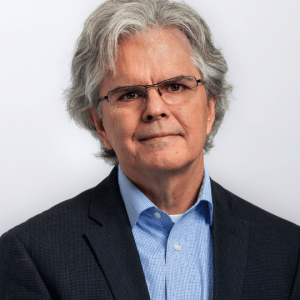
Meet Milton Tyree
Milton has professional and personal experience spanning decades, helping people with disability achieve strong work roles. He uses the principles of SRV (Social Role Valorisation) as a foundation for his work.
Milton lives in Kentucky, USA, and works with Marc Gold & Associates, the pioneers of Customised Employment. He has run several workshops about Customised Employment for Imagine More. He has worked closely with us to support families exploring employment.