Customised Employment in the Australian system

In this presentation, Dr Jenny Crosbie identifies obstacles to delivering customised employment in Australia and provides solutions to overcome them.

Customised Employment is a proven method that helps people with intellectual disabilities find jobs within their communities. However, successfully implementing this approach in Australia depends on understanding the policies and practices that support employment for people with disabilities.

In this presentation, Dr Jenny Crosbie analysed the ecosystem to identify obstacles to delivering Customised Employment in Australia and provided solutions to overcome them. This presentation was recorded during our Opening Opportunities conference in 2023.

Transcript

Hello, everyone. I’d like to just start by acknowledging the Ngunnawal people who are the traditional owners of this land and pay my respects to elders past and present. What a presentation to follow on from.

And, I was just saying that, had I known how powerful Nathan’s speech was going to be, I would have actually structured my presentation quite differently. But what I’d like to start by saying is that I really picked up what Nathan said about the same opportunities and experiences, other people having the same opportunities and experiences that he’s had. And this has been part of my frustration, having been in the disability world for nearly 35 years, and watching those opportunities shrink over time rather than grow.

And that’s what led me to my PhD research, looking at the factors that promote economic participation for young people when they’re leaving school, because I had seen that we’d actually gone backwards in time rather than forwards. And I could see that the NDIS, and I’m a big supporter of the NDIS, but I could see that it wasn’t necessarily going to solve this problem. And so I wanted to understand where in the system the barriers are.

I should also say my PhD research, I interviewed 10 family members of young people with intellectual disabilities, 10 young people themselves, and 15 what we call key informants, so people who work in policy practice across the system. What I’m going to cover today is what I call the employment ecosystem. So I’m hopeful that people will get a sense of where policy levers and drivers are both creating barriers for young people with intellectual disability and where we might be able to break some of those systemic barriers down to enable customised employment to really flourish in this country.

So why do I use an ecosystem perspective? An ecosystem perspective acknowledges that there are multiple levels of influence over individual development, actions and outcomes, and it enables identification of the barriers and enablers across the whole system. Sitting in this room today, there’s a lot of families here, and people are very passionate and committed about employment for the young person.

But well above them in the system, there are systemic barriers that people are not even aware of often that are creating obstacles to families being able to realise their vision. And it was interesting that Nathan’s timeframe for some of the opportunities that he had was 14, 13, 14 years ago. And that goes to my point that we’ve actually, we’ve gone backwards really in this country, and some of the opportunities or some of the supports that Nathan had are not widely available in the system as they used to be.

There’s a map of the ecosystem. What it represents is these different levels and the interaction between them. So we have the person sitting there in the middle.

At the next level up, we have the micro system, which is primarily family when children are young, schools, and other places where people spend time. So they have a direct influence over that person. So it’s family, friends, community organisations, that kind of thing.

At the next level up, we have the meso level, which is about relationships and interconnections. So that’s about how different parts of the micro system are working together and connecting or not connecting. So schools and families, or community organisations and families, for example.

The next level up is the exo, and this is where it starts to get a little bit away from direct services or direct contact with the system. So this is the level where people with intellectual disabilities could potentially be operating, be part of, but often are not.

So, it’s the level of community, employers, businesses, service providers, and so on. And then we have the macro level, which is sitting over the whole system. And that’s about society’s values, systems, its institutions, it’s the way we think about the world.”

And so a good example is if you think about race relations in the United States, for example, in a macro system sense, you know, previously, 50 years ago, African Americans were considered to be different to white people. They had less rights. And so that drove everything that happened to their, in their lives across this ecosystem.

And that’s what we’re really seeing with people with intellectual disability as well is that these higher-level macro kind of understanding of people with intellectual disability is really driving a lot of what’s happening to them in these other levels. The macro is a socio-political level, norms and values influence the whole system. And what I found in my PhD research is that people with intellectual disabilities are constructed as non-workers from an early age.”

It was interesting that Nathan brought up that the doctors and principals had said these things about him when he was 2, 3, 5. And that’s what we do. We construct people as non-workers from a very young age, and then we build a system for them to be non-workers.

And that’s basically what we’ve done in Australia. So it’s interesting that you’re running that DSP session because the disability support pension, and even that word pension, giving a 16-year-old a pension, just sets people up to be non-workers because, rightly so, families want to protect that income support because they know that opportunities are going to be limited or sporadic. And so protecting that income support payment becomes critical. But the way we’ve constructed it as a pension, it sets a whole train of ideas in place.

The UNCRPD, I’m sure you’re all familiar with the United Nations Convention on the Rights of Persons with Disability. This is really driving change in Australia at the moment, and we can’t underestimate the role that can play, particularly from advocates themselves in terms of driving change in this country.

If you’re not familiar with Australia’s disability strategy, have a quick read of even the key priority areas. They are around employment. So, government priorities over the next 10 years are going to be around employment and transition from school.

So we really need to catch on with that. The funding mechanisms, community beliefs and segregated structures. We still have so many segregated structures in this country that many community members think that’s where people go. And so we really need to challenge that.

At the exo and community level, you know, this is really about the structures that are in place for other young people that are not necessarily in place for these young people. Employment supports, which in Australia is the DES system, the Disability Employment Service system, that is our government’s response to the UNCRPD around employment. So that is where people with intellectual disabilities rightly are entitled to be getting employment supports from. Now I heard strongly in my PhD research that’s not the case.

So that’s an example of an exo system. But also there’s TAFE, Employing Businesses and Organisations, and all the other services that people use that should be available to people with disability.

The meso level, this is an intermediate space. So this is about how different parts of the ecosystem are working together. So, what we’ve seen in the last 10, 15 years is a drift away from collaborative practice to really highly individualised practice, and the NDIS is obviously driving that. So, each service provider or each part of the system is coming to that person as an individual provider.

So we’ve really lost that kind of holistic, you know, Nathan talked about that vision, that really having a strong vision for a person and then connecting parts of the system up.

And then the micro level factors, as I said, that’s about what’s actually happening in the person’s life. So family is really a strong micro-level factor, as well as school, community organisations, and disability services.

And then we have the individual. And so in my research, it was really interesting to talk to the families and the young people about, you know, what they kind of called the intrinsic or inherent barriers that some people with intellectual disability have. And we can’t ignore these in this bigger ecosystem perspective.

So personal characteristics, age and gender and ethnicity, disability type, severity, health, they all impact on the person in this ecosystem approach. Some of the common ones that came through in my PhD research were around literacy and numeracy, stamina, independent living skills, and soft skills for employment.

So what does this all mean? The use of the ecosystem analysis helps make the invisible visible. So it allows us to really understand where in the whole system these barriers are, and then it allows us to tackle those barriers. And what tends to happen in ecosystems is something shifts.

There’ll be a shift in a policy or a practice, and it might have flow-on effects that were not intended. They were unintended consequences. And we’ve seen this a lot in DES over time, where the DES model or the DES contract has shifted incrementally over a long period of time. But what we’ve seen is that the shift between the old DES contract and what we have now has been fundamental, but it’s been done incrementally.

So for individuals with significant disability, the norms and attitudes and structures do create very big barriers that are complex and difficult to address, particularly for people who are working at that microsystem level. So families and schools, for example, have limited capacity to impact what’s happening up at that higher sort of structural level, unless they can band together as you guys have done with Imagine More.

The other thing that we’re seeing is that we’ve got a new way of thinking about people with significant disability. And again, this is being driven a lot by the UNCRPD and rights-based approaches.

But what we’re seeing is people, individuals, having to butt up against old structures.

So we still have ADEs, day services, special schools, all of these old structures, someone in my PhD called them “relics of the past”. And unfortunately, they are still the structures and systems that families are kind of intersecting with.

Yeah, as I said, I really wanted to make sure that people were really clear about the barriers at this kind of macro and exo level, because they’re the ones that are going to be potentially going to be harder to shift and take longer to shift, but they’re actually the ones we really need to focus on shifting.

So while we can do a lot at the micro level and even the exo level, sorry, even the meso level, quite quickly, shifting some of these larger systemic barriers takes longer and it’s more complex, and it takes the whole system working together to shift those.

There’s a couple of barriers there that, I think the exo system is an area where we should be really concentrating our energy because people with intellectual disabilities do have the right to services in this country, and if those services are not available to them, that’s created a gap.

And that’s really what we’re seeing at the moment for people with intellectual disability is that there aren’t post school training options available. There’s not the disability employment services available that people used to have. So that absence of kind of suitable services is really created a bit of a vacuum for people.

The other thing I think in this area that’s really critical is this skilled and trained workforce to deliver customised employment. So, you know, we’ve got Milton here from the US., and I know that Imagine More’s had a long association with Milton. But without that skilled workforce, we’re not going to be able to shift what happens for people at the coalface. Whether that shift happens, whether that skilled workforce is developed within disability services or within private services, we need that to happen.

What I want to focus on here in the meso is this lack of place-based approaches. So up until about 15 years ago, employment services were very place-based in Australia. So that meant you had an employment service that was operating in a particular area, and it was linked into its own ecosystem, if you like, in that local area. So it was connected to schools, TAFEs, and employers, et cetera.

And we’ve really shifted away from that in Australia. Now we’ve got a handful, probably more than a handful, 60 or 70 odd large providers who are operating across the country. So we’ve really lost that ability for the Employment Service to really become embedded in that community and to be working across in a collaborative way, across all of the other parts of that community.

I know this new government is very interested in place-based approaches. And so, I think that, again, that’s something we should be sort of focusing our attention on. And also, again, Nathan’s comment about the vision in his family, and we’re not really seeing that holistic person-centered planning that was really supposed to be the underpinning the NDIS in this country was that really long-term holistic vision building.

We talked about aspirations when the NDIS was developed. We’re not really seeing that in action. So that’s another area that I think needs to strongly change.

At the micro level, there’s still a lack of awareness about customised employment approaches, including how they can support people with significant disability. So, in my study, a lot of the young people had been told by, particularly school staff, when they were 16, that they were not going to work, they were not suitable for work, whatever that means. And those schools and other parts of the system are not aware of customised employment and the opportunities that can open up for people.

So they’re judging people’s work capacity based on this kind of view of what work is, rather than understanding work in all of the different ways that it can be. Really broadening this sort of conference, where we’re broadening people’s understanding of even the concept of customised employment, not just how to do it, but even the idea of it is really, really critical.

The other important point in that micro area was that most of the young people in my study had fewer opportunities to build skills and competencies for work. They’d had the opposite experience to Nathan. So they hadn’t done work experience, they didn’t have career plan, they didn’t have a part-time job after schoo, thatl kind of thing. And for the individual, a lot of the barriers were around not having work skills, because they hadn’t been in workplaces or in places where they could learn them.

And there was also some people that had soft skill, that hadn’t had the opportunity to develop those soft skills, turning up on time, being appropriately dressed, communication, those kinds of things.

Technology, it was interesting that all the young people turned up with their phone and their laptop. They were all using technology, but nobody was really talking about how technology could be harnessed for that person in a workplace.

So, they were using their phones for social media and whatever, but they weren’t really using it around work, around how technology could support them to work.

Lack of work experience and marketable skills and qualifications. So some of the people in my study were actually now 20 or 21, and so they’d missed a really significant period of time to develop work experience and marketable skills.

And part of the problem there is that they become competitive pay-wise with adults because they’re now 20 or 21, so they’re expensive, if you like. And they’ve missed out on that opportunity to be 15, 16, where, not that I’m advocating these kids should be paid so badly, but we have this system in Australia where young people are paid a training wage, basically. But if we don’t get people with intellectual disability into the workforce at that time, they’re missing out on that opportunity to be paid a lower wage while they’re learning about work.

And the other big one was the life skill barriers about, for example, using public transport. So, lots of the people in my study had been picked up by a bus every day and driven to school in a school bus. And so they were really trying to learn and develop their public transport skills and other life skills, which we need to go to work. We need those life skills to go to work.

So this is the ecosystem drawing again with an enabling ecosystem. So this is what an enabling ecosystem could look like in Australia.

The first, if we start at the top in the macro area, what we need in Australia is an employment-first policy framework. So it really flips the thinking that people with disabilities probably won’t work, to everyone will work. And that will drive change right down through the system.

Because it will turn around should the person work or can they to how do we make them, how do we help them to work.

And we’ve seen this in the United States. So, there’s a couple of projects over there that I’ll talk about in a minute.

The second thing, as I said, is at the exo level is really focusing on this workforce development strategy. We just do not have enough people in Australia who are trained and skilled in delivering customised employment. It’s just missing in the system. And lots of the families in my study had money, they had money in their plan, and they said to me, “Where do I buy, I’m from Melbourne, where do I buy this support?” And the way they described the support to me, they never used the words customised employment, but they exactly described customised employment to me. And of course I had to say, I don’t know, there isn’t at the moment.

So, I think that’s a really strong focus for building this enabling ecosystem. And the other thing to mention there is that when it was decided that another type of employment support called IPS was going to be implemented through Headspace in Australia for young people with mental health conditions, $10 million was committed by the government for a workforce development strategy to build the capability of the workforce to deliver that. So, that’s the kind of money that we need to be able to do this.

Procurement of customised employment supports. So, government have a lot of levers in terms of what they buy from the service system. At the moment, what they’re buying from DES is not customised employment. So we really need to be looking at how we can persuade government to actually buy customised employment services so that they can then flourish in the community. And essentially that’s what happened in the early 90s in Australia when the Disability Employment Service Network first started.

It grew from the Disability Services Act. It was strongly rights-based. It was very place-based. And we weren’t delivering customised employment, but we were delivering much more intensive and holistic sort of services to people, and very much about the match of the job.

So we know we can do it is what I’m saying. We’ve done it before, but it just takes switching some of the levers, including the procurement levers.

We do need to build the capacity of education and training programs in this country. And TAFE has its own issues, so I’m not blaming TAFE at all, but TAFE is one mechanism potentially to support the training and post-school training and development of people with disabilities. And it’s not functioning as well as it could be.

And we’ve seen some lovely examples of work-integrated learning, which is where people are learning in place in a job with training sitting around that. And this is the kind of models, again, that are coming from the US that we really need to be investing in thinking about in Australia.

Meso, we’ve already talked about, I really strongly believe that these place-based collaborative approaches are what deliver outcomes for people, because they make each of the players in the system’s job a bit easier. They’re not working in a siloed way, they’re working collaboratively.

And so they’re learning from each other, and they’re also sharing resources and braiding and blending those resources together. So the person actually ends up with more resources than they would be if they had an individualised.

At the micro level, this employment first thinking has really needs to come down into this micro level at a very young age. So schools, families, disability providers, right from an early age, the thinking needs to be around this person working, not this person not working. And that’s a big flip still that needs to happen in Australia.

The other big one here is access to opportunities. And Nathan, I won’t talk about this because Nathan beautifully summed it up, that all those opportunities he had access to helped build his capacity for work.

And then for the person themselves, soft skills, technology, life skills, hobbies and interests are really important in customised employment because they, you know, they’re what we can springboard off later for people.

So what can families do to progress customised employment? We’ve got this system that’s not really conducive at the moment to customised employment. The system needs to do some work, but what can families do to progress customised employment in the meantime?

So the first thing I would say is to advocate. So join with groups such as Imagine More, to advocate for change at the upper levels of the ecosystem. Most of the service system that you see today in Australia was parent, a lot of it was parent-led. And while we might think that it’s not suitable for the current environment, back in the 1950s and 60s, those families were fighting against the system that wasn’t meeting their needs, and they built a system.

And so we can advocate as a group and particularly as families to change what happens at those upper levels. And also just talking to school principals and other people about what needs to change.

Have employment goals in the NDIS plans early. There’s no requirement to have employment goals in people’s plans. I think that probably is something that could shift. But get in there early, ask for finding and keeping a job, get the money, send the message to NDIA that this is what people are after.

SLES funding. And SLES funding has kind of rolled out differently to perhaps how we thought it would, but it is a good way to explore the world of work. So if you do have access to SLES, think about how you can use it creatively to do that exploration work. It is a decent sum of money to do that if you find the right supports to do that, you know, really strong discovery work.

Use your buying power. So tell providers you want customised employment. These providers know that things are changing, that the shift is happening and the providers know it. So go and talk to providers, go and talk to them as a group even, and talk to them about this is what we want. We don’t want what you’re buying, what you’re not buying, what you’re selling. We want to buy this.

And also, obviously, if there’s job coaches delivering customised employment in your local area, that’s great, but unfortunately, that’s not the case everywhere.

Building the independence of your family member, that is really critical. Build their capacity to just move around the community, prepare basic meals, obviously, dependent on the individual person, but take that approach from an early age, that this person is capable and competent and build those skills to the extent you can. And also support their engagement in community-based activities because they build soft skills like teamwork, communication, et cetera, but they also build networks, and that’s really critical for young people.

Learn from other families. I strongly endorse coming to all of Imagine More’s activities. Join the group. I think there’s going to be a peer group at the end. This is how most people learn. They learn from others, so definitely do that.

Also, it’s about normalising employment in your own networks. So people work, people spend time in networks in their community, or people are members of Rotary and other organisations. We need to be out there talking about people with significant disability working. We need to normalise it. And we need to challenge people and ask them to create opportunities in their, you know, people in your networks. Ask them. Just like Nathan’s mum did, ask people whether they could create a work experience or a paid job, any type of opportunity. Sometimes people have never thought about it. It hasn’t even occurred to them, so.

Help to change community attitudes by engaging in a broad range of community activities with your family member. The more time people are in the community, being part of the community, that’s how we get those big attitude shifts, that people belong in the community and that they’re capable and competent.

Use your NDIS funding creatively and cleverly. I know a lot of people here are probably individually managing their funding. Go for it. Just be creative. Be as creative as the NDIS will let you be, and just keep your eye on that prize, it’s about, is this activity helping build these skills that my person needs for a life in the community?

Okay, so in conclusion, Australia is yet to create the systems and structures that enable customised employment at scale, so that means available everywhere. The new Australia’s Disability Strategy has placed employment front and centre in terms of government priorities, and there’s an increased focus on funding what works.

There’s been a real shift in the language the government’s using. They’re looking for evidence-informed practice. They’re looking for what works. I said to Jan earlier, now’s our kind of opportunity, I think.

The momentum is building. We’ve got funding mechanisms in place. The NDIS funding does have a mechanism for customised employment. So we can’t lose sight of that. We need to make sure now that the marketplace grows up to actually allow people to get funding, but then have the services available that they need.

And for now, people with disabilities and their families, continue to advocate, build your own expertise, purchase supports via the NDIS, and just keep doing whatever you can do at your level to build this capacity for your person to work.

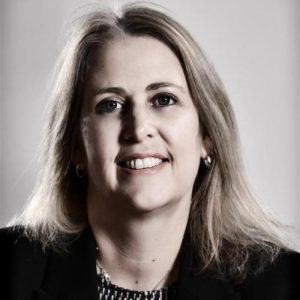
Meet Dr Jenny Crosbie, PhD Portrait of Dr Jenny Crosbie PhD

  • Bachelor of Arts (Disability Studies), Deakin University, 1992
  • Graduate Diploma (Industrial Relations and Human Resource Management), University of Melbourne, 1997
  • PhD, Swinburne University, 2023

For 35 years, Jenny has been dedicated to supporting people with disabilities to participate in their community. She has worked in research, advocacy, and practice roles. Her primary focus is on addressing the barriers that young people with intellectual disabilities face when it comes to economic participation. This includes systemic barriers that limit the opportunities available to them.

Jenny’s PhD research offers a new way of thinking about economic participation for young people with intellectual disabilities. She also identifies factors that promote their inclusion in community-based economic participation roles.