Daisy’s school to work journey

Daisy Brown and her mother, Gillian, as they explain how Daisy has used her high school years to explore employment and create a seamless transition from year 12 to working life in a job that is a great fit for Daisy.

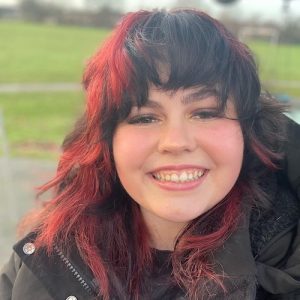
Portrait of Daisy BrownMeet Daisy Brown

16-year-old Daisy Brown was in year 12 at Charters Towers School of Distance Education when she presented at our Opening Opportunities conference. She combines schooling (QCE) with a Cert II in animal studies at Central Queensland University via the Start Tafe Now programme. She loves rap music and reformer pilates.

Daisy has a lifelong interest in animals, particularly horses and dogs. She established her career by undertaking a work experience placement in a vet clinic. Her teammates valued her skills in asking questions, using her initiative and monitoring dogs in surgical recovery. As a result, Daisy was offered an ongoing job at the vet and now works 17 hours a week. Her tasks at work include bathing dogs in the hydro bath and providing laser treatment, pre- and post-operative care, and general animal care.

Daisy’s school-to-work journey

Join Gillian and Daisy to hear how Daisy has used her high school years to explore employment and create a seamless transition from year 12 to working life in a job that is a great fit for Daisy. They’ll discuss

  • Daisy’s experience of distance learning
  • how school-based Work Experience operates under the distance education model
  • how paying attention to Daisy’s interests helped identify potential school-based Work Experience opportunities
  • how they approached the Veterinary practice to ask for a Work Experience opportunity
  • the supports Daisy needed to thrive in the workplace, including:
    • having clear instructions about workplace expectations and clearly listed jobs
    • assistive technology
    • social scripting and helpful phrases
    • staff awareness around the impact of her disability and needs in the workplace
  • the challenges that have arisen and how they’ve overcome them.

Portrait of Gillian BrownMeet Gillian Brown

Gillian has a background in nursing, having studied in Brisbane and Kings College University in London. She became a Nurse Practitioner in Haematology and lived and worked in London for over ten years. She has travelled extensively and worked in Africa, India, Eastern Europe, Europe, South and Central America (Mexico, Guatemala, Bolivia, Peru) and Asia.

After her daughter Daisy was born, Gillian started her own cake-decorating business. She also worked as the food editor of Sweet magazine.

Gillian’s community work includes volunteering with refugees, asylum seekers, and homeless and women’s shelters. She has always included her children in these community initiatives.

Gillian’s current focus is supporting Daisy’s schooling. She believes that navigating the education system using your child’s area of particular interest or passion plays a crucial role in facilitating their opportunities and success in transitioning through school to employment.

Transcript

Gillian Brown

I’m really, really proud to be here to share Daisy’s journey from school to employment.

My hope is that by sharing with you, be it educators, parents, carers, or a person with disability, you may be inspired, maybe learn something, but also see that it isn’t a straight line from A to B, school to employment. There are many ways to reach your goals.

Nathan’s talk today really, really was relatable. How he fed back about the experiences his parents had from schools and maybe employmen, and that we had the exact same, especially Daisy presenting with invisible disabilities, so to speak, set a different set of challenges for us. I am constantly learning and open to trying new things to help Daisy.

I came across Imagine More researching work experience and employment options for people with disabilities. The first thing I loved was the name, Imagine More, as it captured everything I was feeling. When I reached out to Jan with a few questions, I then was set on a discovery to read absolutely everything that Milton had written in his whole career, and I think the comparison between an FBI agent and a parent of a child with differing needs is pretty spot on.

We do tend to leave no stone unturned, but what I had was Daisy, a child in front of me who had such great qualities and abilities with so much to offer, but was in a system where the sole emphasis was on test results rather than identifying interests for possible career paths. I found that with schools moving away from practical subjects such as cooking, woodwork, welding, or auto mechanics, kids like Daisy aren’t exposed to a variety of hands-on experiences that may spark interest and identify potential career options that will keep them engaged in learning.

On our journey, identifying what sparked Daisy’s interest and passion, which is animals, was a crucial factor in keeping Daisy engaged in education and giving her realistic and achievable goals for her future.

I found that exposure to the wider community gave Daisy a sense of belonging that she perhaps didn’t experience at school. Being part of our local community definitely was a driving force for Daisy finding work experience and, in turn, employment.

Daisy’s school path: Daisy, apart from other difficulties, the most challenging aspect was her anxiety and sensory issues, and that was experienced from prep right through to year eight. We tried a variety of school models, including small schools with inclusive mission statements, other schools with teacher aid in the classroom, special school, and nothing fit. Daisy spent most of her time at home. We had a lot of negative experiences, but within that we also met some incredible educators who really tried to step up and change the system, but it just wasn’t a right fit for us.

So this resulted in Daisy missing a lot of school, a lot of days, a lot of weeks of school. But I used it as an opportunity to engage Daisy with the wider community and concentrated instead on therapies, including speech, OT, physio, and psych. One thing I want to stress is that when you’re finding providers like speechies or psychs is you’ve got to find the right fit.

And as someone just said, you know, don’t just stick with someone because they’re teaching your kid the A’s and the B’s. Find someone that you really, well, not me, that Daisy really connects with. I mean, we had six clinical psychologists before we settled on someone that’s now been part of Daisy’s journey for about eight years. Nothing wrong with the other ones at all. They really helped others, but it was specific that we found someone that, within one minute, Daisy connected with. She was a lovely, she’s a lovely lady whose PhD was in specifically autism and intellectual impairment for girls with autism. And our speechie is fabulous too.

When we didn’t go to school, we attended the local library and got to know the staff really well. We participated in free workshops that were led by the council. Things like keeping chickens, edible weeds, composting, just random stuff really. But Daisy was really interested.

At the time, I was volunteering, providing lunches for asylum seekers and refugees. And Daisy tagged along with me because she wasn’t at school, and I noticed that Daisy was way more comfortable with people when language was removed from the equation. She was loved. She had a cherub face, and they just adored her, and she gained confidence, setting tables, folding napkins, serving. We also attended our local Bunnings who offered free workshops, which Daisy loved also.

Daisy would attend the pool with me ’cause I go to Swim Fit and we used a small canteen there to practice some social skills like ordering food or using money. We also participated in the annual community Million Paws Walk, making cupcakes each year to raise money for the RSPCA. Daisy would also help me grocery shop and became very well known during school hours around our local shopping area, which is quite small; it has a Coles and a few specialty stores.

One day, when we were off school, surprisingly, in year five, we were just taking a stroll through the park, heading towards the swings, when Daisy stopped in her tracks. There were three horses with riders just sitting in the shade under a tree. Daisy headed straight for the horse and began stroking its face. This in itself was quite exceptional, as Daisy never approached anyone, not even our family. She was just so comfortable and happy.

A week later, Daisy was signed up with the local horse riding company that specialised in supporting kids with disabilities. It was the in that we needed in terms of sparking a real passion in Daisy.

Daisy entered the Special Olympics for equestrian, and our local community, including many businesses, really got behind her. This helped her with her confidence and social skills, as people would ask specific questions like, “How are the horses, Daisy?” Daisy outgrew that facility, and we moved to a non-disability specific riding arena called SPC, who were very hesitant to take Daisy on.

But as I always say to anyone, can you just give us a meet and greet? And they approved, and after an hour with them, they said, “We would love to have Daisy”. And she’s been riding there ever since.

How we came to distance ed: Like brick-and-mortar schools, there are a variety of different distance education schools around. Some run exactly like mainstream schools. Some are private, some are faith-based. Some offer greater flexibility. So it’s just a process of me ringing every single facility. I started in the north Queensland, was prepared to go down, and on my 12th school, I hit a jackpot. I talked to a lady, and within a couple of minutes I thought, this is the place for us, it fit our needs.

Now there are two enrollment types. If you don’t anything about distance education, one’s usually regional or being isolated, so living on a property, and the other’s a medical enrollment. Daisy’s medical enrollment offered more flexibility with adjustments and subject choice.

So we started Charters Towers at the beginning of year nine. Oh, we chose Charters Towers… we’re based in Brisbane, so if you don’t know, that’s at the top of Queensland, near Townsville, but it’s all online, so it doesn’t really matter. We found it to be very flexible. And it was inclusive, where all abilities were together and celebrated, and I’m talking celebrated from some kids achieving small lifestyle achievements, like being more independent or helping mum unpack the dishwasher, to having the head chemistry winner in Australia in the same grade. But everyone was together, and everyone was celebrated. The main focus, though, that I noticed on students were their strengths. And guidance toward vocational pathways.

Their catchphrase, and how they sign off every email is ‘Progress, not perfection’, but it was a language used by the teachers that was different. It was so positive and basically emphasised “Just give it a go”. Now it’s quite a low socioeconomic area where the school is, the physical distance ed school is situated, and I would be in class with Daisy each day as her teacher aide.

One specific thing that really stuck out, they were learning about the rabbits. It’s a book, don’t need to know about it. And it was about the stolen generation, but they used pictures too, instead of words for this book. One boy in the class said, “geez, that rabbit looks like it had a hard night” because it had green teeth. And it was a side effect of like the industrial revolution and stuff like that.

And instead of just poo-pooing his answer or mocking him or saying concentrate, the teacher said, “That’s a really good observation. Can you explain to me a little bit more?” And he goes, “Well, he looks like he must have been on the hard stuff”. And she goes, “Keep going, you’re doing really well”. Now, this was a boy that was really disengaged, but he was given an opportunity in front of the class to continue and explain what he saw, and he was praised for that. Now he was in the next class and the class after that, and is now doing an apprenticeship. So that is the difference between educators, in my opinion, when they can engage anyone.

It follows the Australian curriculum, and also there’s live classes. You don’t see the teacher, you get a blackboard. It’s interactive. You have a chat column where the students can chat with and answer questions and interact during the class, but there’s also a private chat where you can, without your peers seeing, you can say, “Miss, I didn’t understand that”. Or, “Miss, can you go over that again?” Or you can give your answer if you think that it’s gonna be wrong. And it’s confidential.

Daisy’s experience of distance learning was mind-blowing. Daisy adapted really well. I cried for the first three weeks. No joke. I was so overwhelmed, and I’m really bad at technology, and I was feeling really lost, but Daisy was really calm for the first time I’d ever seen. She was really good with assistive technology, which she used for speech to text, text to speech, and in the community, so was more open to learning with this reduced amount of anxiety in the home. She could relax and was supported at home with her dogs. As I said, the teachers were genuinely interested in her success and well-being.

Lessons were adapted to engage Daisy and often around her passion for animals. Example Greek mythology, which was quite abstract. The teacher said, “Scrap that assignment, Daisy, just find some interesting facts about Pegasus” which is a winged horse and had her hooked. She did a brilliant assignment on Pegasus the horse.

The way it works is the chat boxes. There’s weekly worksheets that need to be handed in, but they stress if you can’t complete it, A-okay, if you just need to put your name at the top of the form to show me that you’ve listened in class, I count that, and those worksheets are what they use as attendance for class.

They don’t mark the role per se, but you hand in that work each week, and that’s marked as your attendance. Yes, I was her teacher, God help her. It was her and I, 24/7. I was sinking with maths, but then they came up and asked, “What were the great partnerships of the 20th century?” And I thought Robert Redford and Barbara Streisand in The Way We Were, which I explained to Daisy. Teacher, not on board, but we watched the movie anyway, and she fell in love with Barbara Streisand.

How it works is you have certain lessons, so you have quite a lot of non-contact hours during the week, so Daisy was doing about seven to 10 hours of schooling, took advantage of the non-contact hours to focus on building skills towards being independent and exploring new hobbies.

We worked on being punctual. Timekeeping. She tried gardening, furniture restoration, going out to the shops with her support worker, having lunch with Amy, her support worker, using her assistive technology in the community, so gaining all that experience from the speech therapist and taking it into real-life situations.

Looking forward: At vocational study, Daisy’s teachers, and in fact her speech therapist, acknowledged her as a hard worker. It was when her teachers asked her in year 10, “What do you want to do, Daisy?”, Daisy said, “I dream of working with animals,” but for us, TAFE seemed unattainable. CTDE, which is Charter’s Tower’s Distance Ed, believed in Daisy and also believed that with the right supports in place, she could complete her QCE, which is like a senior certificate in Queensland.

To enter TAFE, you have to sit a literacy exam. Now we knew that wasn’t really going to work, so to overcome the obstacle of the literacy and numeracy test required by TAFE, the school suggested a CERT II in job skills for work and vocational pathways, which gives you access to TAFE courses, and I believe, I did have a quick look, the equivalent is in each state that can leapfrog you to qualify for TAFE courses.

Developing a work experience placement. So we did the CERT II. They stepped her through that at school. And this included foundational skills development for workplace entry or vocational studies: basic reading, basic writing, basic numeracy, and a little oral communication.

The fly in the ointment was that it required 10 days of work experience placement, which I thought was going to be very difficult because, at this stage, Daisy did not leave the house. Anyway, we had a think and developing a work experience placement, I decided to take a solution to the vet instead of just rock up.

So what I did was I reached out to our local vet. We already had a good relationship with them through fundraising ventures like the annual Million Paws Campaign, and also Daisy’s service dog was looked after there. So they were aware she had some disabilities. For me, I thought it would be a good fit because it was a place Daisy was familiar with, and it was close to home, and Daisy knew the staff.

I led with Daisy’s strengths, her interests, and her need in a workplace that related to her disability. She loved animals. So, we tried. To our surprise, they jumped at the opportunity to support Daisy in completing her work experience. And they were the ones that actually suggested, instead of doing a 10-day block, perhaps doing one day a week for a school term, which lasted 10 weeks, which was fantastic. Daisy started work experience, and it was a huge success.

The first day was a bit wobbly. I looked at my watch all day thinking, ‘Why haven’t they rung yet?’ Because normally school would ring within the first hour, but she was beaming when I picked her up at two o’clock. She couldn’t wait to get back. She promptly informed me, “Mama, they don’t finish at 2:00 PM. They finish at six”.

So six it was the next week. A few wobbles again, but Daisy absolutely loved it. They reassured her. She didn’t need to speak if she wanted to; that was her option. She absolutely loved being in the cattery and was noted for being able to keep it spotless.

The vet practice valued Daisy for her incredible affinity with the animals, her quiet demeanour in helping the animals wake up from anaesthetic and her confidence around larger dogs. She had gained this confidence with large animals by being around the horses. Ross touched on this earlier about interactions in the workplace.

I got a phone call. I knew it was the vets. I was worried. “Hi, Gillian. Just got a quick question.” I was like, “Yes, anything.” “Are we allowed to swear in front of Daisy?” And I was like, “She listens to Snoop Dogg. Yes. I said, she’s there to experience real life and to gain employment, whatever you do, do in front of Daisy.” She probably knew better words than them, to be honest.

Meeting Daisy’s conditions for success. We had to make sure, I did this myself, so it was kind of like trial and error. So we had to make sure the staff were aware of Daisy’s disabilities, her needs, her strengths, and give them education around the impact of selective mutism. And things like making staff aware that her phone was used for assistive technology in the workplace and communication, as opposed to just watching TikToks.

We had strategies in place in where I could be contacted by either Daisy or the workplace if needed. As I touched on, she presents with invisible disabilities, so we had to make sure that clients who weren’t aware of some of the challenges Daisy faces day to day could be nipped in the bud because they could potentially lead to misunderstandings. The staff have been brilliant with that.

We actually used our funding from NDIS with regards to the speech pathologists and clinical psychologist in developing strategies for the workplace. As again, I came up with these ideas and I was just in the dark, but, you know, trial and error.

We set about doing some simple social scripting, and Lizzie, her psychologist, came up with asking: Ask someone, ‘How is your dog?’ because we know that pet lovers just love to talk about their animals. Daisy had strategies where she had prepared texts in her phone to send sentences to her job coach for support if needed. And a few questions just to fire off if needed. There was a combination at the beginning of her support worker attending, but also she more just let the job coach know what Daisy needed specifically.

And I was really, I really wanted to take a step back and let Daisy and work sort themselves out, which worked really well. And also, I’m not really fond of that many animals, so that helped that I stayed back a bit. We adopted open communication where anything was being, they could say anything to me, good, bad, ugly, and also asked Daisy questions.

It was really important that we set realistic goals for Daisy and also spell out the expectations that they had as an employer. Clear instructions were vital for Daisy of what was expected of her, and clearly listed jobs with explicit instructions, including laminated pictures. Explicit instructions, because little things like, ‘Can you take the wash down?’ “Yes.” You have to then go and just say, “And put it in the washing machine and turn it on.” Daisy’s all over that. Now she even does it at home, which is brilliant. And we arranged a site visit by Daisy’s speech pathologist and set up some assistive technology shortcuts for her at work.

Paid work, and further studies. The work experience finished. I approached them ’cause this was the first time Daisy had ever spent time away from home independently. And I could see how much joy it was giving her. And I asked if there was any way we could extend that work experience. And they said, yes, of course.

After a few months of work experience, one day a week, the girl running the hydro bath on a Saturday resigned to concentrate on finishing year 12, and Daisy was offered the position. Daisy was accompanied by her job coach each Saturday. And her confidence slowly grew in communicating with the clients. Daisy’s biggest anxiety was around talking to the clients or them talking to her, but she found that she was slowly building a rapport with the returning clients. She took great pride in washing the dogs and drying them, and was complimented on her abilities by the clients, which helped her confidence grow.

The vet practice was sold to a larger company, which you know, I had a panic attack. Daisy was offered by the vet that was there a position with her new vet practice at their new practice, but she actually chose to stay. Having completed the Cert II in job skills and vocational pathway, Daisy now qualified to apply for a Cert II in animal studies at TAFE.

After a lengthy call with the TAFE Queensland, we realised it wouldn’t be a good fit for Daisy because one, there were long waiting lists, meaning Daisy would have to probably wait until year 12 or after to be accepted. And two, students were required to spend one day per week on campus, which wasn’t feasible for Daisy.

So we looked around as you do, and we found another provider that offered the certificate. And it was called Central Queensland University, but the bonus was, it offered it completely online through their START TAFE NOW program. They also ran it like distance ed with live classes. So Daisy was all over it.

When I approached the Central Queensland University, I went again with a solution that we had adequate support to provide for Daisy at home and at the vet practice to complete the course. And the vet had signed a form to say they would provide Daisy with the 240 work placement hours required to complete the course.

And they put me in touch with the tutor running the course, and I was able to discuss Daisy’s strengths, her weaknesses, and what we had in place, and where she may need additional support. Doing the Cert II in animal studies was a brilliant way of pushing Daisy out of her comfort zone and showing her and those around her just how capable she actually was.

It also offered structure, increasing her skills in the workplace. Example, one module in the Cert II was around appropriate workplace behaviour and answering the phone. This was something Daisy was absolutely terrified to do. But as always, we made a plan. So we had a meeting with the little university, the vet practice, the speech therapist, the clinical pathologist, the psychologist, Daisy, and myself, and we came up with a plan.

Daisy now confidently answers the phone at work, and this is where we really celebrate the wins. Daisy now works 17 hours a week at the vet practice. While doing year 12, she has completed her Cert II in Animal Studies, and I’ve gotta say, we couldn’t be prouder.

She was so resilient doing this; you get three attempts at each model. Daisy normally took two, and then the tutor recognised that Daisy knew the work, just couldn’t express it, so they just changed it to oral presentation of asking Daisy some questions, and she knew all the stuff. It was just the questions written that tricked her up. She never gave up. She never complained. She’s never said, ‘This is not fair. Why do I have to keep repeating the modules?’ She just did it.

So just to recap and highlight that, at the beginning of year nine, we were sinking, really sinking. We begged Daisy to stay in school, but we knew that it was just awful experience for her. And I promised her, just get through year 10, and we could finish school altogether.

Years nine to 12 were life-changing. They were monumental. We were able to use her interest of animals, and with the reduced anxiety, Daisy was able to become a school leader. She is the captain of her school this year. A valued member, not just of the vet practice, but of the wider community. It’s really been a snowball effect, like more little wins lead to increased confidence to being more open to try new things.

Employment has given Daisy confidence, some financial independence, budgeting skills, and a sense of belonging as a valued member of her workplace.

But more importantly, what has Daisy given her employer? She’s given them loyalty, hard work, commitment, and a different perspective, which has actually led to real-life changes in the day-to-day running of the vet practice. One thing Daisy picked up on that the vets hadn’t picked up on, the vet nurses, the practice manager, was why they dogs and cats were getting so anxious and a bit aggressive in the consulting rooms. Daisy piped up, ‘Because you’re not separating them. You need to change.’ She’s very direct. ‘You need one consulting room for dogs, one consulting room for cats, because then they can’t smell each other. You need to add diffusers in each room. Releasing dog pheromones, cat pheromones.’ This is still in practice, not the only change she’s made. So well done, Daisy.

Also, it’s a little-known fact that employers that do come and try out at the vet don’t know that Daisy actually has a deciding vote. She’s like the barometer. She can tell within a second whether they’re good or not, not as a vet, but as a person. They send her out, give her five minutes with them, she’ll come back, and it’s a simple “No”, “Yes”. And they’re either, ‘Thank you for your time’ or welcomed into the practice. That led them to say, “Actually, Daisy, you have finished your Cert II, and that’s a prerequisite for being a vet nurse. And we know that’s your dream. So what we’re gonna do is offer you a traineeship.”

We did have to go through a provider university which I was a little nervous about because a lot of them you have to go into their campus. But I did what I always did, and I rang, I rang University of Queensland, thinking, no way, Jose, as it’s a top 50 university in the world. They were so open to accepting Daisy, they love people that think differently at the university. They welcome different minds at the university. They knew that we had the support and the hours needed to become a vet nurse, and they even said, “We can change the way we examine her.” Practical assessments are done on campus at Gatton, and they’re even gonna be flexible about how they approach those.

Daisy will continue to work at the vet, finish year 12, and then complete her vet nursing. My takeaway points for families are, don’t let the early years deter you from continuing to reach your potential. Use your child’s passion and interest to help guide them through education to work. Be familiar with your community. Find alternative pathways, both speaking with your local or online TAFE providers, or anyone else. Just ring and be good at communication.

Respectfully, you can’t change everyone’s mind. Daisy asked me just to add this, something I told Daisy from the very beginning, and I still do today when things are really bad. “I know this isn’t working Daisy, but I’m looking for a solution, and so hang in there.” Also, that we don’t concentrate on diagnosis. I tell people to not worry about getting a label or being scared of a diagnosis. All it does is give you tools to help your child. That’s all it does. Like anything else, recognise when it’s time to grow also, and move and grow and just keep going.

And now Daisy is going to talk.

Daisy Brown

Hello, my name is Daisy, and I’m a trainee vet nurse. My current role involves starting vet consultations, helping the vets during their consults, and completing my own nurse consults. I have learned many skills, including how to measure and administer medications. Preparing animals for surgery and assisting the vets throughout the surgical procedures are some of my favourite jobs. I’m also good at trimming nails and completing the laser treatments for patients.

I absolutely love working with animals. I don’t mind if it’s dogs, cats, birds, lizards, or anything else. I enjoy learning new skills and trying tasks out of my comfort zone. I have recently learned how to take bloods from animals. I love the atmosphere and the group of girls I work with.

When I changed to riding at SPC, Carrie, my coach, taught me how to care for the horses. I enjoyed caring for the horses so much so that she let me come in on my school holidays to help with the jobs at the stable. This included feeding the horses, washing them and mucking out stables, doing laundry, and dragging the paddocks. Now that I go to distance Ed, I go twice a week to ride and then help out afterwards.

My favourite part of vet nursing is monitoring and assisting during the surgeries. I love being a part of the team and getting to know the clients and their patients, helping them recover when needed, or just keeping them healthy in general.

I have learned so many new skills at work, such as taking bloods, working on reception, putting payments through, and doing phone calls, nurse consults, and more. I have really improved talking to people, not just at work, but in general. Doing distance ed and working at the vet has been an awesome experience. I have learned so much from doing my Cert II in Animal Care and made many friends throughout. I feel more confident talking to people now and can even answer the phone at reception and send clients emails. I always wanted to learn, but struggled with the environment of school and leaving home. I loved being relaxed with my dogs while doing school. My teachers have been really supportive at distance Ed and encouraged me to reach my goals of becoming a vet nurse. One of my teachers has told me in the past, “Inch by inch, life’s a cinch. Yard by yard, life gets hard,” which means break things into small chunks and try not to get overwhelmed. I still use this saying daily.

They have been so good at being flexible and encouraged me to take the job at the vet, even though it was on a school day. And they have also helped me by talking to CQU and making sure I had time to get my Cert II done. I have learned so many things at Charters Towers and love that I don’t have to watch the teacher but can concentrate on listening in class.

I have met some really interesting kids. There’s a range of us, some from the city, cattle stations, ones that live on boats, and ones even in Singapore. I have made plenty of good friends, local or not.

Animals make me calm, and I really prefer them to humans anyway. But I really… I have lovely colleagues and Zoe, my job coach and practice manager, who can tell when I’m anxious and checks in with me privately. I have a private chat on my phone where I can send messages to Zoe and/or Mum if I need to. Sometimes I get the wrong end of the stick in a meeting or in general because I’m still learning some social cues and with situations, but Mum and Zoe helped me understand. And in the end, most of the time, we laugh at my language mix-ups.

I am excited to be finishing school and continue my vet nurse training. One day, after I qualify, I’d like to work at ARH as an emergency vet nurse or work with large animals such as horses. At the moment, I am saving up to buy my own car and building up my hours to get my driver’s license. My dream is to own a tiny home and be able to live independently away from home and travel around.

My message is to find something you love doing. For me, that has been animals. Don’t let your disabilities define you, but concentrate all your energy on your strength to find your dream job or whatever works for you.

Distance Ed has really helped me, but work experience was the best in helping me know what I actually wanted to do for the job. It helped me keep going when school was hard, to know I was working towards a vet nurse, something I wanted to do.

My final message is to not give up, even though it can be scary and it’s really tough. It’s totally worth it, and to imagine more.

Thank you.