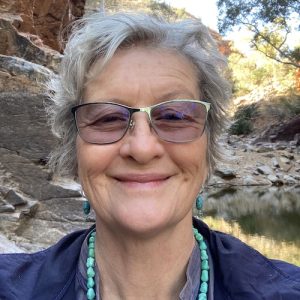
In this presentation, Genna Ward, Jessie Ward, and Cassandra Morrow discuss their experience with Job Development, focusing on Jessie’s role in after-hours school care.

Jessie’s work life has been greatly enhanced by what she learned through the Discovery Process and using a Customised Employment approach. She loves being involved in the workforce and is very keen to participate in the wider community. She appreciates having a strong team of mentors that back her up, including Cassandra (her Job Coach and Life Skills Development Mentor), as she takes her place in the world.
In this presentation, Jessie, her Mum and her Life Skills Development Mentor, Cassandra, discuss
- the Discovery process and how it helped Jessie to identify her interests and employment aspirations clearly
- how they reached out to people they knew to help them brainstorm employment ideas and approach potential workplaces
- how they created volunteering and employment opportunities using the Customised Employment approach
- the role of a Job Coach and how their understanding of the role has evolved
- the Job Development process: what worked, what didn’t, and how they overcame obstacles
- what was needed for Jessie to be successful in the workplace, including:
- clear expectations of what she will do
enough hours to have a meaningful working week - avoiding big noisy environments
- consistent co-workers
- supported study
- support to understand appropriate expectations.
- clear expectations of what she will do
Transcription
(Genna) This is us, I’m Genna, the mum.
(Jessie) I’m Jessie.
(Cassandra) And I’m Cassandra.
Jessie’s gonna share a bit about herself and her life, and then I’m going to talk about a sort of longer picture of our journey and all sort of many different pieces. And then Cassandra’s gonna speak mostly about the job development process that we did quite thoroughly for one particular role, and about how to be a job coach and what she’s learned about that.
(Jessie) So last year was my first year out of school. I ended up working in OOSH, or after-school care, for a couple of months, which was really interesting. And now I work in early childhood as an educator three times a week with 2-3-year-olds, which is very interesting. And I also do advocacy work with two organisations, which I started doing in year 12.
Currently I’m studying my Cert III in Early Childhood Education and Care at CIT, and I’m learning about rules and regulations, safety, what is good practice, how to entertain the kids, how to do bottles, how to feed them.
It’s all a lot; busy. It’s very busy but also just so exciting, and I’m very honoured to be able to work with all these amazing young people in getting to watch them grow up. Alongside work, last year I spent a few weeks house sitting with a friend to try living out of home without parents. And let me tell you, it was very interesting.
There are a lot of dishes that need to be cleaned repeatedly throughout the day, which I didn’t realise, because I usually don’t do them. Outside of that, I love drama and musicals, I’m learning how to play the drums, I’m in a band, I have a gorgeous dog that I love. And I love going for walks and being in the mountains.
My hopes and dreams for, I guess, the rest of my life, is to get a steady part-time job working with children in some aspect with a really positive team.
(Genna) Which, I’m gonna interrupt, is kind of what you have now, but your hope is for that to keep going (Jessie: Yeah.) and settle in and really that be a long-term thing. Would that be right?
(Jessie) Yeah, and uh, hopefully if all goes well, finish my Cert III next year. My advice to young people looking for jobs or looking for employment is do work experience. It might not be easy to get, and sometimes you might have to go to the business themselves and ask if you can do work experience there, but it was such a valuable thing for me because it helped me gain so much confidence in knowing that I could work and I could have a job.
But it also helped me realise that there were some jobs that I did not want to do; that I just didn’t click with, or there was something not right about it. So that really helped. And use your support. You have so much support around you. People who know you and love you and respect you, and not every job that you go into will know how to help you, but your support can help train them how to help you.
(Genna) Okay, I think that’s your bit for now. So, a little bit about me. I’m a clinical psychologist in private practice, and I work part-time, and I also work, I guess, doing family work, you know, supporting Jessie’s life behind the scenes, supporting my mother, who lives nearby.
Yeah, I have two children. We have Tulley, who’s 24, and Jessie, who’s 20. And my partner, my favourite co-conspirator here today, and we manage all of this together.
So what I’m gonna do first is take you on a little timeline journey over what’s been happening for the last few years. So in years nine, 10, and 11, Jessie did work experience in a few different places, and it was kind of a combination of a, you know, we hadn’t really done Discovery, making a guess what she might like: very social and verbal, maybe working with children.
But then gradually, you know, you would start to say, ‘Oh yeah, I wanna do that one. I don’t wanna do that one.’ And then in 2021, Jessie was in year 12. I’ll just tell you on these slides, the blue-colored circles represent study, the purple is the jobs that she has, and the green is the customised employment processes that we were utilising over this time. So in year 12, she got offered the chance to do a business apprenticeship, which is called an ASBA, Australian School-based Apprenticeship, in the front office of a primary school, and had that job over the year, and that involved doing a Cert II, it should be Cert II in business at that time as well.
And also at the beginning of that time is when we really went, oh, we want to do Customised Employment. We decided we, you know, wanted to jump on the train with that. And we got a job coach, and we did our Discovery process.
And then in 2022, that’s Jessie’s first year outside school, the job development process with OOSH finally got her into a workplace that was suitable in the second half of the year, and we had the job coach with that, Cassandra. And that’s what Cassandra’s mostly gonna talk about is that job development piece. How did we do that? And what did we learn about that? And also out of Discovery came advocacy work, this understanding that that’s important and meaningful to Jessie, and now that’s become an ongoing part of her work life.
And at the end of last year, the beginning of this year, there was a little bit of a change. There was an opportunity to go into a new role, and I’ll explain that as we unpack it more. So that’s a little timeline story. So you can kind of hold all, you know, where we are on this road we’re going like this on.
So the business apprenticeship in year 12 was offered through the school. It was a bit of a, a gift horse, if you like, and Jessie said, well, I’m not very keen on business. But, she got offered to do it in a primary school and that was attractive. And we thought, oh, admin skills are useful. So many jobs have admin skills in them.
And so we went ahead. And that involved working eight hours a week in two four-hour shifts, and she did a Cert II over that year with a particular trainer support person.
So how did that go? Well, while the workplace was aware about disability, we realised, coming up to when Jessie was starting work, that they really didn’t have anything to offer about what that meant, or how they were gonna support or adjust. And we kind of went, oh my god, it’s up to us. And that’s when we were like, okay, we’re gonna do it customised employment way.
I just actually, I just want to step out of this story for a moment and say something about when we are describing to you what we’ve done on this journey, it might all sound a bit kind of neat and, you know, orderly and, you know, with the right jargon a little bit maybe.
But actually, we were really just making it up as we went, and we were learning, you know, we got lots of input from Imagine More, you know, training, webinars, conferences, individual consultations. We’d say to one of them, can we talk to you? And when I say we, I really mean me and Cassandra. We are really kind of doing this, learning this together and, and Kim supporting us as well.
And so, don’t think it was all neat. We’d just sort of be like, you know, we were making it up and often going, “What do they mean by that?”, you know, “What do you think?” So, that’s the real… what it’s really like.
So we employed a job coach. We chose Cassandra because she’d been working with Jessie doing life support skills stuff and really knew how Jessie learnt and they got on really well. Also, Cassandra was a bit maturer, and we thought that the workplace that Jessie was in would respond to that, would kind of give her a bit more credit, and it would make it easier in the job coach role. And she was there half the time Jessie was at work.
And we were just learning the job coach role on the run. And we began, we’ve sort of been having regular meetings. We meet kind of weekly-ish since then. And it really is something that we kind of run together as a team. Neither of us could do it on our own. We are it.
And how did it work out? Well, it turned out there wasn’t enough work in the office, so we asked if they could add library work and some time with preschool, and they agreed to that, which was really great.
But it turned out that the bosses didn’t really have enough time to train Jessie and kind of invest. And so it was difficult. It was difficult for Jessie, and in a way, the fit wasn’t great, but we persisted, and Jessie was growing skills, and it certainly wasn’t a waste of time. And completing the Cert II in business was really good for confidence and really made a difference when then it came time to jump into a Cert III, it was like, oh yeah, I think I know about how this works. But we could say there that we knew that we hadn’t done the job development piece. It wasn’t really a customised job. So, in that year, 2021, we did the Discovery process. We’d been learning about it from Imagine More and so on.
And the way we did it was as a meeting, a one-off meeting where we invited about 15 people and got about 12 people and they were, um, a mixture of friends of Jessie’s, friends of the family, neighbours, support workers and different ages. And we had this meeting where we had an external facilitator, we were very lucky to have Jan, um, and Jessie, and she sat out the front and facilitated this meeting for a couple of hours where we talked about Jessie’s strengths and conditions for success and contributions.
And I also interviewed four teachers. Individually, some of them on the phone, I had a little kind of script what I wanted to ask them because they couldn’t come to the meeting, but they were really important informants. They were the teachers who really got Jessie and really worked well with her, and she thrived in their classes, and we wanted to know, what do you see about her that she does?
So, that was really helpful information, and this is the kind of picture of what we learned. I’m not gonna read through all of this. I’m gonna give you a little moment to read fast. All useful stuff to find out, but more what I’m gonna go to is what were the outcomes of doing Discovery for us.
And firstly, the clarity about what Jessie needs to have a fulfilling, rich, happy life. And, you know, we were coming to the end of year 12 and Jessie didn’t really have a sense of what she wanted to do, and we didn’t really know what anything was gonna happen.
And it’s a bit like, feels like going off a cliff, coming to the end of year 12 for parents sometimes. And this meeting just made it really clear. We came outta that meeting and had all this information and went, oh, we need to do this. She needs this in her life and that and that, and that was enormously helpful and kind of de-stressing about that transition, and it also created optimism and excitement. Jessie just had a real burst of confidence from that experience, and everybody who attended was kind of quite uplifted and were chatting in the next few days, going, “Wow, that was so good”, and think everybody should have one of these.
We got confidence to pursue the educator roles prior to that, when initially I’d organised work experience in year nine, it had been a kind of guess. But when we were in Discovery and all these different people from different angles could kind of say what they could see in Jessie, how she likes to guide and support children, we’re kind of like, okay, confident to go that way. And also this exciting brand new idea that was, like, left field was ‘Bing’, was in the middle of discovery meeting, her brother said, “Hey, look, Jessie always really likes talking about how different groups of people are treated and what’s fair and right and how the world should be a bit different about that and what’s not fair, I think she might like advocacy” and it was kind of like: “Oh my goodness”. It was just kind of so, right, and Jessie had a big response to that, and so I’m gonna share a little bit about this new part of her life, that came through Discovery.
So they’re small paid roles. They’ve mostly been online, and we found and employed a wonderful young woman who’s here to be Jessie’s advocacy and social change mentor. And for quite a few months, maybe, maybe 7-8 months, they were working together four hours a week. Now Jessie’s work life in Early Childhood Education is a bit more busy, so she’s had to back off on advocacy work, but doesn’t wanna stop completely. I think it’s a part of what’s, you know, what she wants to and needs to do.
And she’s worked for Inclusion Australia; that was a year-long project. Sexual Health and Family Planning in the ACT where she was on the youth council, and she got trained to review easy-read materials and gets given that work now. ‘And then would you look at this for us? Would you look at that?’
And then CYDA, Children and Youth with a Disability Australia, Jessie is on the youth council at the moment and has co-designed with that group of young people a national youth summit that happened in January.
And that’s what that picture’s of, and Jessie’s kind of in the middle at the back. So I thought I might ask Jessie to say a little bit about what that means to her to get to do that sort of work.
(Jessie) I’ll try and, like, wrap the, I’ll try and like put it kind of neatly, ’cause it’s just such a huge part of who I am and what I care about. I just love, I enjoy helping young people and giving them a voice when they so rarely get one, and hopefully making a bit of difference in the world for young people, whether they have a disability or not.
I love being on youth councils. It feels so good to be part of a group of young people who have the same goals and want to make things better for people, and it’s something that I hope to continue to do for the rest of my life.
(Genna) Now I’m going to talk about from the parent part of the team, about doing job development in OOSH, which in case you’ve forgotten is Outside School Hours care; after-school care for children.
So, after the business apprenticeship, we really wanted to get the fit right. And we chose OOSH because it’s with young children. There were short shifts, which would suit Jessie and hopefully other young people as coworkers, which is attractive to her. So Cassandra and I, meeting weekly and discussing possible workplaces and how to get into them, and how to, for her to kind of present herself. All the things Milton’s been talking about, us trying to get our heads around it. Sometimes we felt like we were really cricking our necks, trying to get our heads around it. And just persisting, persisting. Cassandra did the research, made the visits to places, and talked to employers.
I didn’t do any of that, but was quite involved behind the scenes and sometimes writing some of the documents that we’d use, or emails. The process began before Jessie finished school at the end of year 12, but it was unfortunately very slowed down by COVID. So early ‘22 primary schools were really under the pump, with the kids not being vaccinated much.
And that meant we had to be patient. But, it also gave us lots of time to learn, which wasn’t bad in a way, ’cause there was a lot to learn. And then once we found a workplace that we were, like, we think this fit’s good, and we were starting to negotiate the job, Kim and I helped Jessie apply for that job online.
So she did have to go through the usual employment processes, and Cassandra and I supported her with her first job interview, and that was all pretty straightforward. We don’t know whether the boss had said to them, ‘ We want her just, you know, but. ‘ Yeah, she won the job and then, when she started work, Cassandra and I still, you know, meeting, talking about each shift and what’s happening and what, you know, how we could work with the workplace and the coordinator to make it work.
And we also created a visual resume, which Milton’s covered why that’s a good idea and kind of what it is, but I do have a single page from Jessie’s visual resume to share with you, her visual resume that we made, you know, for her as a school leaver. I think it’s about five pages, and yeah—lovely active language and showing her in her competence and her abilities.
So, we were doing this job development process, then Jessie got a job in OOSH. And how did that actually work out? Well, it was a very positive start because it was a properly customised job. There was a really great relationship with the coordinator, and between Jessie and the coordinator, there was an understanding that we would need to think carefully about which parts Jessie did and where she would contribute best.
And that meant that Jessie was, you know, a little bit on a high with it and picking up new skills and confidence relatively quickly, and really enjoying feeling like she was part of the workplace. But unfortunately, as life unfolds, within not that long, the program that she was in changed quite significantly.
The coordinator left, and the staff member who’d been Jessie’s, that Jessie had been shadowing and kind of training Jessie, left, and the workplace had a really different tone and feel to it. It was being run in a bit of a different way, and in fact, it became, you know, perhaps a little bit of a challenging workplace for a range of staff.
And it meant that really what, as we’ve been talking about this and trying to work out what our journey’s been to tell. We realised at that point it wasn’t a customised job anymore. It was now a different workplace, really. It was same physically, but, but quite difficult for Jessie to do her best in that environment.
And then we also found there was a lack of flexibility around shift hours. For example, we were coming up to the school holidays and they would only accept 10-hour shifts, whereas we wonder whether the first coordinator would’ve said, yep, you can do shorter. That she had that, you know, ability to adjust.
So we made a decision that we wouldn’t keep going with that, and we would reapproach other employers that we had identified earlier in the job development process. But then the twists and turns of life. Jessie was saying to us that she wanted to study again, that she was missing school and wanted to, you know, be around other people learning. And so we were researching what she could do at CIT, and we found in the middle of that process, we found this great supported program that was entry into early childhood education called ELC.
And that offered a job in a workplace, which, because we knew so much about Jessie and what her conditions for success were, we could actually assess it pretty quickly and look around and go, “Oh, this looks like, you know, this is a good one,” with Jessie going, “uh-huh”. And she settled into that and has gone into the study at CIT. So that means we’ve left OOSH.
I’m gonna invite Jessie to talk about what she learned through doing the OOSH work in the two different situations. I’m gonna call it Situation 1, when it was a properly customised job with a good fit, but then the workplace changed, and we’ll call that Situation 2, and what her learnings were through that.
(Jessie) So I learned a lot from both situations, and I think both situations have helped me grow as a person a lot. But, from the first situation, I learnt how a good boss or leader will let you know what they want from you and have it be really clear, and especially how they treat the children around you.
I learned how to help with craft activities, which has proved to be very helpful in my new job. I learned how to scan the room and keep an eye on the kids and make sure they weren’t doing anything too dangerous or crazy, and I got a lot more used to talking to kids, which again has proved very helpful in my new job.
In the 2nd Situation, and I think this especially has helped me a lot, I learnt how to persist with work even when it’s hard because in whatever job you have, there’ll be parts of it that you don’t really like or that you find a bit hard, but you gotta be able to persist through those and keep doing the job, even if it’s a bit hard or if it’s a little bit of a struggle at times. And how to tell when a workplace isn’t right for you or if it isn’t a good fit.
(Genna) I just wanna say something about from my point of view at this time, what I see as big benefits of doing really thorough job development and that is that when there is actually a good fit with a workplace and the coworkers, you get a lot of confidence. And Jessie comes home happy and picks up skills quickly, and that really feels like it’s kind of a bankable thing, that then you know that you can work and do stuff and have a place, it’s like it’s gold when you get that. That’s really great.
And the other thing is that we’ve noticed that, because we did such thorough research and we’re reaching out to a number of possible employers, when one stopped working, haha, we’ve got all these contacts and knowledge about where we can go next. So we are not kind of left to start at the beginning.
So, where are we going from here? Jessie’s continuing with early childhood educator work and study. And if that isn’t working for some reason, we’re going to do what Milton calls the ‘Customised Plan for Employment meeting’. And in my head, I call it the ‘Employment Brains Trust meeting’. So this is, you know, real life. It’s the local adaptations, we do it our own way, and to me that’s, yeah, it’s exactly what Milton talked about. And I personally gain a lot of comfort and reassurance to know that we can do that at any point that we need, and that it will be fruitful. And the other thing is, we can go back to OOSH work. You know, we’ll see what happens.
So my advice to families is, you know, yeah, go for it and do it your own way and don’t be too precious or worry about getting it wrong. And invest in your job coach developer. Get them, you know, training in Social Role Valorisation, training in customised employment. Learn alongside them. Yeah.
And I want to just say one last little thing, which is that, to me, doing customised employment as a family-led thing is very, very rewarding. I don’t have any regrets. I’m gonna keep going but just to acknowledge, it’s very demanding on families, and as Jenny Crosbie pointed out, we don’t have a workforce of trained skills, you know, customised employment people that we can bring in to to help us do this, and that not all families have the resources, the time, the skills, even the confidence to do this kind of work.
And so my deep wish is that this work, this idea, takes off, that we get the workforce to support this so that more families can have it, and the families that do have it don’t have to work quite as hard to figure it all out. Thank you for listening. And now I’m gonna hand over to Cassandra
(Cassandra) Just in terms of my background, ’cause think that’s relevant for how, you know, we came to the job. So I’ve been working with Jessie as a life coach since 2017 and then as her job coach and job developer since 2021. So I know her well. She knows me well. We’ve got quite a language together that we could draw on, and that’s really made a difference to the work, I think.
Alongside this work, I run my own practice as a Feldenkrais teacher for, I’ve been doing that for over 20 years in Canberra. And prior to that, I worked in the early childhood field. So the linking thread in those areas for me is the opportunity to bring out the best in people and for people to really reach their full potential.
So I’m going to, you know, that Jessie was working with OOSH, so I’m going to sort of fill in some of the parts that wasn’t there that Genna was talking about as to how we actually came across that. So, you know that she did the Discovery process and the first step in my job developer role was to work closely with Jessie, with Kim, and Genna, and have lots and lots of meetings, and I think the regularity of those really helped to find out what was a suitable workplace job role for Jessie.
And as you know, we chose OOSH because that had a lot of the conditions of success for Jessie: That she would be working with young children, the shifts were shorter, and that she would be working with other young people as coworkers. We were particularly looking for something close to home with the idea that Jessie would be able to walk to work, not too big a program, so not too many educators, and also not too many children; that can be overwhelming. So we made a list of 10 possible primary schools in our area, and we asked friends and neighbours and others about what they knew about that school. You know, what sort of reputation it had. Then the next part was to research and start contacting them.
So, yay COVID. It had such an impact, we… it meant we couldn’t go to schools; basically, all of this had to be done on the phone, and, wow, cold calling is really hard. Not my favourite part of any job. But we persisted, and I persisted with a lot of encouragement from Kim and Genna. So, it did slow the process down.
What we thought would be only taking, you know, say two or three weeks or a month, actually spread way out into months. People running the programs were so stretched and, you know, their priorities were elsewhere, really, it made it very hard to stay in touch with them, so we had to keep persisting in doing that.
One program that we were really keen to go with, they were a parent-run group. The OOSH program was run by a parent group, but due to COVID, they were really clear they weren’t gonna have any visitors. So move on.
Next choice. We chose one very close to home that was small, and the coordinator of the program was very keen to have Jessie, but head office was a nationwide provider, proved almost impossible to get to. We tried phone, we tried email, and after five months of pursuing it, we had to let it go. Hard to let something like that go when it was so good; potentially so good.
So, next choice was another one close to home, but a much bigger program, about 80 children, and in any one day, the coordinator was very enthusiastic, so we went with that.
At this stage, it was a very general way of approaching the workplace because we weren’t saying, you know, we’re gonna come, we would like to work actually in you. We just would really work with you. We were just wanting to find out, you know, more about the centres, make that decision whether we’d pursue it.
My approach was; I introduced myself and my role by saying, “Hi, I am working for two families that have young children who we think have something to offer OOSH, I’d like to find out more about your program and see if it would be a place they could add value”. So, that’s a very general way of doing it, but we weren’t looking at specific jobs at this stage.
So then we had a set of questions, and I think we had something like 14 questions, but kind of brought it into the conversation. They were things like the size of the program, how you train your educators, if there’s changes how do you communicate that with them, what are the qualifications needed, lengths of the shifts, routine of the afternoon.
So, really finding out lots of information as much as we could over the phone without eyeballing a centre, a program, and finally asking, “Would it be possible to visit the program?” And that was the hard one to get into, understandably. So then, I did get to visit a workplace. So, as I said, we had to go with this, you know, this third option that we are on.
And I visited that program, to meet with the coordinator. I’d set up that time, and she was fantastically open to me coming in. It was still COVID, but she was, she was keen for that to happen, and it was really a way to get to talk with her. I, I met with her, I think, two or three times before I went there with Jessie, and it was really about finding out, you know.
OOSH programs are run very differently. They’re a fairly chaotic, full-on, fantastic energy place to work. But there are definitely some that have a different philosophy, a different mood, you know, seeing if the children are happy, have a lot to, you know, have enough to be doing, enjoying themselves, the layout of the room, that kind of thing.
So it was great to go and visit a centre and see that. In conversation with the coordinator, I shared Jessie’s visual resume, which Genna’s referred to, and Milton as well. And this gave the coordinator a sense of who Jessie was and her capabilities before she met Jessie in person. Also, when I was there, I was looking to see were there some quieter places in the room because we thought Jessie might need to do that and benefit from being in a quieter place.
What was the level of noise and the expected chaos factor like? Was the program well organised, which this one really was. It was very impressive in that way. And these are all considerations for conditions for Jessie’s success. And that’s when I negotiated specific tasks, having known what the tasks were, having talked to the coordinator and doing the research that we’d done about how different centres are, different programs are run.
We decided that it would be good for Jessie to stay in the hall of the program rather than being outdoors. I’ll talk, you know, more about that shortly as to why, why we chose that. And the particular activity that she was to be involved in setting up that, that, that time was invaluable of taking time to be in the program, seeing it being run, starting to build right from the beginning, that relationship with the coordinator, you know, to see if it was gonna be a suitable place for Jessie and helping them to know that there might be some adjustments that we needed to make to support Jessie through that role.
So, winning the job: The coordinator said that Jessie would have to go through the usual application and interview process, so we used scripts for interview questions and went through those. And then Kim and Genna supported Jessie with both the application and the interview.
Once she was successful with that, she completed an online orientation, and we were able to go ahead with a volunteer shift because we’d already negotiated some conditions for success for, for Jessie. One of the things that we said was that there would be a shorter shift ’cause it’s quite a long shift, and so that was going to be a shorter one in the beginning.
And also for Jessie to stay indoors and supervise particular activity, rather than trying to keep everything looking around in the room. So, we chose the craft activity and that was for several reasons. The educator that Jessie was shadowing usually supervised the craft activities. Another reason was that Jessie has a great interest in craft, so it led into her interest.
And another one because it was more possible for Jessie to engage with children when they’re sitting down doing craft. You can be sitting alongside them and really building those relationships and just having conversations with them that’s, you know, different if they’re outdoors and throwing balls around.
Curve balls get thrown at you on the first day, which we didn’t discuss or negotiate, was that Jessie was gonna be cutting up some fruit, was on really high benches with massive knives. Even I was scared – the size of those knives – and that was, you know, not gonna be something that was easy for Jessie to do.
So, you know, an example of adapting a task was that we asked for a smaller knife, and it, you know, took a little while, but we did get a smaller knife, and that made a difference, things like that. Adapting the tasks, having a smaller knife made a difference.
But also, you know, Jessie being at the craft table and therefore not having to take in the whole room and watch what was going on, even though she was developing the skill of looking round the room. That just made a difference.
She did do some work outside, you know, within time, so we were aiming for 2-3 shifts a week with the OOSH program, but for a variety of reasons, we were only able to do 12 shifts over a five-month period. And one reason for that was that we were trying to have Jessie in attendance when particular staff were working, and another reason was that, you know, for example, Jessie might be allocated a shift, but then the attendance was low in the program on that day, so they didn’t need the casual workers. So after Jessie started working, my role changed from being job developer to job coach, and this was now focusing on the workplace and setting up Jessie to have success in her work role.
There was discussions about how the workplace trains their educators and what may need adjusting. Something that was really helpful, there was some visual diagrams of how to set the hall up, so we walked into a blank hall that had been used, you know, during the day for the schoolchildren, and actually having a visual map of where the book corner would go, where the craft activity would go, et cetera, that made a big difference. Another part of the role was continuing those relationships, continuing to build those relationships with the workplace, and working with building those with people that Jessie would work with directly.
Another part is understanding and assessing what tasks Jessie could do already that didn’t need any adjusting; she could just head right off and do them. But then, of course, there were tasks that would need extra training or some extra support or practice. And these ones were often ones that Jessie and I did together. They were things like creating prompt sheets.
Part of the role, too, is staying in the background. You’re in a bit of a no man’s land when you start doing this. And you wanna be there to know what conversations are going on, what needs to be supported, but you also, you know, need to be in the background. And part of the role is fading, disappearing, eventually not being there. Um, and I think that’s something I’ve really, I can hear Milton saying it, to set that right up from the beginning. And I know that now that ’cause I think there’s an expectation often that you’ll stay there doing that role, and staff need to know that, no, you are, you are there doing this as an interim.
My role as a job coach; there’s definitely modifications and breakdowns of tasks. So, using a smaller knife was an example of that for cutting up fruit. In reading stories to children, we had a prompt sheet and it had, you know, step by step of how you read a book, so the children can see the page, questions to ask, maybe different voices to change for the different characters.
When you get clear instructions of a skill to be developed from a supervisor, that is gold. And one of the things that we have found is that when Jessie’s working in her current job in childcare, that the supervisor gave really clear instruction about voice modulation and using an adult voice when working with young children.
I think it’s pretty common that we can talk in a high-pitched voice when we are talking with children and babies. So, Jessie and I talked about that. She said to me, “Oh, you mean you want me to come down an octave?” I went, of course, she’s a singer. She knows more about this than I do. I said, “Yeah, how about a baritone?” She said, “I dunno if I can do that, but I can at least bring it down.”
So we now practice that when we are walking the dog, when we’re in the car, and, you know, we’re working on it, it’s going well, and even walking into the childcare room using an adult voice that we make sure we have a conversation when we walk in.
Capturing the learning with photos and videos is great to do. A little bit harder in a childcare centre, but that can be worked around.
So I will finish with our learnings. It was a fabulous preparation to spend that time talking to the coordinator of the program. It seemed to go really slowly, but in hindsight, I can hear, you know, Genna’s and Kim’s and my conversations about, it’s okay if we go slowly, even though we were really impatient and wanted to get it done, and I can hear it, Imagine More telling us the same thing. So that paid off in spades. It was really fantastic.
However, you know, as Genna said, the role there really changed when both the person she was shadowing and the coordinator moved on, it became a different centre, and when they left it was, um, there was no longer, you know, the, what we’d set up in terms of the adjustments were no longer there, and no one was familiar with that. So it’s like we’d started out at square one again, and the new coordinator was preoccupied with her job, so understandably, she just didn’t have the time to take that on with Jessie at that time. So it meant there was no longer supports and adjustments. It was no longer a customised job.
And finally, my advice to families is to think outside the box. I know you’re all doing that anyway, but to do that more, to broaden your search for a job coach, a job developer. My background in early childhood education and as an allied health worker is not immediately an obvious area to get a job coach. But I think anything it brought in some different aspects, which we hadn’t expected. Thank you.
Meet Genna Ward
Genna works as a psychologist in private practice. She is concerned about the state of the world and has an interest in eco-psychology. She also enjoys being in the bush and meditating.
Along with her partner, Kim, Genna is very committed to ensuring her daughter Jessie has a rich, full life and is well-connected in the community. Genna has been learning about Customised Employment for a few years and has been busy implementing the model. With Genna and Kim self-managing her NDIS plan, Jessie has received support to do an apprenticeship, work in childcare, and become involved in advocacy. Jessie is supported by a Job Coach and Life Skills Development Mentor, Cassandra.
Genna is glad to be able to share her story and give back to the community that has helped her family so much.
Meet Cassandra Morrow
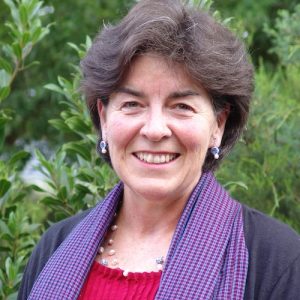
Cassandra is a self-employed Job Mentor/Life Skills Developer and has worked in this role with Jessie and Genna since 2017. She has been a Feldenkrais teacher for over 20 years and has her own private practice. Before that, she worked in the early childhood field. The linking thread has been her passion for individual development and dignity and seeing people live their best lives.
When she’s not working, Cassandra enjoys being in the bush, bird watching and the chance to be quiet with a good book.

Meet Cassandra Morrow