Helen Neale discusses the process of establishing a micro enterprise and why is can be a wonderful career option.
Meet Helen Neale
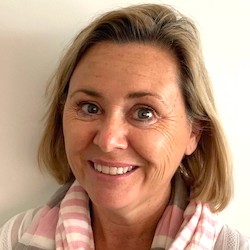
Helen works for Community Living Project (CLP) in SA as the Project Lead of a 4-year ILC Grant project called “Discover Micro Enterprise- Exploring Possibilities.”
She is also mum to Tom, owner of Ground Control by Major Tom. Tom and Helen spoke about his successful small business at our 2021 Get That Good Life! Conference.
Helen is passionate about inspiring people with disability to have high expectations about careers and work.
Discovering Micro Enterprise: Exploring possibilities
Helen will speak about establishing a Micro Enterprise, why it can be a wonderful career option, and share stories about Enterprise Owners and their businesses. She will explain
- What a Micro Enterprise is and some examples of local Micro Enterprises
- The benefits of considering Micro Enterprises
- The principles which guide the CLP’s Micro Enterprise project in South Australia
- Tips for using NDIS funding to set up a Micro Enterprise
- How to establish a Micro Enterprise
Transcription
Helen Neale
Thank you, Imagine More, for giving me this opportunity to come today.
I’m not sure about you, but my brain is bursting with ideas, and my cup is full from a lot of the stories that have been shared, and I thank those who have spoken before for their generosity in sharing their stories. I’ve certainly got more than one idea to take away from today. So let’s hope I can add a few more.
But like Milton also said, speaking on day two means that last night, I also rethought my presentation. So, I wanted to make sure that I didn’t just cover a lot of the same ground, although I think that also shows that there’s a very constant theme coming through. So I’m going to wing it a little bit.
So, a bit about me. I work for Community Living Project, and I’m the Project Lead of what is now a four-year grant, an ILC grant, which is called Discover Micro Enterprise: Exploring Possibilities. We call it the grant that keeps on giving. It was a two-year grant; it became a two and a half-year grant; it’s now a four-year grant, which is really fantastic because my role is to get out and about within South Australia and metro and regional South Australia, as well as when there’s opportunities like this nationally to talk about micro enterprise as a career option for people with disability.
So, in that role, I get out and I talk to people and families. I go to spaces and talk to providers, people, educators, LACs, planners, and I talk to community groups as well, sending the message that people with disability have great capacity to work and to offer and hoping to send a message that we can all raise our expectations.
So in that role, I get out and I do lots of different information sessions, and we realised very early on, the best way to tell the story is by individuals telling their own story. So, I have worked with seven individual enterprise owners to help them build their skills to tell their own story.
And after today, I’m sure Imagine More will be sending you some information, and one of the links that you’ll get will be a page of ten videos that we have made during the few years, with links attached. And I strongly encourage you in your own time to have a look at all of the stories, because everybody is individual, every story is unique, and there’s some powerful stories there.
Last year, we also added to the stories of the enterprise owners and added a few more. One, which actually describes the process of the consultant in the Micro Enterprise Project really well. That’s a great one to look at.
And another is aimed towards school leavers, so it’s a great one if you’ve got someone at school or know somebody who’s heading towards the end of their school time. And that’s a great one to share with educators and families, about how a young man called Bailey started his process of Discovery through year 12 with the support of the school. And by the time he left school, he was well on the way to crafting an enterprise.
And I know how important that can be too, because having adult children now, I know that in year 12 they’re constantly asked, “What are you going to do?” You know, this constant question: “Oh, you’re finishing school. What are you going to do? What are you going to do?” And in my son’s case, he was getting very very anxious in the early days when people were constantly asking that. I used to say to him, “Oh, just tell them you’re taking a gap year.”
But when we worked out that actually a micro enterprise was going to be where his pathway would go, he could turn around and say to people, “I’m going to own my own business.” And straight away, you know, we were talking about perceptions before and perceived ability, and straight away people would respond differently to him because of that. But it also really quietened his anxiety about leaving school and gave him a clear pathway. So, as I said, I encourage you to look at those links afterwards.
But before I go too much further, I think the best thing is if I show you a small introduction video. It’s a compilation, a little bit of some of the enterprise owners I’m going to share stories about. And they say it best.
Video
[Intro text: When we meet a person, one of the first things we ask is, “So, what do you do?” Our aim is for everyone to have a great answer to that question.]
Narrator
The Micro Enterprise Project supports people with significant disabilities to pursue their individual career through establishing their own microenterprise. Community Living Project helps people to discover what enterprise focus will match their interests and talents.
Ben
My personal favourite would actually be Crescent Tune. It’s really, really beautiful. The colour, the vibrance, it’s actually quite beautiful in a way. It matches with blue and purple. How gorgeous does blue and purple look good?
Fleur
I love to do flowers. My business is called Flowers by Fleur.
Fiona
This one down here?
Jak
That’s just my bowl of tumbled stones.
Fiona
Tumbled stones. Yep? So it’s a great part of Jak’s work doing tumbled stones. So what does it mean to have a business? So, seeing people wearing your jewellery?
Jak
Yes.
Fiona
Yeah, earning a bit of money?
Jak
Yep.
Fiona
Working with other people?
Jak
Yep.
Wendy
And so in this slide, there’s a whole bunch of pictures of Joc delivering to her customers. I kind of reckon this might be a favourite bit, Traci.
And so the process of Joc’s business, how this works. Perhaps, Traci, you could ask Joc what she’s doing in these photos.
[Traci signs a question in Auslan]
[Jocelyn signs an answer in Auslan]
Wendy
Peeling pears.
Adrian
And with Something For Stella, I’m gaining the confidence to visit people’s houses to deliver their dog treats. I’m willing to go in shopping centres and shops on my own. I have baking and delivery schedules. My week is structured, and I’m accountable for my business and my life.
[End text: CLP (Community Living Project) provides opportunities for people to establish their own small business through the Micro Enterprise Project. Thanks to the presenters for sharing their achievements.]
Helen Neale
To be quite clear, what is a micro enterprise? A micro enterprise is a form of customised employment, which is crafted around a person’s personal interests, gifts and talents, and available resources to create a small business of a quality product or service. And it’s really important that we focus on that word ‘quality’ as well.
Micro enterprise is, none of this is tokenism. This is not about getting somebody to, you know, scribble on a card and sell it because someone’s going to feel sorry for them. This is about creating a product or service that can stand by itself in a common market.
I just need to give you a bit of history. About 11 years ago, my manager Jane Barrett was at a function in South Australia, and she was standing with a couple of pretty senior people in the disability area and a couple of politicians, and they were lamenting about the lack of good and meaningful work options for people with significant disability.
And because it was sort of later in the night, and I think that had a few drinks at that stage, one of the politicians said, “Well, you know, what about if I put some money forward to your organisation, what could you come up with?” And I’m probably selling that story a bit short, but that’s the snapshot.
And basically Jane was tasked with to go away for six months and to create something that could be another option for people; in fact, probably one of the only options for people with significant disability at the time. And so was created the Micro Enterprise Project, which is still being operated and supporting people in South Australia by Community Living Project. And over those 10 years, there’s been more than 140 people who have been supported to create their own unique micro enterprise. And these are just a few. Some of these people, when I look at the slide, are actually some of the original micro enterprise owners.
And when I say significant disability, we are talking about people who are really deemed not suitable for anything that was being offered, including day options programs. Now that might have been because of their health conditions, their complex needs, or ‘behaviours’, as often was referred to, so people who weren’t seen as able to work or able to be educated and learn. So, there’s a range and as you can see, everybody has a very different enterprise because everybody is different.
A nice little snapshot there of some of those stories, and I will throughout the presentation use some examples to highlight what I’m trying to explain.
And this was the purpose of the Micro Enterprise Project: to support people with significant disability to pursue their individual careers by inspiring the possibility and assisting them to establish their own micro enterprise. And the why. You know why? Why an micro enterprise? Because what we found then and still is that we need to increase opportunities for people to live and engage in meaningful work.
They say when you do activities, you fill time, but when you fill meaningful roles, time takes care of itself. So a lot of people were just time-filling, doing time-filling activities, and there was such a loss of potential and what a waste of capacity that was happening and still continues to happen.
The Micro Enterprise Project was founded based on the principles and frameworks underpinned by SRV (Social Role Valorisation). So I was glad that Milton showed some of the snapshots and brief examples of SRV because it is what underpinned every decision that we encourage people to make. These are the five framework and principles that the MEP was based on.
And I think the best way to really explain some of these, I mean, they sound obvious, but it’s to give some examples. So the five framework principles are individuality, relationships, valued roles, competencies, and social capital.
Everyone with a micro enterprise, it’s a very individual process, and I don’t think there’s anything more individual than deciding what you’re going to do for work, where you’re going to do it, when you’re going to do it, and who you’re going to do it with. So by working one person at a time, I think this is the epitome of choice and control.
So we know that people have different needs. There was an example yesterday, I think it was mentioned that Milly is best in the morning. So is Michael, who has Greens To You; he’s an early riser. So by having a business based at his home, he gets up and he starts work when he’s ready to. Other people because of their health needs: There’s a lady I know who had her major seizure activity in the afternoon, so again, her work was centred around the morning. So she worked four mornings, and it was less likely that a seizure activity would interfere with her workday. So huge individuality there. And this will flow through.
As far as relationships: when you’re a business owner, you sell, but you buy as well, you often need to purchase things for your product. And so by staying local and building up relationships with suppliers, that is a strong part of a micro enterprise as well.
Valued roles. What you do, you know, like it said in the video, “What do you do?” That is really one of the first things people ask when you meet someone new, “What do you do?” Being able to say, “I have my own business”, you are immediately perceived as capable. If you can have a business, you must be able to do other things too. So we see that straight away, and good things flow on from that when you’re perceived as capable.
Having the opportunity to pursue a unique talent or gift is something that’s often not available to a lot of people with disabilities. So, by being able to pursue that and giving the opportunity to contribute, is so powerful. When I do longer sessions and we really start off with often, what is the value of work, the number one thing that people give me the message of, apart from income, is contribution. The feeling of contributing is a really powerful one, and that’s often denied to people with disability.
And the social capital aspect of this is hard to sometimes measure, but it’s really there. I had an example recently, in my own life. So as we’ve mentioned, Tom has Ground Control by Major Tom, and he did some local distribution of flyers. And a neighbour who we didn’t know at the time became a customer. And through that work role, they built a relationship because every time he went on a regular basis, he noticed that she was struggling with some things. So apart from mowing her lawn, he might bring her bins in and, you know, this lovely organic sort of relationship started to happen.
And then last year, it was quite late one night we got a knock on the door, and it was unusual because it was really quite late, and it was our neighbour’s daughter who was next door and quite distressed. And she said, “Oh, mum’s had a fall. There’s something, you know, serious going on”. And we went to get up to go and help, and she said, “Oh no, she wants Tom”. And I thought if he hadn’t had that opportunity to get to know her through a work role, build a relationship, and show how capable he was, she might not have done that. And that to me was a really powerful thing. She knew he was strong, she trusted him, so, it’s the flow-on effect sometimes of an enterprise and owning a business that is hard to measure.
Adrian, the man that was on the video who has Something For Stella, lives in the southeast of South Australia. Adrian was a man with crippling anxiety and hadn’t left his home for four years. And during that time, his mother had stayed home with him. He had put on an enormous amount of weight, and he was living a pretty miserable life, and he came along to a session begrudgingly. But he says within the first hour of that day, he realised this could be something for him.
And, you know, fast forward, he started a micro enterprise that was really perfect for Adrian. He has a love of dogs and a love of baking, and he had a dog baking business. And through that motivation of combining his interests and his skills, he built the confidence to start going out with his PA to do regular deliveries of his business, his product.
Through that, his mother was able to go back to work. And somebody mentioned that yesterday when the minister was here, that you know, that’s one of the big returns of people with disability having meaningful work, is that it actually frees up families often to continue their work life.
So she went back to work; he lost 70 kilos in the process, and he’s now gained the confidence to go and study. So, the micro enterprise for him was a huge opening of opportunities to build his confidence again, and to go on to study.
Examples of how these five principles are very important in making these good things happen in life. Jak is a man; he was also on the video with his mum, Fiona, and that’s a nice presentation to watch because Fiona is a powerful advocate for Jak. Society and organisations were determined to make Jak have a life of segregation and other, but she had a very clear vision for Jak and she’s held strong to that.
She tells the story of what the microenterprise for Jak has meant to their family as well. But with Jak, he has always had a love of gems and minerals, so he, it was given that his work would involve that passion. And with Jak’s business, he’s started off tumbling stones, then making jewellery from that. He’s now faceting and which is quite a developed skill, and you know, has taken time, but he’s had this opportunity for new growth and for build competencies along the way. He’s also a member of his gem club, and every year he goes to the national conference, and those same people turn up every year, so he has these great relationships of people with a common interest. And this year, he was a prize winner at the Jamboree. So again, you know, involving those highly valued roles. Looking at competencies and relationships is very, very important.
Community Living Project have the Micro Enterprise Project, where a consultant works with the person and family, and there’s also a PA or assistant and an Enterprise Management Group. That’s the model and the framework they use. But we’re totally aware that other people living in other parts of Australia don’t necessarily have an organisation or don’t want to use an organisation. We’ve seen so many great examples, and we’ll have more this afternoon of families doing this work anyway, so I thought I’d just give some practical little tips about some of those things to consider if you are walking away from here today, thinking maybe a micro enterprise could be a good option for my loved one.
So these are some of those initial thoughts to consider, and this is pretty well Discovery, I mean, only parts of it, I must say, early parts of Discovery. And I think the message has been very clear about Discovery too, is don’t rush it.
People will sometimes say, “Oh, they love dogs, oh, let’s do a dog walking business”. Or you know, “This person likes to bake or do cupcakes”. Genuine Discovery takes time. It takes time by spending time with people, with the person of course, looking around their surroundings, seeing them interacting with people that they know. So don’t rush Discovery. Do that real deep dive. And if a consultant was working with someone in the MEP, that would take three to six months of maybe two to three hours a week, over a long period of time to really get a good idea.
Occasionally, someone will come and they already know, or they might already have a product or service. And this was the case with a man called Jeff, who came to us about a year ago, too. And he had, for seven years, been growing plants hydroponically. Now he was the expert in hydroponics. He didn’t need a PA or an assistant to help him with the product. What he needed his assistant for was what to do with this product. He didn’t know how to market it, and sell it. So people can be involved and brought in a micro enterprise for specific parts of a role too.
So some of these things, what are the experience of the person’s daytime that needs to change? As we said, a lot of people with disability spend their weeks filling in time, and often there’s reluctance and resistance to change that. It’s like, “Oh, no, I can’t work on a Tuesday because I have… my support worker comes and we go and have a coffee. Or we might go and look at some shops”. Or they might say, “Oh no, I have a lot of health medical appointments”, but some of those things can be worked around. They can change, they can be condensed. A lot of people work full-time and they have their coffee with their friends on a weekend. So, there can be some negotiation and some help.
But there are some things that you don’t want to change. Someone might have a highly valued role. I’m thinking of Fleur. She was a member of a patchworking group that helped… that was on a Wednesday. Now, there was no way we would want to encourage her to lose that relationship. So some things shouldn’t be moved if they’re actually having a meaningful role.
And of course this one keeps coming up, doesn’t it? What are the gifts, talents, passions, and interests of the person? Sadly, so often, families and people themselves struggle to answer that initially because they’ve had such a lot of deficit language around them. So, they’ve only heard that the things they can’t do; they’ve forgotten their interests, or they might not have had the opportunities to explore new interests. So again, taking time, but being the detective. I loved it. And I’m not sure who said it yesterday, how a parent was often in disguise as an FBI agent. I thought that is so perfect. And Jan said too, we are always on the lookout for good people. It sparks an interest. So take the time to really look for that.
And of course, talk to the people who know them best. Who’s in the person’s or the family’s personal networks? Haven’t we seen great examples of that? You know, pull on those contacts, share the story. As a parent, one of the things I found hardest a while ago, not now, was asking for help. I didn’t want to bother people. What I learned through all of this is that people want to help. And people want to help people who want to work. There is so much support when people want to work, I’ve personally found. So use those networks and look for those connections.
What personal resources does the person have? So this is a really, this is an important thing to consider. Everybody needs a place and a space to operate an enterprise. Sometimes people have a spare room that’s ready or part of a veranda or a shed that’s ready to go, but some people don’t. And occasionally, you know, there’ll be people who are living in a shared situation, and there’s real restrictions about that.
So look beyond, but look for places that really send strong messages of good image. For example, we’ve heard of a lady recently who wanted to start a painting micro enterprise, she’s a very clever artist and she didn’t have anywhere at home. One of the consultants in the country was helping her to look for a place. And the church initially, there was a local church, said, “Oh look, we’ve got a little room at the back. You know, she could use that”. But what sort of message would it send if this artist was tucked away at the back of a church that not many people at that time were going to? So, how could we look for something that’s sending a stronger message?
And this is all the SRV thinking coming under, underpinning this. So a bit more work was done. I mean, it was tempting to take that first opportunity because often with like, well look, grab what we can get. But time was taken, and in fact, another place was found not much longer after this, the church, in the main street, in the cultural centre where other artists were working. Now, what a better image that was for this person, rather than being tucked away out of sight, working with, not with, in her own separate space, but in a very better location.
There’s also startup funds is something people often ask us, and we’ve seen examples of everything from someone having $50 to buy 10, you know, $5 IKEA vouchers, to having a refrigerated car bought so, and everything in between, but that needs to be taken into account. There’s no point starting with something that there aren’t the funds for, initially at least. But there are ways to look for funds as well, and I will touch on that in a minute, but look at those sorts of things. Look at the resources, the people, what equipment is needed.
With equipment again, what I found is a lot of service clubs are very keen often to support people who want to work. So there are ways of approaching them to see if they’d like to be part of that process. And it’s a great thing to do, but not through the eyes of charity. I think make sure that if you’re receiving something, there is recognition for what is being received, and also things like reporting back to the organisation so they can actually see what’s happened to their money as well.
The stamina is a big one, and this is something that changes. Most people start with a micro enterprise, the people that we’ve worked with at least, start around 10 to 15 hours a week. But often their work hardiness, like for all of us, will build and they may increase that. Emily, who has Shred Em, was most insistent recently that she worked more than two days a week. And so she’s now working three days a week. But, look at people’s stamina as well. What can they manage? Are they better for short bursts of work or a couple of long days? And those, as I said, the initial ideas about what’s floating around for an enterprise. But spend time and don’t potentially grab the first one.
And funding, you know, this is the reality; a lot of people will use their funding. We do support people without NDIS funding and encourage them to look at other ways to get funding or to use their existing funding that they’ve got. And I’ll touch on that as well. Sounds like I’m coming back to a lot, doesn’t it?
So the scope of the service, again, our advice would be to start small. Start with something, and this is based on the competencies idea, start with something that the person can do really well or can quickly build the skills to do really well. It’s really tempting to take all opportunities.
Under this, the MEP model, we have something called an Enterprise Management Group, and we invite people to come onto that to give ideas and to share the process, really. And often you’ll get people who will come in who are business, small business people, and they’re used to taking every opportunity, but getting bigger quickly is most often not the best way. So look at the scope. Be clear on the intent of the business. With Ground Control, they are lawn specialists. They often get asked to do hedging and rose pruning; that’s not their area. It’s tempting at times to think, “Oh, could they learn it?” But that’s not the area. So be really specific and clear about what that is so that you can operate a product or service at a high standard.
Logo and image: When we had that slide up about everybody’s, the businesses, everybody has a name, they have a brand, a logo, uniform, everything that businesses have. We would really caution, thoug,h against childlike imagery and branding. We don’t wanna send the message that this is an inferior product. This should stand alone in the market and in all of the marketing and advertising that you’d see with anyone that CLP works with, there’s no reference to disability. It’s irrelevant to their business. They are the owners of an enterprise where they operate at a high quality standard.
So avoid… and also, yeah, as we know, language is so powerful. So be very very mindful on the names that you select or encourage the person you’re working with to choose for their business. It should be related. When Fleur first started her business, she had a business of small, elegant vases that would sit on tabletops and reception areas. And she would go in on a Monday and bring her vases, the flowers, put them there and a week later she’d come back and change them over.
She was born with a beautiful name, Fleur: It means flowers, and initially it was gonna be called ‘Fleur’s Flowers’. But you know, again, spending a bit of time involving some people in that process, it changed to ‘Flowers by Fleur’. Just that little bit more elegant, a little bit more adult. So think about the names. I mean, some of you laugh with ‘Ground Control by Major Tom’. It always gets a comment. So, in fact, we had someone a little while ago who’s had the flyer on their fridge for two years, ’cause they liked the name so much, and then they moved and they got a lawn and they went, “I can finally use you!” So, it really does work.
But branding imagery, what you are wearing, workwear is really important. What is that culturally valued analogue of someone who mows a lawn? What do they wear? How do they look? All these considerations are very important.
And, who are the potential customers? Again, based on the relationships and the need for community participation, we strongly recommend people stay within a local area. Now, you’ll need to define what local means to you, but having customers that you can service and meet and see regularly is really a very important strategy. You can develop that relationship.
It’s also a level of safeguard. So with Michael, he delivers his products to his customers on Tuesdays and Fridays. If Michael doesn’t turn up with his basket of green vegetables, someone actually asks, you know, “Where’s Michael?” They might look. So I think, you know, there’s these inbuilt layers. Everything has more than one purpose.
And the caution with the market stall is mainly because some businesses are suited for markets, and I get that. And if you are a regular market store holder, you can build up a regular relationship with customers. But often markets are held on weekends. Therefore, that might affect, if they’re being supported, the rate of pay; that’s often higher on a weekend. They’re often long hours that can put a lot of stress on people who are working on those stalls. And there’s often a real turnover.
Recruiting a personal assistant. So we call them a personal assistant, and that’s a very mindful name. We don’t recommend you call anyone a ‘support worker’. And we certainly recruit an assistant for the role. We don’t encourage people to convert an existing support worker into the role of work assistant because we are talking about a quality product or service. So, for example, with Fleur, she’s got a great support worker, but if that support worker had helped her to do her vases of flowers, they might have put flowers in there that only have a shelf life of two days. A florist, however, would know the flowers to put in the flowers that will last a week.
So recruiting the person for the job role is so important if you’re having that standard. And with recruiting an assistant, if you don’t have someone else already in your life that’s helping you with this process, then bring someone in for recruitment. I’d strongly recommend that. A lot of parents find it very hard to put an employer hat on in the recruiting process. And we might feel sorry for people, often, we might want to give people a go, that’s not necessarily best for your person with a micro enterprise. So bring someone in and have a standard set of questions that is done away from the house.
These are other quick considerations; initial work tasks, ongoing tasks, draft up lists so people are clear.
Now, how to use your NDIS, we had some good examples already with Mary yesterday, so that was great. There is acknowledgement all through the NDIA literature about micro enterprise, about Discovery, about Customised Employment. If you’ve got an LAC or a planner who doesn’t understand that, then educate them by showing hard copy examples. If you look in the NDIA literature, and if you google on their website ‘microenterprise’, there will be lots of stories that come up. There are examples. It is a real thing; we know that one of the main focuses for the NDIA is to get more people into work, hopefully meaningful work.
So take examples, copy stories, look on our website, look at all the other organisations that are doing this. And it was touched on yesterday; we worked closely with the NDIA at the beginning of the project, and we said, “Oh, you know, we want to produce something that people can take to their meetings’, you know, “help us.” And they, they said to us, “Don’t tell us our job. Just tell us what you want to achieve”. But the most important thing was to have an employment goal. And I would encourage that really, from a young age, make it general, make it broad. Talk about, “I want to work and I want to discover what skills I need to have and what my interests are”. Make it general, but have it there as a strong message that you want to work.
And for people who’ve got existing Core (NDIS funding); use that to employ a PA or a mentor. It’s flexible. You can do it. You can also use lines from Capacity Building as well, and thank goodness SLES (School Leavers’ Employment Supports) is changing its name because that’s, that has been able to be used, but people haven’t understood that.
There’s a lot of gatekeepers I suppose. And as parents, as family, as workers, we need to know this stuff so that we can educate people who need to know as well. We shouldn’t have to, but we do. So let’s just do it.
And of course, you know, how’s this happening? It’s been happening with families since the year dot, I mean, families know the person best, so you don’t have to have an organisation, but there are some, these are some that I’ve found. There’s not a lot, and if you know of more, please tell me because we get calls all the time in South Australia from people around Australia saying, “We would like you to be involved”. And we can’t, if we can’t be there front and centre, we can’t do that, but we will happily refer you on if we know places.
So there are some people who are taking great interest in this, and of course, all the NACBO organisations with the capacity building to help families do this themselves. There’s… sometimes there’s incubator spaces or hubs, caution a little bit on that, but if it means using some resources, then that’s worked for people.
The old NEIS scheme has changed and it’s now called the Self-Employment Assistance Program, is another way some people use this amount of federal funding to get themselves started in a small business, just look up that ‘Self-Employment Assistance Program’. It doesn’t normally work for the people that we’ve supported historically, but there might be people here who can.
And grants and philanthropic funding, less of those around, but there’s still some councils, small grants, service clubs, things like that, can sometimes get you on the way. A microenterprise, I should make it clear that with the funding from the NDIS, that is for your support or for your capacity building to have a micro enterprise. Anything that’s a business cost, like your fuel, your equipment, that’s a business cost, and that’s self-funded. So I’m not sure if I made that very clear. So that’s where you might go to some of the service clubs to help with the setup costs of a business.
You know, spend your time looking online: There’s some great stories and we’ve heard great examples here, from Belonging Matters, Imagine More, CRU (Community Resource Unit), and Resourcing Inclusive Communities as well as Community Living Project.
So that’s all I really would like to say. I’ve rushed through a lot of that and I hope it hasn’t been too jumbled, but hopefully some of those examples have highlighted the capacity of people with disability to work, and I encourage you to give it a go. It’s life-changing. Thank you.