Don’t believe everything you think

We were delighted to welcome Milton back to Australia as our keynote speaker for the Opening Opportunities conference.

This session begins by exploring Discovery as an alternative to competitive, comparative methods of traditional vocational assessment. It directly challenges the limiting “everybody knows” mindsets that too often get in the way of people with disabilities getting fitting, challenging, socially valued jobs. Discovery involves establishing a balanced relationship with the job candidate, developing mutual understanding and trust by exploring different life contexts and understanding past experiences to determine future possibilities.

Milton will then explore the relationship between Discovery and Customised Employment, starting with studying tasks within targeted businesses. This involves getting to know the employer by listening, exploring, and understanding their needs in three key areas: employees, work setting, and customers.

During this process, Milton will examine three primary business needs, including unmet needs, tasks better performed by others, and tasks that require specific skills.

Transcript

It’s a privilege and a pleasure to get to return to Canberra and participate in the Imagine More conference. I’m really looking forward to hearing the other sessions, the other presentations by people with disabilities and their families and learning from their experiences.

As Jenny said, like in Australia, in the U. S., since the 50s, it’s been parents who have been pushing the envelope for what their sons and daughters need. And, really it’s the same everywhere I’ve ever been. So I’m really humbled with the opportunity to get to be here.

Now ,having worked in the field of open employment since my hair was very black, I’ve had the opportunity to work alongside and learn from many amazing people, certainly families and people with disabilities. But also other professionals and business people.

We’ll be taking a bit of a dive into Customised Employment, how Discovery leads into Customised Employment. But all of this stuff are things that I’ve learned from other people that have been helpful for me in my work and in my teaching about the work. So, I’m just hopeful that these same kinds of things are helpful to you in Australia.

Now, just a word about terminology. Open employment. what y’all call ‘open employment’, we, in the U. S., call ‘supported employment’. And I know that here, ‘supported employment’ is something different. I may say ‘supported employment’, but if I do, what I mean is ‘open employment’. And you may even see it on one of my slides. So if you hear supported, it means open.

There also is the thing about my southern accent, so I’m hoping you can understand what I’m saying. In the Brisbane airport the other day I was sitting next to a man and we were chatting and he said, “You’re not from around here, are you?”

And part of that is, everyone will need to understand the word ‘y’all’. And what that means is ‘everyone’. Y’all is everyone. It means you all. And Southerners, we think of ourselves as being friendly and exclusive. And I like a lot of your terminology, too. I really want to pick up this mate thing. I just think it’s great. Hey, mate, can you give me a hand with this?

Alright, so let’s go.

It was a clever bumper sticker. A play on words. It read, “Don’t believe everything you think.” It’s derived, of course, from the familiar adage that our moms told us, “Don’t believe everything you hear.”

Don’t believe everything you think.

It reminds me how easy it is for all of us humans to make snap judgments about others. To be sure, aspects of snap judgments are hardwired, evolutionary in nature, in a self-preservation kind of way, going back to our cave people days. Homo sapiens seeing a new creature for the first time, perhaps what we’d nowadays call a dinosaur, and needing to discern, and very quickly discern, if in relation to it, if we are more likely to be diners or dinner.

Nonetheless, these cautionary snap judgments are experiential and not “prehistoric experiential”, current-day experiential. What if the only experience you’ve ever had was seeing people with disabilities grouped together? Grouped together in a bunch of people, all of whom have disabilities.

What if you’d never experienced seeing people with disabilities work where everybody else works? Or, if the only job you had seen people with disabilities do were the jobs that everybody else didn’t want to do.

If these were your lifelong experiences, and someone approached you that believed someone they knew with a disability would have a lot to contribute to your business and the role of an employee, then this could very well seem more based in fantasy than reality. Because it would shake their life experience, their reality to the core. My study of Social Role Valorisation theory has clarified these dynamics, how painfully low expectations about people with disabilities are perpetuated and, very important, how it does not have to be that way.

What can be different? Better? Much better? How people with disabilities can take their rightful place in the world. How it is that valued social roles, like the role of employee, provide access to the good things of life. Things like being treated like an individual. Respect. Honesty and fairness. Opportunities to develop one’s abilities. Contributing. Having a say. The things we all want.

And that the attainment of valued social roles and the valued role of employee for people formerly denied such will require changing perceptions of the perceiver so that positive social judgments are made.

I get to talk with people in the U. S. and elsewhere about Discovery, and it’s common that people find Discovery, along with its underlying values and principles, to be quite appealing.

But in the same way that it’s true for me, it’s difficult to do. Why would it be difficult? Because it’s different. We don’t have the muscle memory. We haven’t established the reflexive Discovery habits. And not only that, it’s likely we have competing habits. A competing muscle memory and reflexive habit, often based on former professional training and experience.

Don’t believe everything you think.

Discovery is not a program, and all of my background had been in programs. Discovery involves personalised approaches and imagination. It looks different for everyone.

When my history was in formal services, standardised programs, where at best, people with disabilities and their families got to pick from a menu of what’s available.

It’s not a test. When I’d extensively studied standardised tests as well as informal community-based assessments, Discovery is rooted in balanced relationships, when I was the one used to being in charge, telling people what to do and think.

And I was the one always providing instruction and support for people in jobs. The idea of learning how people I’m partnering with in Discovery. Learn and study. And then learning and studying how people typically learn their jobs from existing supervisors and coworkers using the typical ways of learning as much as possible, now that was very different indeed.

Discovery requires challenging conventional wisdom. The ‘everybody knows’ statements.

  • “Everybody knows that Jean belongs in a sheltered workshop with her peers.”
  • “Everybody knows that Tim can’t sit still.”
  • “Everybody knows that Sam won’t listen to anyone. He just does what he wants to do.”
  • “Everybody knows that Mallory can’t work, or at least she couldn’t work in a real job.”
  • “Michael couldn’t even make it as a lobby attendant at Dairy Queen. So, what do you think he can do?”

Contribution, not competition. This is a way of leaving behind the us and them mentality. Instead, what’s important for me is also important for you. Now we can devote time to determine characteristics of job fit instead of testing people. And making life determinations about people based on test results, instead of an insistence on modifying behaviour that’s difficult to understand, we explore its meaning.

And now we can deconstruct job descriptions and instead focus on business needs and how these needs intersect with a job candidate’s contributions.

It’s a very different mindset with a very different skill set. It’s personal. It’s relational. And no one loses. It’s good for people with disability, good for business, good for society: People with disabilities taking their rightful place in the world of work.

It requires discerning the right questions like, “Why does Jean belong in the cerebral palsy workshop with her peers?” Jean does belong with her peers, but her peers are other employees at the University of Louisville Personnel Office, people interested in running the personnel functions of the university. Her peers are not people who share the characteristics of having a disability.

When does Tim sit still? He must sit still at some point, right? Tim sits still when he’s presented with a task that’s interesting and challenging to him, where he can see what he’s accomplishing, what he’s contributing.

When does Sam listen? Sam listens just fine when he’s receiving clear, non-judgmental information on tasks. When he’s not getting blamed for not trying when he makes a mistake.

And yep, Mallory can absolutely work in a real job when it’s negotiated in such a way that her conditions for communication, task duration, and customers are met.

Michael can perform just fine in a company that has a mature workforce and challenging tasks that rely on his exceptional eye for detail.

And on it goes. Start with the person and not the job.

I want to pause here just a moment on Michael’s story because this is a photo that was taken shortly after Michael left school. He was a recent school leaver, as you all say. This is a photo of Michael working in a customised job at Trustwall, a company that makes metal trusses for commercial and industrial construction.

But this was not Michael’s first job. His first job through his high school work experience program was a placement at Dairy Queen, a fast food restaurant in the U. S. And it truly was a placement, entirely arbitrary. A lobby attendant; not a good fit for him in terms of task. Michael liked things to be a certain way, and people always messing up the tables that he was setting, that was not a good fit.

Nor was it a fit in terms of his coworkers, other teenagers, who, due to lack of maturity, looked for ways to exploit Michael. Pranks that ended up costing him his job. He was fired. To the credit of the organisation that had placed Michael at Dairy Queen, instead of blaming him, they took a step back to consider what they had not done.

And they started again. With his permission. With Discovery. Devoting time to know Michael, thinking about conditions for fitting work, work where it would be appreciated, where his talent for seeing things as being just so, where it would be valued, having mature co workers that would be good model workers.

While visiting a targeted business, Trusswall, his job supporter, Mary, noticed that the welders were leaving their welding job and heading to a machining station at the plant to grind punches used in the production of the trusses. And Mary noticed that sometimes their accuracy was off, and they had to return to the punch grinding task.

Mary mentioned what she’d observed to the manager, and she said she’d like to learn more about the punch grinding operation. And she learned that this was a position trained in-house, didn’t require any particular credential or certification, and the nature of the work seemed like something that was suitably challenging and would be of interest to Michael.

So Mary told the manager she was representing someone that she believed could learn to grind the punches correctly every time, allowing the welders to do their welding certification work, their welding work that their certifications required. Noting that this kind of precision in an area, was an area where the person she was representing had a particular talent. And he had this talent more than most people.

Just imagine the difference in Michael’s second job, a truss wall job. Imagine the difference that made in his life, having a job that uses his skills, a job where he’s known, appreciated, receiving good pay and benefits, a job that would include a positive social standing in his hometown in western Kentucky.

This versus the failed Dairy Queen, or as we would call it, DQ job. “Did you hear that Michael was fired from the DQ? Too bad. If he can’t make it there, I wonder what he’ll be able to do.”

Let’s imagine that there wasn’t exploitation and bullying by the other teenagers at the DQ. What if he’d left high school and this had been his only work experience, a job that he disliked, that wasn’t a fit for his interests or talents? How could this have influenced his life?

What if he’d been asked the question that we ask in the U. S. only of students leaving special education at the point of leaving school? This is what we ask. “Do you want to work?” If Dairy Queen had been his only experience with work, he would have answered with a resounding, “No!” which is typically a ticket today program pipeline.

Michael’s experience underlies the critical importance of students having positive work experiences. It’s not a trivial issue. It’s one of heightened importance. Getting a good taste of work, suitably challenging and fitting work, a positive work experience, is much more important for students in special education than for students in regular education because of the special education students vulnerability to being captured in the permanent ranks of the unemployed or underemployed.

So, it’s essential, it’s just respectful that special education teachers and school job support people are knowledgeable about Discovery and the principles of Customised Employment.

I used to be this teacher. And from a professional standpoint, if the purpose of education is to prepare students for a good life, then the absence of this information is professionally unfair for them. It can lead to wasted lives for their students. Furthermore, the same principles of working with students to understand their work, interests, conditions, and contributions for success would be helpful for all school leavers, with or without disabilities.

Let’s take a look back at the everybody knows examples. Jean, Tim, Sam, and Mallory and Michael are all of these examples of Customised Employment. They are not. So let’s look at some distinctions.

This is an old photo, but it’s an early illustration of open employment. Jean is a woman who had worked in what we call a sheltered workshop, you call a disability enterprise, for 15 years. And she ended up in the sheltered workshop for one reason. Because she had cerebral palsy.

And what Sandy did on Jean’s behalf at the University of Louisville was this. Sandy looked at existing job descriptions. She negotiated sliced-off parts that she was confident would be a good fit for Jean. In terms of the nature of the tasks, the challenge of the tasks, and Jean’s interest in performing clerical tasks, primarily filing and document organisation. Other parts of the job, like phone answering and typing, would be done by someone else.

So this is a 1983 version of open employment. Jean was in the sheltered workshop from 1968 until 1983. She led a lifetime of professional work after that.

This is another older example. This one goes to 1991. Tim’s job was negotiated by looking at existing production jobs and lifting out initial production tasks that would be a good fit for Tim. Essentially a proposal for Tim to augment productivity in this part of the business, building this part of the conveyor systems. Other parts of the work were done by other employees.

So, is job carving the same as Customised Employment? It is not. While there certainly were good things happening in these stories, Mike Callahan and others were asking essential questions in open employment.

What would be better? Could we balance the equation a little bit more? Our terminology, job carving, sounds like we’re asking employers to accept less. What might be added to the employer side of the equation? And while we’re at it, how can we strengthen the job candidate side of the equation? What if we began by devoting time to really know the job candidate with a disability, learning about the person’s life journey, its ups and downs, things that have worked out and things that haven’t. Exploring people’s interests related to work, things the job candidate enjoys doing and is good at doing. Perhaps uncovering interests and skills previously unconsidered. Thinking about what needs to be in place for people to be at their best.

This forms the job candidate side of Customised Employment.

What if we did the same kind of thing from the employer side? We took time to explore, listen, and understand the needs of a business, seeking possibilities that have a point of intersection with the job candidate. We’re not asking for a job. We’re not asking to see their job descriptions. No. We’re asking permission to devote time in the business to learn about what’s important in their operation.

So while we’re there, we’ll be learning. about the business’s side. One of the things we can explore are unmet needs. These are things that aren’t getting done as needed, affecting employees, work setting, and customers. And, unmet needs that are a good fit for the conditions, interest, and contributions of the job candidate.

Tasks of particular benefit to the business. For example, you notice an existing task or perhaps one to propose related to the business’s employees, work setting, or customers that especially reflects a strong fit for the very person you’re representing.

And then there’s tasks better performed by others. Here, what we’re searching for are tasks performed by highly paid and credentialed people that could be a fit for your job candidate not having the same credentials.

Just to be clear, we’re not saying that someone with a disability should be paid less. This is looking for tasks that don’t require the same credential, that are also a good fit for your job candidate, freeing up higher-paid credentialed people to do tasks more fitting with their pay and credentials.

As described, Michael learned the punch grinding correctly. Every time. There were no more error punches to be reground. So in this sense, he fulfilled an unmet need for Trusswall. He also allowed the welders to do their welding certification kind of work that Michael didn’t have. So in this sense, it was a task better performed by others, because Michael was paid a good fair wage, way above minimum wage, but not as much as a credentialed Welder would be paid. And noting the kind of precision that was required in the area where he was working and Michael’s skill at doing that, it’s fair to say that this was a task of particular benefit to the business.

Work experience example from the U. S. and I’m thinking it’s similar to what you all think of in terms of work experience, in terms of a job that is held during school. Everybody would say that Corey had a terrific personality, the gift of gab. And while a terrific personality is usually appreciated at work, in itself, it seldom relates in getting hired.

But, the work experience job developer was seeking a place where Cory’s personality would be an asset. Also, one of Cory’s skills was driving his power wheelchair. If there were a wheelchair motocross, Cory would be competing in this.

So Donna, the work experience job developer, was making a purchase at one of our huge Walmart retail stores in Lexington, where she and Corey lived. And Donna could not help but notice the mess behind the counter. There were cubbies overflowing with merchandise that needed to be returned, and there was a line of shopping carts in front of the cubbies with the same kind of stuff. Donna asked, “What is it that’s going on here?” She wanted to know what was the reason for the big mess, although certainly finding different language to describe what she was seeing.

And Donna was told that the department managers are responsible for returning the items to the departments, but they’re so busy with their other responsibilities that things get stacked up. Almost all of the time. Did I hear someone say unmet need? Donna found an unmet need related to the setting that could be a potential fit for Corey, and that’s exactly what Donna negotiated with Corey’s permission: A job where he drives up to the return desk, other workers load the cart for a specific department, say housewares.

Corey expertly drives the items back to the designated department, exchanging pleasantries with Walmart shoppers along the way.

Do you see the difference in the ask?

Donna didn’t look at the department manager job description and inquire about carving out a job for Corey. She instead contacted the store manager, explaining that when making a return in the store, she noticed how very busy all of the dedicated Walmart employees were, but nonetheless, there were still many items needing return to their proper department, so they could be available again for sale.

And she was representing a young man she believed could be the perfect solution to this situation. So, here’s another one of the conditions for Customised Employment. It needs to be good for both parties, the business and the job candidate with a disability. Corey’s work experience job accomplished both of these.

Gabby had recently completed school. And like Jean’s experience, decades earlier, she was placed in a day program with other people with disabilities. Like Jean, this had nothing to do with Gabby. It was a decision based entirely on her disability. It’s profoundly disappointing to see how much things remain the same from 1968 to 2021, even when we know better.

Two women, over a span of time, Mackenzie and Mary Reed, both job supporters, had a very different vision for Gabby than spending her days in a program, in a day program. Instead, devoting time to know her, and as you’d expect, learning about her conditions for good employment, things that need to be in place for her to be at her best, and what are her interests, what did she have, what are her interests related to employment, and what are her contributions.

Turned out, that Gabby had a history of collecting digital photos and taking digital photos for family events, like family reunions. And then she would develop attractive presentations on her Mac. She had quite an eye and understanding for social media. Who knew? You don’t know unless you look.

So, Mary Reed and McKenzie assisted Gabby to get some formal training in such design work, taking classes at the community college. So, here’s a photo on the right of Gabby, working as a digital content specialist at Eagle Eye Strategies with Christie, the company owner.

This is a task list of Gabby’s responsibilities that the owner Christie used to do: creating digital content editing, using Photoshop, Canva, Ripple, WeVideo social media scheduling using Facebook Business Suite, as well as a variety of data collection and video inventory tasks. So, tasks better performed by others.

You see the ask? Would it be helpful if someone were to perform these basic digital tasks, so you could offer, you could devote more of your time to building your business? Another customised job, an example of tasks better performed by others.

What about Mallory and work? During the process of Discovery, it was learned that Mallory had an interest in young children. They fascinated her, and in turn, young children were intrigued with Mallory, how she got around in her wheelchair, how she communicated in ways other than talking. Can she compete in a child care, which other child care workers seeking jobs at Sandy’s preschool? She cannot compete.

Can she contribute to the work and mission of Sandy’s preschool? Absolutely.

Not only does she contribute by providing additional weekly reading to the students, reading to the students being something identified by the child care centre as exceedingly important, and the level of frequency in reading being an unmet need, plus think of the social benefits for the students, the three and four-year-olds. Prior to too much prejudice taking hold, having Ms. Mallory as a teacher, who uses a wheelchair to get around, and a pre-recorded computer to read books.

The ask? What kinds of things aren’t getting done the way you need at your preschool? Reading to students was the answer, and reading was the primary task that Mallory performed. So focus on customers, being the three and four-year-olds, and unmet needs.

So Customised Employment. It’s a popular term that’s closely related to Discovery. It requires Discovery as a foundation. But what does it mean? The following items were derived from a document developed in the U. S. by a number of organisations, including Mark Golld and Associates, reaching an agreement about what we mean when we say Customised Employment. Something that’s so important to do because we know that our human tendency is to take a concept and co-opt the term without proper study and understanding of its real meaning.

So these are characteristics that are derived from the essential elements of Customised Employment for universal application. And the other organisations, in addition to Mark Gold and Associates, are Griffin Hamas Associates, Transcend Incorporated, and Virginia Commonwealth University. And so I know there have been people from three of those organisations working here in Australia, which I think is terrific.

Determination of an individual’s interest, conditions, and contributions should be the result of a qualitative approach of Discovery. Discovery is the foundation of Customised Employment. It’s not possible without devoting time with the job candidate, starting with the job, not the person. It’s a qualitative, no-fail process. It’s not possible to fail Discovery. It’s not a test. Instead, it describes what needs to be in place for people to be able to contribute in a business.

A planning meeting needs to be held in a timely manner. At Mark Gold and Associates, we call this a Customised Plan for Employment meeting, a time to gather a small group of, say, eight people, a mix of paid and unpaid people, like neighbours, friends, maybe former teachers, members of a family’s faith community, to examine what’s been learned in Discovery and how this translates to tasks and how those tasks relate to businesses and who has connections with those businesses.

In other words, when the 90-minute meeting is completed, the job supporter has a list of businesses to contact and warm connections that are agreed on by the job candidate and the family. No more need for random job development calls.

Customised Employment occurs in businesses in the community or in businesses owned by the individual. People with disabilities work where everybody else works, or in an individual business that the person develops. So this does not include any kind of human service developed business, or for that matter, corporate-developed entities that group together people with disabilities for employment.

Customised Employment is not a repackaging and renaming of a former service. It involves negotiation of job duties. Employment specialists should avoid job openings and typical personnel approaches when approaching targeted employers. This gets back to the reason for Customised Employment in the first place, where the focus on job descriptions has led to one of two things for many people with disabilities: Either people with disabilities are not considered eligible to work, they’re screened out, or they are profoundly underemployed if relying on established job descriptions.

It requires individualisation, one job for one person. It’s not a group thing. Negotiated pay of at least minimum wage. In the U. S., I think like you all have here with your subsidy, we have a reduced wage that can legally be paid to people with disabilities based on productivity. And this hails back to the Fair Labor Standards Act of 1938. So, the 1938 part should tell us something about this rule. But nonetheless, a reduced wage does not apply to Customised Employment. That must be at least minimum wage or more.

Job supporter agents are used to represent the job candidate. Customised Employment is a representational form of job development, where the job supporter has permission from the job candidate to approach targeted businesses.

Job supporters develop strategies for assisting families for assisting employers to identify specific areas in which the business might benefit. At Mark Gold and Associates, we call this the Employer Needs and Benefits Analysis. It’s a study of the targeted business to explore fitting tasks for the job candidate. The primary customer in Customised Employment is always the job candidate. Job supporters should emphasise an informational relationship with potential employers.

In other words, it is not our job to twist arms or persuade people. It is our job to inform businesses about new possibilities, a different entry point, a new way of hiring, a mutual benefit for the person we’re representing and for their business.

Job supporters should negotiate a support plan with employers that honours typical ways of new employee instruction and support. At Mark Gold and Associates, we use the seven-phase sequence for job analysis, studying the culture of the targeted business, learning the means for new employees learning their jobs and asking about the people and learning from people who teach new employees their jobs.

And we do this, not so we can teach, but so that we can understand the typical ways of operation and make use of all of these means and people as much as possible with their new employee.

Customised Employment facilitates mutually beneficial voluntary employment. It’s the essence of Customised Employment. It’s not required by regulation, or mandate, or law. It’s a voluntary relationship between a business and a job candidate that is of benefit to both.

So, who are the people who may most benefit from Customised Employment? People who have failed or perform poorly on comparative vocational evaluations or community-based assessments. People who have failed the test. Discovery is not a test.

People have the most significant impact of disability or multiple disabilities. So Mallory, for instance, would especially benefit from Customised Employment.

People who’ve been fired or quit from multiple jobs in the community. This would be Sam’s experience before Discovery outlined what it would look like for a business to be a fit for him and him for the business.

People who have multiple life complexities beyond disability, such as poverty, lack of transportation, difficulty in school.

People who have experienced years of human service segregation.

People who have uncertain or, and challenging behaviours.

People who express little interest in going to work, because they don’t know what that would look like.

People who have uncertainties about the kind of work they would like to perform.

And people who may obtain competitive jobs, but who will be limited and underemployed by these. So, this would be like Michael at Trustwall.

The way I see it, we’re in the business of changing lots of minds. We’re in the business of discovering new possibilities, awakening new possibilities, envisioning new possibilities, and exploring new possibilities, and inviting others to join us in these new possibilities that benefit everyone.

No winners or losers. The nature of what we’re about doing, walking alongside one another, people with disabilities, their families, professionals, business people, all other citizens. We are in the business of changing minds, perhaps changing our own minds.

Don’t believe everything you think.

Thank you.

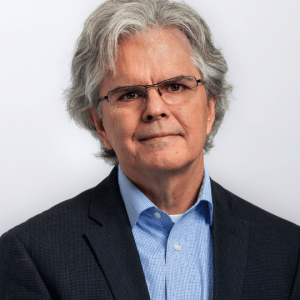
Portrait of Milton TyreeMeet Milton Tyree

Milton has professional and personal experience over decades of helping people with disabilities have strong work roles. He uses the principles of SRV (Social Role Valorisation) as a foundation for his work.

Milton lives in Kentucky, USA and works with Marc Gold & Associates, the pioneers of Customised Employment. He has run several workshops about customised employment for Imagine More. He has worked closely with us to support families in exploring employment opportunities.