Our Discovery journey with Milly

Milly was in the process of transitioning from school to work and exploring options for further study and employment when she gave this presentation. This presentation describes her informal discovery process, and how she learned about her interests and opportunities through work experiences and extracurricular activities.

In this presentation, high school student Milly,  her Mum Simone, and supporter Ros describe

  • how they learned about Customised Employment and started to apply it
  • how they have prepared Milly for life after school
  • their experience of the Discovery process and what they learned about Milly’s interests, conditions for successful employment, and potential contributions she can make to a business.
  • how they set up Milly’s work experience in Office Administration, including on-the-job support and relationship development
  • how they set up a Microenterprise named Made by Miss Milly and why it was such a good idea
  • How the family and workplace discovered and met Milly’s conditions for successful employment. Milly
    • works best in small groups where she feels comfortable and supported but from where she is also free/able to extend herself outside this immediate comfort zone
    • prefers to learn without pressure or time constraints
    • establishes structure and routine using lists and timetables
    • prefers having a mix of routines and a variety of tasks
    • likes knowing what to expect and preparing for the day ahead
  • the challenges that arose, and how they were overcome.

Transcript

Milly Whitehead

Hello, my name is Milly Whitehead. I am 18 years old and I’m in Year 12 at Canberra College. I’m here with my Mum and a work experience employer, Ros Kewley. I’m going to talk about some of the things in my life that I enjoy doing and that I want to continue after I leave school.

I love dancing and music. Dancing and music makes me feel amazing ’cause I can forget about everything when I’m learning new moves and dancing with my friends.

I love drawing. Drawing and painting help me express myself in different ways through shape and colour. Colouring makes my drawings more beautiful.

I love animals. I really enjoy meeting new dogs on our walks with Mabel, our labradoodle. I’m a college zookeeper at the Canberra Zoo, and this term I’m learning how to look after animals and fish in the aquarium. I would like to volunteer at the zoo one day.

I love my friends and family. I love spending time with my family, and I really like seeing my cousins. I also enjoy going out with my friends on different outings.

I love my microenterprise, which is called Made by Miss Milly. I make colourful Christmas decorations and scrunchies to sell. I have an Instagram page, too. I enjoy my sewing lessons each week. I’ll have more time to spend on my business next year.

Work experience with Ros has been great, and I have learned a lot of new things. I work one morning a week in the office, and I have regular tasks to do. When I arrive, I refill the photocopiers up with paper, tidy and arrange the meeting rooms and the kitchen. I also put together information packs for meetings.

I have been learning how to help on reception, too. I enjoy seeing my coworkers each week and being a member of the KBR team.

One idea I have for next year is to work at a vet or a zoo where I can use my office skills and combine this with my love of animals. Another idea is to work in a front office of the school. I would like to study office skills and animal care at CIT.

The message I would give to other students with a disability about employment or work experience is to believe in yourself, not to be scared. It’s really enjoyable and you can learn a lot if you have the right people to work with you, to support and work with you. Thank you. Here’s my mum, Simone, to tell you more about my journey of discovery.

Simone Whitehead

Thank you, Milly. My name is Simone Whitehead, Milly’s mum. My husband and I have three children, two older sons, Henry, Oliver, and Milly is our youngest.

We have always tried to offer her the same opportunities as we offered our boys. Why should it be any different because she has a disability? Milly has always proved quite resilient. As much as she didn’t like change, she has worked through a number of big changes in her life, which will give her confidence with her upcoming transition from school to work.

Milly started her early years of education in an international school in Port Moresby. We moved to PNG when she was just in kindergarten. She was part of everything at the school, a student learning alongside the other children in her classes. She was a class captain and was involved in dance performances, sports carnivals, national and cultural celebrations, school camps, and extracurricular activities such as art, swimming, and tennis.

She was involved in all aspects of school life, albeit with a curriculum which was modified by her teacher, but only as required.

This resilience continued as we moved back to Australia after four years, and Milly started school in Australia. This was more difficult than we imagined, as we were getting advice that she needed to be in a special stream at school.

However, it ended up that she was fully integrated through her primary years with modification of curriculum as required, as in PNG, and supported in class, thanks in the main to a wonderful, young, inclusive-thinking teacher who taught her over her last two years of primary school.

But through high school and college, she has been part of a learning support unit embedded within the school. Back then, we were unsure of our rights to insist that she be included within the mainstream with her learning supported.

Milly had struggled with friendships back in Australia after PNG, and it seemed easier at the time to have her supported in this and other aspects of school life through her teenage years.

We started on a more focused and conscious journey of discovery when Milly was in year 10, after I was introduced to Imagine More by a teacher at Milly’s High School. I had been concerned that years were passing and had expressed to her that now really was the time to seriously start thinking about what life after school might look like. And since then, I have been learning about creating a vision for a typical and good life for Milly with goals of meaningful work, freely given relationships, a variety of roles within her community, and eventually a home of her own.

I have been doing this by exploring the theories of customised employment as Milton has just described, and social role valorisation through Imagine More’s online resources, workshops, webinars, peer groups, and in-person support. One of the most powerful learning tools has been listening to other family stories, which have inspired us to try new things and to have high expectations.

It is an exciting pathway to Milly’s future, and we are no longer as daunted or overwhelmed by this journey as we once were. We have a strong vision of how life can be for Milly and all its potential. We hope this will result in Milly finding employment in a job she enjoys, aligned to her interests, where she can contribute and be a valued team member.

Along with being a valued employee, we want Milly to be known in her local community and to hold lots of different roles so she has a rich and full life, not just one that is filling in time. Milly has many valued roles now, as shown on the slide, and we hope she will continue to discover more roles as she moves into adulthood.

Discovery is the first step in this process and captures information about Milly’s strengths, interests, and needs to help us prepare for her transition from school to work or school to more learning. We have done this and continue to do this by noticing things in Milly’s daily life that can translate into work skills and which can also open up other opportunities that will align with these strengths, interests, and needs.

We have also set up new opportunities for Milly ourselves in order to discover more about her, for example, her microenterprise, which I will expand on later.

As Milly has told you, she is currently in year 12 at college, so the end of her school life is only a matter of months away. We are working to make the transition from school a smooth one, without too much stress or anxiety, and we’ll try to ensure that life after school is meaningful, rewarding, and interesting.

Milly will need to call on her inner resilience again for this big change. To do this, we are bringing together the results of our informal Discovery process done over her life so far to really work out what Milly likes or what aspect of particular things she likes, doesn’t like, her passions, what motivates her and what doesn’t, and what her unique conditions for success are.

We have done this through observing Milly at home, at school, in the community, and through exploring extracurricular opportunities and some work experience. Some of the things we have learned about Milly’s interests are that she’s very creative and has a good eye for design and colour. She’s organised, ordered, methodical, has great attention to detail and a great memory.

She’s drawn to all animals, but especially dogs. She enjoys learning dance and performing, and has a love of music. She’s very social and enjoys interacting with others of all ages, and she has a wonderful sense of humour.

The opportunities we have offered Milly to gain these insights were varied. The observation of her love of animals comes from a number of activities, both at home and in the community.

At home, we have a pet dog, Mabel, and Milly takes her for walks around the block, feeds her, and generally cares for her. On her neighbourhood walks, Milly often stops to chat to fellow dog walkers about their dogs, a commonality that puts her at ease in this social situation. She walks where she doesn’t need to cross big roads and can get home easily, but this activity gives her confidence in her ability to handle Mabel on her own. It is also a good way for Milly to become known in our local area.

During her primary and high school years, Milly had horse riding lessons and enjoyed both the riding and social aspects. She loved the horses and interacting with her fellow riders, the coach, and the farm dogs and cats. Milly learned how to groom, how to care for the saddle and other gear, and to clean out a horse’s stable.

Through high school, Milly has also been a junior zookeeper at the Canberra Zoo and Aquarium. Here, she enjoyed learning about different types of animals with their different needs and working in a team to complete regular zookeeper tasks, such as feeding, providing suitable enrichment activities, changing bedding, and cleaning enclosures, including the huge job of cleaning out the giraffes’ enclosure, task made much easier and more enjoyable through teamwork. Working with animals, big and small, domesticated or in a zoo, will always involve a lot of cleaning up jobs.

Both horse riding and working at the zoo requires Milly to be very aware of working with animals that can be big, unpredictable, and dangerous, and that certain safety measures are required for each of these roles.

Milly’s zoo-keeping activity was for one afternoon a month, and the same group of junior Zookeepers continued for the three years that Milly was involved. She developed some nice friendships and had her friends from the zoo WhatsApp chat group. She was part of the annual sleepover and the conservation open day.

The junior zookeepers all wore uniform shirts and caps, so were distinct from the general public. She even knew some of the zoo’s secrets before the public, like the birth of the baby giraffe, and was able to visit and watch her grow until she was ready to be put out on public display. Milly felt like she belonged and contributed along with her fellow team members.

Milly is currently a college zookeeper, a new program at the zoo, and goes weekly on a Tuesday morning before school. Milly has developed new friendships and has had the same zookeeper leader for three years. This has helped Milly continue and feel supported in engaging fully in the program. The zookeeper leader is young, vibrant, knowledgeable, and knows Milly well. Volunteering at the zoo might be a next step for Milly.

Milly’s interest in dance performance and music in general are seen through activities she likes to do at home, at school, and in the community. Milly has always lit up when listening to music, starting from when she was a baby. A long time ago, I was listening to a Johnny Cash song in the car, and Milly, then a toddler, was in the back singing along. I couldn’t believe she knew the words to the song. Her memory for lyrics continues today, as does her love of music. She has her own playlist set up on her phone, organised, depending on the occasion or mood.

She enjoys concerts and loved seeing Guy Sebastian and Ed Sheeran more recently. These big concerts with thousands of people were a big test for Milly, who usually doesn’t cope well with large crowds, uncertainty, unknown places, late nights or loud noise. We help Milly deal with these challenges in this particular environment through talking about what to expect, options to leave early, and having earplugs on hand if necessary.

Milly has asked for the latest Just Dance interactive game each Christmas for a number of years now. She dances and sings along with these consistently through each year and always initiates this activity herself.

Her singing and dancing at home prompted us to find a dance class for her. She joined a class with the Canberra Dance Theatre and really enjoys her weekly lessons. Milly has performed on various occasions at the Dance Theatre and also at the Portrait Gallery. She happily attends all rehearsals and is excited to wear her costumes and perform alongside her friends in the group. Milly is a quiet girl, but is not too shy to perform. She feels very proud at the end of each performance.

Milly and her social side are noticed in all areas of her life. One of the most consistent needs and motivation for continuing any activity or interest is that of its social side. When she gets to know you, especially adults in her life, she will ask you about your family, your children, your pets, and what you’ve been up to each time she sees you. She remembers details and is genuinely interested in you and your life.

Milly is a caring person and shows this in her friendships. She likes to help her friends and often speaks on their behalf if needed. She likes engaging with friends socially at school or as part of her regular interests, such as dance or in the local community by visiting cafes with family and friends.

Milly is also a keen member of an organised social group. She’s now part of its leadership committee, which meets regularly online to decide on and organise upcoming activities. The leadership committee members help set up, greet new members, are ready to assist if needed, but who also enjoy the activity themselves.

Milly doesn’t like conflict, and especially conflict with friends or between other friends. She tries to fix things and gets worried about the situation, even if it is not about her. This is an aspect we work on by talking through issues at home, but also with the help of an art therapist. Using art therapy as a means for Milly to privately discuss things in her life that she needs clarification about or help with is a perfect fit for her, as she gets to create, talk, and find solutions all at the same time.

Milly is a keen Wordle competitor. She completes it every morning and is very motivated to post her results in her Wordle chat groups, set up specifically with family and friends who also play it daily. There is always a daily Wordle winner.

Milly loves doing 1000-piece puzzles, using her skills of perseverance, patience, and attention to detail. She completes puzzles with a degree of mindfulness that helps her relax and recharge quietly at home. The end result of her determination and one of her intrinsic motivations is the ensuing photo to family and the well-dones given in response. Some family friends have noticed Milly’s interest in puzzles and sent her photos of puzzles they have completed themselves, and now we even exchange puzzles.

A number of years ago, while Milly was still in high school, we had the opportunity to travel to Vietnam when my husband was posted there for work. This was an opportunity for Milly to discover new interests, places, ways of living, interacting with people in a new and very different environment. The streets of Saigon were busy, noisy, hot, crowded, and quite overwhelming.

We planned our outings for the morning to be short and focused, and then relaxed and swam during the afternoons back at the apartment, A key thing we noticed traveling was that Milly was very open to new experiences as long as she felt well supported and listened to when she did start to feel overwhelmed or anxious.

With my husband posted for two years, this was a huge adjustment and challenge for Milly and our family. By maintaining her routines and loved activities, and online contact with her dad, Milly was able to thrive during this period.

Milly’s interest in being creative and her eye of colour are observed at home, at school, and again in the community. Milly has always loved drawing, painting, and putting colours together, both at home and at school. We have been told regularly by her teachers that she has a good eye for colour and her creative side worth nurturing.

To test this, we enrolled her in a drawing and painting class for primary schoolers at the Belconnen Art Centre. She enjoyed these classes and created some interesting work. She then took art as an elective in high school along with textiles, and has also done an art elective in college. Being creative is something that she really enjoys and seeks out. This will continue through her lifetime, I’m sure. As Milly mentioned, she paints to relax and to forget any worries she might have. I think this can be interpreted that being creative for Milly is an essential part of who she is as a person.

To explore her textiles interests further, in year 10, we found a sewing teacher locally, and Milly has been having lessons with her ever since. She especially enjoys these lessons held in the teacher’s home, who has a young family, dogs, and an array of wonderfully coloured fabrics, ideas, and endless stories to entertain Milly as they work together.

The teacher has adapted Milly’s lessons to include printouts with simple step-by-step instructions with photos, along with templates and videos if needed. Milly’s specific conditions of success are met here: To have an engaging teacher, very supportive one-on-one lessons, set out clear instructions, and a relaxed, fun environment in which to be creative, all very important motivations for Milly to continue and explore her interests further.

We had been thinking also about other opportunities where Milly could further explore this interest in colour, sewing, and being creative. And we went about setting up a microenterprise last year called Made by Miss Milly. I had no idea really how to do this, but we had a sewing machine and ideas, and that seemed like a good place to start. We are still finding our way very slowly, again, more on this later.

Milly’s sense of humour is seen in all aspects of her life, home, school, in her activities, and in her friendships. For all Milly’s interests discussed so far, friendliness with a sense of humour is an important condition for success. It is a requirement for Milly that the people around her are approachable, supportive, and can see the funny side of things. A good chat with all its quirks is very uplifting for her.

From her interactions with her sewing teacher, her art therapist, other leaders, teachers, friends and family, through to her choice of TV programs and movies, her own sense of humour is highlighted. She loves The Big Bang Theory, Modern Family and the teasing quiz show, Hard Quiz.

Milly also loves to be organised. We have also observed across Milly’s interests that she’s organised, methodical, and has a good memory, along with great attention to detail. This is through her remembering family’s birthdays, doing large puzzles, remembering dance choreography, knowing her school and activity time timetable, and being organised and ready for each.

At home, Milly shows her organisational skills through her given tasks. She feeds Mabel, our dog, every morning, usually getting up before everyone else to do this at 6:30 AM each day, as requested by the dog on the dot. Unpacking the dishwasher, having breakfast, and getting ready for her day, from appropriately dressing for the weather to packing her lunch and gear she needs, she likes this daily routine.

At the end of high school, we wrote to her teachers to ask them about what they had observed of Milly over her years there. They confirm what we had also observed of Milly in her daily life; that she is a caring person and loyal friend, and likes to help others. She’s a hard worker and tries her best. She also has strong advocacy skills, both for herself and others.

Due to the COVID lockdown at this time, the schools closed and students were homeschooled. She used her strong organisational skills and was ready and prepared for all her online classes. Staying connected to her peers and teachers was very important to Milly during this period. The teachers were impressed with her consistent work ethic and also her support of other students.

What we have learned with Milly approaching the end of her school years and now preparing for the next phase in her life of work and further study is that Discovery will be an ongoing and most likely lifelong process. There will always be more to discover about Milly’s intrinsic interests and motivations as we and others observe her in different situations as more opportunities and roles open up in the future, and also as she herself develops as an individual young adult who wants to make her own decisions about her life and the direction it will take.

So, what have we learned about Milly’s conditions for success? Over the years, while exploring and discovering more about Milly’s interests and motivations, we have also learned a lot about Milly’s conditions for success. I have mentioned some of these already, but we know that Milly does her best when she’s with leaders and other people who are engaging and friendly, when she’s in smaller groups where she feels comfortable and supported, but from where she’s also able to extend herself outside this immediate comfort zone. When she’s learning without pressure or strict time constraints, when she has structure and routine – she likes order, lists, and timetables – when she has set tasks to be completed routinely, along with a variety of non-regular tasks as required, when she knows what to expect and is able to prepare for the day ahead, and has a place to call her own, such as a desk next to familiar colleagues, students, a place she feels she belongs, and when she’s with people who have a good sense of humor and who like to have a chat.

Milly is most productive, connected, and positive in the first part of the day. She can get tired by mid-afternoon.

We have also discovered what doesn’t work well for Milly. These can include uncertainty and sudden changes to routine, how to fill in downtime at school or in a workplace, stressful environments such as high-pressure ones where people are stressed, in conflict, and unfriendly, being isolated to do a task or activity,

noisy and crowded environments, and being overwhelmed when tired and anxious, especially towards the end of a very busy day or when things haven’t gone as planned.

These conditions for success, plus our discovery of Milly’s interests, are helping us explore with Milly what work experiences would be interesting and valuable to her now, and what paid work in the future might look like; a role that Milly will enjoy, thrive in and be able to contribute meaningfully.

Milly continues with her speech therapy as we have discovered that clear speech is very necessary in communicating well with people, especially when meeting them for the first time, for example, in a workplace. Speech therapy also helps in her understanding of language and what has been asked of her. It has been very beneficial in teaching Milly to be aware of social cues and rules, such as how to hold a two-way conversation and how to end one without awkwardness.

We are in the very early stages of creating a Circle of Support for Milly around employment. We are thinking about people who know Milly well from her current role as a student, animal carer, dancer, sewer, office worker, along with family and friends who would be able to help and support Milly to live her typical life with meaningful work as a part of that life.

We are using our vision for Milly to keep us on track through this process, and part of this vision is that Milly will have an award wage paid role in a small, supportive team in an area of intrinsic interest for Milly.

We had some challenges finding work experience during high school and college. Prior to COVID, in year nine, Milly did a one-week work experience in a florist and was involved mainly in the delivery of flowers, packing of gift hampers, checking inventory used by dates, along with some arranging of posies, along with helping with the tidying up at the end of the day. We thought Milly would enjoy this workplace given her creativity and love of colour.

From this experience, we learned that Milly enjoys working in a small, supportive team, but that she wasn’t as interested in flower arranging as we thought she might be. As it was only a week-long block, it was tiring for Milly, and we realised she didn’t get much of a chance to actually feel comfortable in the workplace and feel like she belonged, nor to understand and get to know the business’s routines and people.

We came to the conclusion that Milly needed to have a work experience set up to suit her, a customised one, where it could be spread out over a period of time and would address Milly’s conditions for success. This would give Milly the best opportunity to explore a workplace and understand what aspects of it she enjoyed and would like to pursue, and what parts she found difficult.

During Year 10, Milly joined a program at school where a group of Year 10 students would volunteer in a classroom once a week at the Woden School. She enjoyed this role as a learning support assistant, helping students younger than her in class with activities such as art and writing, whatever the teacher was teaching that lesson.

She liked being an assistant to both the students and the teacher. It was in a familiar environment for Milly, a schoolroom, with a teacher and students doing familiar tasks. It aligned with her interest in helping others, and also her conditions of success were met by being part of a small, supportive team. It was spread out over a period of time, giving her an opportunity to get to know the role, the people, to think about it in between times, and finally to feel confident to do what she was there to do and to belong.

In Year 11 at college, we had a difficult year finding and getting support in finding suitable work experience. Along with everyone else, it was very hard with the waves of COVID and not many businesses being able to accept students for work experience. I approached a dog daycare company, but it just wasn’t viable as they were struggling with ongoing staffing issues and great uncertainty of what each week would hold.

In our most recent NDIS review, at the start of last year, we had asked to be considered for funding for job support for Milly’s work experience and possible part-time work but this was declined. We were told by our LAC that the SLES funds would only be available when Milly finished Year 12. I believe some young people have been given this support while still at school, so it seems this decision can be a very subjective one, dependent on who is performing the review. Given that we would’ve liked Milly to have access to customised work experience and to explore paid part-time work through her college years, this lack of funding has made it more difficult.

I also asked Milly’s College if they might be able to provide LSA support for Milly while at work experience, especially in the early stage when learning new tasks and getting to know her colleagues. But I was told this wasn’t possible. It would need to be outsourced.

It is enormously difficult, I’d imagine, for most students with a disability to set off on their own for a traditional school week-long work experience to an unknown environment with new people, new tasks, new routines, and no real time to get to know the business or for the business to get to know them or to see how that student might contribute in a role. Work experience should not just be another thing that a school needs to tick off. Real value from the experience is needed.

We have our plan review coming up again at the end of this year. We hope through this review process to secure the NDIS funding for a job support mentor for Milly, and really start exploring the world of work using everything we have learned so far in Discovery.

I will have help this year in preparing for our NDIS plan review, both from Imagine More and others in the community. It helps to be very clear about what you are asking for and why. I get very nervous before reviews, but I’m hoping to be more confident this time.

I have just finished Making the Most of your Funding course with Imagine More, and now I know more about developing a vision, nurturing life roles and freely given relationships, the power of positive introductions and using support, both paid and unpaid to develop social and employment opportunities for Milly.

So, exploring Milly’s interests through a micro enterprise. Back to Year 11 and our difficulties in finding viable work experience for Milly, I started to think about other work options. Along with learning some very useful life and creative skills, I thought her sewing lessons could possibly lead to other pathways, such as selling her creations, fabric design, or screen printing. She’s very proud of her finished works and likes to share what she makes and draws or paints via photos to family and as gift for both family and friends.

Given her love of sewing and of being creative, we went about setting up a microenterprise to show and sell some of her work online. We had also started to make Christmas acorn felt ball decorations using lots of wonderfully coloored felt balls. The name of Milly’s business is Made by Miss Mill,y and she makes and sells hair scrunchies and her Christmas and other felt ball decorations.

We are only just starting out and are yet to set up an actual online shop, but we have a business name, business cards and a love of the colour pink. We also have a presence on Instagram.

The Christmas decorations are relatively easy to make and require a step-by-step process, as do the scrunchies. Leading up to last Christmas, we had a busy time filling orders for the decorations along with Milly’s Christmas theme scrunchies, sold mainly to and through family and friends. We have had some outside orders also though, which is very exciting. Milly has some products for sale also in a couple of small and local gift shops wanting to support a community member. Her products are high quality and she has a quirky niche in the Christmas decorations market. We have ideas to expand to other felt boar creations, such as garlands and necklaces in the future.

We are now starting to think about other ways she can sell her works down the track, including at local and country markets and suitcase rummages. At this stage, though, we are keeping the business small and manageable for Milly while she’s at school. We are having our first pop-up shop today, which will be open during lunch and afternoon tea breaks.

Prior to starting this microenterprise, I had asked Milly a number of times about what she thought about possibly setting up a small business and was always met with a resounding “No!” I came to realise that Milly didn’t understand what it actually meant to set up a business, and maybe it didn’t have to be too big, overwhelming and stressful.

We are starting very, very small, and we’ll see where it takes us. If Milly continues to enjoy the process and wants it to grow, being a business owner can be just one of her roles into the future. There is a lot to learn about running a small business, and one of these could lead Milly in a different direction again, such as into social media, photography, or bookkeeping.

The aim is that eventually, Milly will take full control of her business with some support, such as a dedicated Circle of Support for her business. Its creativity could sit alongside paid work in the community with the very necessary motivations of social interaction, a sense of belonging, and a regular paid wage.

At the end of last year and after setting up the microenterprise, I was talking to a new personal connection, now friend of mine, about how work experience was very hard to find during COVID and especially hard for a young person with disability. I first met Ros, who’s here today to also speak to you, through a group called Dinner With Friends. She had set this up for young people to assist them to develop friendships and to be social and have fun.

Ros, herself a parent to a young man with a disability, fully understood the need for worthwhile and valuable work experiences in a supportive environment while still at school. Ros had contacted Canberra College to offer a work experience to a suitable candidate in an office in the company she works for, KBR. Milly’s name was put forward by the college as someone who would work well in a supportive, consistent environment and who was interested in experiencing office work.

Ros, who had met Milly, agreed and was very happy to work with us to customise the role to maximise Milly’s chance of success. She was able to visualise Milly working in her office and how it might be beneficial for both her office and for Milly.

Ros and I met prior to Milly starting to discuss details. We decided, given Milly works best in the mornings, that she would work once a week on a Thursday morning for half a day. This arrangement was approved by the college and was seen as a valuable alternative to her regular classes.

I was then disheartened when one of Milly’s teachers asked me, “Are you sure Milly is really ready for this?” This comment upset me, but I confidently answered “Yes”. I’m so glad that I had attended a number of Imagine More workshops on Customised Employment. You don’t need to be deemed ready for either work or, in this case, work experience. If I hadn’t had this background knowledge of what can be achieved through these opportunities, I may have believed this teacher and doubted myself and Milly’s ability to be able to manage such a work experience.

Before commencing, Milly and I visited the office with Ros to meet some of the staff and to familiarise Milly with the office layout, to show her her desk, and to talk about the unwritten office rules, such as what happens at tea time and lunch. This helped reduce Milly’s uncertainty and anxiety on her first day.

Milly was to be working with Ros and her assistant Donna, in a small team, extending to reception later on. We envisage Milly’s skills have been organised, having a good attention to detai,l along with her needs being met by working, sorry, by working in a supportive, welcoming environment with structure and routine, that it would be a successful experience. And if it didn’t go well, we would learn more about Milly and what she doesn’t like in a workplace.

She has now been working with KBR across more than two school terms and still looks forward to going each week. We would definitely class it as a success. We have learned much from watching Milly develop her confidence and skills over this time, both with her work tasks and her self-confidence in being a contributing and valued member of the KBR team.

Ros will talk more about work experience and KBR generally, and her role in encouraging the workplace to take on students with a disability for work experiences. Milly is now handing over her role to another student and is teaching him on the job.

So for the rest of Year 12 and beyond, we will continue to work on Milly’s transition from school to work. We will continue to develop Made by Ms. Milly while keeping it fun and manageable. And we are currently looking at arranging another work experience for Milly in a different office. This will help Milly understand that working in an office can hold variety and interest dependent on the nature of the company and the people who work there, but that a lot of skills are transferable.

We are investigating courses at CIT for office skills and animal care for next year. Combining these two interests has Milly thinking positively about working on reception or in an office in an animal-based environment, such as the zoo or a vet practice. As Milly mentioned earlier, working in the front office of a school would align with her interests, too.

Milly is also taking driving lessons after having passed her Road Ready course. This will assist her in becoming more independent and in taking a typical path like other young people her age, if successful. All this along with keeping up with her regular schoolwork, her social life, and graduating Year 12, always with the end goal in mind to continue to strive for and follow our vision for a good, typical and meaningful life for Milly. Thank you.

Ros Kewley

It’s been great to hear about the Discovery journey that Milly and her family have been on, and I’ve been very, very privileged to be a small part of that. Milly is amazing and she’s absolutely bursting with potential. I thought for my part of the story, though, that I’d continue the Discovery journey theme, but the focus is on the Discovery journey that my company has gone through.

I work for a company called Kellogg Brown and Root, known as KBR. I’m a solution designer and architect at KBR. I like to tell people that KBR is the biggest company that you’ve never heard of. We, at our heart, deliver science, technology and engineering solutions to governments and large companies around the world. Here in Australia, we do a lot of work with Defence and other government bodies such as NASA.

A key part of my role is to articulate solutions and KBR’s value proposition to the private sector, to governments, and to Defence in writing bids and tender responses. If you’ve had any exposure yourself to that process, you’ll know that there’s a requirement for companies to talk about their diversity and inclusion approach and their plan. We also talk about our corporate values, which at their heart are people-focused. Our headline is We value people.

Now, the KBR workplace is a very good workplace with great people, but some time ago, I found it increasingly hard to write corporate documents about how we support diversity and inclusion, when I couldn’t actually see some of the practical application of these principles on the ground.

You see, I also have the lens of a parent of a young man on the autism spectrum. My son Austin had terrible work experiences when he was going through school. It usually consisted of one week packing shelves at Coles or Woolies, and it really provided limited employment opportunities or understanding.

I passionately believe that we need to provide our young people with a proper work experience and give them the capacity to grow and to explore what real work might look like. So I decided to start in my own workplace, bringing together this desire for change with the real need that KBR had for diversity and inclusion, which really was their aspiration and intent.

So this work experience is an exercise, as I said, in KBR’s discovery journey as well as Milly’s, and also for some other work experience participants. For its part, I think KBR needed to work around this lack of traction that they actually had. In exploring what was causing this lack of traction. I think there’s basically four assumptions that people work on, and that just slows down the process altogether in the workplace.

Firstly, I felt like we were up against a time assumption. People assume that supporting someone with a disability would be incredibly time-consuming, and it would take away from time needed to get jobs done, including time away from my job.

I think there’s also an assumption that there’s going to be a considerable amount of management and effort required, and this was going to take an undue amount of time from management, and many people across the business were going to have to, you know, devote time to this process as well.

And I think people were unable to also see the perceived benefits and outcomes of that. And it’s hard, I think, also, there’s an assumption about interactions. I think staff members were genuinely concerned about behaviours and interacting with people with a disability, and I think their own personal ability to respond to that.

Finally, I think it’s unpredictability as well. People with a disability are perceived to be unpredictable, and others won’t know how to handle situations when they arise. So it’s basic catastrophising, I think.

But I’ve worked out that the best way to get past these assumptions is to address them, but to also provide some proof. For my part, I was as reassuring as I could be in the workplace, at the start of these work experiences, to try and prove that these assumptions were unfounded. But in the end, there needed to be a level of trust from the company, and I needed to actually prove these assumptions were wrong.

In my workplace, trust was partly established through a business case I developed and presented to senior leadership to get their approval. To develop the business case, I channelled my inner Frances Frei. Now I’m a fan girl of Frances Frei, who is a Harvard Business School professor who lectures on trust in the workplace. She has really great TED Talks if you ever want to go and look her up.

To give you the unabridged version, because I could actually talk about Frances Frei all day, trust requires three basic elements, and they are authenticity, empathy, and logic, radical logic.

So, in putting together my business case, I had to address each one of these key elements. Firstly, authenticity: I put to the company the need to actually be authentic in how we are living out our corporate values and making a real commitment to diversity and inclusion in the workplace. So we needed to talk about that, and we needed to present it to the world.

In addressing empathy, I was very keen to make sure that senior leadership understood that I understood and acknowledged that there were those assumptions around how this was going to work in our workplace and that I could provide some proof that would step past this.

And then in terms of logic, we were going to put together some real supports; processes, management routines, structures in place to ensure that success was going to happen and that we were also able to mitigate concerns that people may have had and that I would report back to them on the progress of those things.

So a few years back, I got a ‘yes’ to be allowed to move forward.

Okay. So in addressing those assumptions, some really wonderful things did actually happen. First of all, if I can take Milly’s journey, the four basic assumptions that I presented to you before were just blown away.

Firstly, the time perception. Once Milly had a proper orientation and training on her tasks, which anybody should actually get at the beginning of their employment, there was only a limited amount of extra time required from her managers.

Additionally, in terms of the task getting done, Milly actually saves us time on some of those admin jobs around the office.

The management and effort perception, we have a template and routine, which means that Milly knows her tasks each week and has a schedule for getting those things completed. The schedule takes us five minutes to put together the day before, so not a big effort. Milly knows who her managers are, and she has a clear reference when needed. Having now mastered many of the tasks, she completes them autonomously and with minimal management required.

The interaction concerns: Well, Milly actually blew this one out of the water, can I tell you? The first day Milly came into the office, she was nervous and not interacting at all, as most of us are on our first day. We made sure that we took the time to introduce her to people in the office so both sides would feel comfortable. Look, fast forward to a few weeks later, and I found her in the lunchroom, happily talking one day with the younger ladies in the office. People love talking to Milly, and she loves talking to them. Our technical team have made her an honorary team member, and Milly actively participates in all social events that go on in our office.

The unpredictability factor, again, she blew this one completely out of the water. Jump to where we are now, I think people see that the unpredictability that they were expecting was really underestimating her abilities.

Let me tell you a story. Now, KBR has a lot of engineers working in our business. We had to put together a few weeks ago hundreds of promotional boxes. Nobody in our office could figure out how to actually put them together and make them stay together. It was endlessly frustrating. Milly’s unique problem-solving skills had us all just standing back and watching her solve the problem. People now seek her out because she’s got a different view on things. She has reorganised our storeroom so it’s structured and ordered. I actually found her in there one day supervising our Vice President, to help access some items on top shelves. So she’s actually seen as a celebrated and cherished member of the KBR team.

Success, I think, has been achieved through a number of different things. Before everything, I think it was important that we selected the right person. We know this was only going to work if we had a participant that was genuinely interested in learning the work experience in an office.

For example, our new work experience participant, Josh, has a very, very keen interest in all things military. So, in working back with Canberra College, it wasn’t a case of just “send us some Year 12 students for work experience”. It’s talking with them about making the best fit for the job.

Orientation was important, providing a detailed orientation, ensuring we didn’t assume that Milly understood nuanced information. This included explaining how the office works, how and when to take a break, what’s the protocol for going to the bathroom, what do you wear, what do you eat that’s in the kitchen, so what’s shared and what’s not. All of those sorts of things. Who to talk to if you have a question, and we needed to repeat this, not just on the first day, but with every new experience as we go along.

Introductions to people in the office are also important. Explaining what those people do and when she might refer to them was also important. We made sure we shared appropriate details about them personally, repeating introductions as required, practising introductions, and how to ask someone their name, and perhaps ask again.

It’s beautiful to watch her at the beginning of her workday. Her first job is to ready the meeting rooms, all around our office. She walks around the office and says hello to everybody, asks about their children, and asks them if they’re feeling better. As I said, she remembers beautiful details about people.

Set up. We made sure that Milly was provided with her own space. She has her own private drawer and a desk that she can come back to and sit at as required. As I said, she’s got a dedicated drawer where she can actually put her personal items. She also sits near me and the office manager, and one of us is always present and available to Milly when she needs some support or if she may have a question that needs answered. For safety reasons, we also need to know where she is at all times.

Schedule and routine: We established a regular routine and rhythm for the day. Core tasks are always completed first. Then, flexible tasks that may change from week to week are done next.

A critical success factor for Milly and the other staff in the office: We print the schedule off and provide it to her on a weekly basis. The schedule also makes sure that it’s quite clear about when the breaks are as well, so that’s included.

Support and feedback: There is always a manager available to support her. Also, with careful introduction over time, Milly has built a support network all around the office. We give her appropriate, honest feedback as required, and she understands the best way to get the job done. And also, we provide clarity about the expectations for what “completed” might look like.

And finally, mastery. As Milly learns tasks and processes, we actually encourage her to master them. She has become an expert in the office on some tasks.

We look for opportunities to celebrate successes. Successes include her growing autonomy. She now coaches and mentors the new work experience person, and that’s Josh.

You know, after I put these success criteria together, I remembered an experience of starting a job myself in a large software provider a few years ago. After I came through reception, I got introduced to one person who pointed me at my desk. It was piled up with a laptop that was still all boxed up in boxes, and they simply said to me, ‘You catch and kill it yourself around here. ’ It took me weeks to find all the equipment, including a chair, I might add. I think I’m still steamed about that and all the information that I needed.

These success criteria are what we should all expect and receive at the start of a job. I hate that there is a perception that it’s different or way more because somebody has a disability.

So, what about the Discovery journey for KBR? Well, I can report that there has been real traction now, and we are seeing benefits for the business.

Firstly, the tone in the office. Can I tell you that Thursdays have become special? People openly talk about it as Milly Day. If she’s not there, she’s missed. There is genuinely a good feeling, spirit, tone in the office when she’s there. People are more respectful to one another, but this is not for show. People genuinely love coming to the office on Thursdays because it just feels better.

We’re also getting administration tasks completed, which frees up other people in our workplace, so it’s actually saving us time. We can proudly say that KBR is starting, and I might add, there’s still a ways to go, to take some real action on diversity and inclusion in the workplace, and that supports our corporate values. We can show our customers and other companies in our industry that we can do something, perhaps together, and there’s some value in that.

We are seeing the unique thinking and problem-solving that neurodiversity brings into our workplace. But you know, I think my favourite benefit is seeing business as usual, overtaking normal business. It’s special because it’s actually becoming less special, if that makes sense. This is actually what an inclusive world should be.

So, where to from here? Well, KBR is very keen to do more. I keep openly saying that my immediate plan is to have a Milly in every office in Australia, and we have a considerable number of offices around Australia. We’ve now engaged with the global head of talent in Houston, who’s very, very interested in what we are doing with the work experience opportunity here in Canberra.

So, I’ve actually upped my aspirations, and I want to see a Milly in every office in the world, so a little bit of global domination, as it says there.

At its heart, I would love to see these work experience opportunities turn into paid employment, and that’s the most important direction I would like to take this and, hopefully, that will be the next step on this KBR discovery journey.

It’s also an opportunity to provide industry and the corporate world with a template for doing this and moving things forward.

I hope that you’ve had value out of this presentation from me, and I thank you very much for listening.


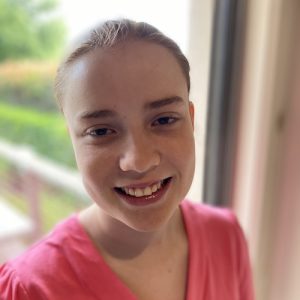
Meet Milly Whitehead

Portrait of Milly Whitehead

Milly is currently a student in Year 12 at Canberra College. Milly enjoys school – her study, friendships with peers, and being an active member of her school community. She joined the Senior Leadership Group, which helped new Year 11 students on their first day of College. Along with her studies, Milly is completing a long work experience. For the first two terms of 2023, she will work for half a day weekly in office administration. Milly hopes to find another work experience opportunity for the next term or two before the end of Year 12.

Outside of school, Milly is exploring her other interests, such as participating in a weekly Zookeeper program, having sewing lessons, and participating in a dance group and other social groups making friends and connections in the broader community.

Milly is transitioning from school to work this year and is exploring options for further study and employment. She is following an informal discovery process, learning about her interests and opportunities through work experiences and extracurricular activities.

Milly and her mother, Simone, started a microenterprise called ‘Made By Miss Milly’. She sells her sewing and craft creations, including colourful scrunchies and felt ball Christmas tree decorations. Milly enjoys the process, and her microenterprise aligns very well with her creative and artistic side.

Milly is a daughter, sister, grand-daughter, committed niece and cousin, keen student, business owner, artist, dog lover and walker, zookeeper, dancer, seamstress, bike rider, swimmer, puzzle expert, Pokémon gamer, Wordle competitor, Ed Sheeran/Guy Sebastian/Harry Styles fan, an avid viewer of comedy and ‘who done it’ TV shows and a good and loyal friend.

You can find out more about Made by Miss Milly on Instagram.

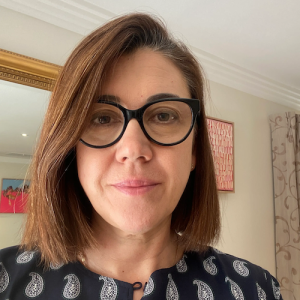
Portrait of Simone WhiteheadMeet Simone Whitehead

Simone works as a part-time Practice Manager for a medical specialist. She is a mother of three children, the youngest being Milly. Simone devotes time to working towards Milly’s vision for a good and typical life with meaningful work, freely given friendships and eventually a home of her own. Following the guidelines for customised employment, the family hopes this will lead Milly to employment in a meaningful and exciting position – a role she enjoys and where she is a valued team member.

Simone is learning more about creating a vision for a typical good life for Milly. She is exploring the theories of customised employment and social role valorisation through Imagine More’s online resources, webinars, and moderated peer groups and their in-person support. Listening to other families’ stories has inspired Simone to try new things and have high expectations. It is an exciting pathway to Milly’s future. The family is no longer as daunted or overwhelmed by the journey as they once were.

In Simone’s spare time, she is learning to sew and crochet. She enjoys solving sudokus, reading and playing beginner bridge. Simone also likes to walk Mabel, the family dog, in the reserves of Canberra, talking to the magpies she meets along the way.

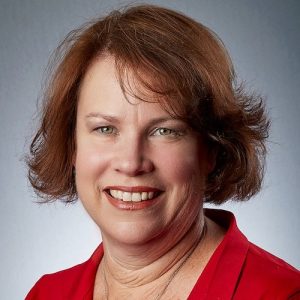
Portrait of Ros KewleyMeet Ros Kewley

Ros Kewley is passionate about promoting diversity, inclusion, and social responsibility. She has actively participated in various professional and personal activities to improve the lives of others.

Ros has multiple roles in this field. She is the proud mother of a neurodiverse young man named Austin. Ros organises social events and offers capacity-building opportunities for neurodiverse adults through a community called “The Dinner with Friends Initiative.”

Ros works as an Educator and Solution Architect for Defence and Government at KBR, a global company. In this position, she advocates for and promotes diversity and inclusion, and is an active member and local representative of our Global Employee Resource Group.