
Will at work

Will Coventry presented on Day 2 of the Opening Opportunities conference alongside his mother, Anna Coventry. They shared their journey in crafting a meaningful week of work and volunteering with the support of Will's Circle of Support.

In this presentation, you will hear about:

  • Will’s vision for lifelong employment
  • when and why Will’s family decided to look for volunteering and employment roles for Will
  • the steps his family took to explore and set up work experience, volunteering and employment, with the help of Will’s circle of support
  • the role Will’s school played and what it might have done to make the transition from school to work even more successful
  • what Will’s family and supporters have done to sustain paid work
  • how good workplace relationships have been nurtured, including through the use of Will’s alternative communication method
  • the supports that are in place to help Will succeed.

Meet Will Coventry

Portrait of Will Coventry

Will graduated from school in 2016. Since leaving school, Will has worked part-time as an administrative assistant in three businesses in Brisbane’s CBD. He also volunteers at Meals on Wheels one day a week.

Will enjoys sports and is a member of The Renegades, a touch football team. He is a Broncos and Reds rugby supporter. He also loves taking photos, listening to music, and hanging out with friends and family.

Meet Anna Coventry
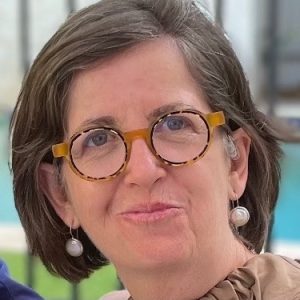
Portrait of Anna Coventry

Anna Coventry is an Occupational Therapist who has a private practice in Brisbane, conducting functional and care needs assessments. She is married to Keith, and they have two adult sons, Henry and Will. Will lives with a complex disability.

Anna self-manages Will’s NDIS plan and is involved in Will’s Circle of Support. The circle consists of significant people in Will’s life who support Will in fulfilling his vision of living a good life, including work, contributing to his community, and planning to live in a home of his own.

Learn more about Anna at LinkedIn

Transcript

Anna Coventry

Good morning, everyone, and thank you, Jan, so much for inviting Will and I to be here, to be part of the conference.

Firstly, I’d just like to say that I found yesterday incredibly inspiring and that Keith and I went, I mean, Keith is my husband who is here. Will and I went home last night with so much to think about. So thank you all for sharing with us. Will and I are going to share with you his story about finding meaningful work, which includes both paid and voluntary work. We will discuss how he found his work and obtained it, what has worked well with his work, the role of a support person at his work, and sustaining his work.

But firstly, a little bit about us. This is us, Will and I, with Will’s Dad, Keith, who is here with us and Will’s older brother Henry, who just yesterday moved to Sydney. So we are going to miss him dearly.

We live in inner-city Brisbane with Will’s dog, Barney. Will lives in the downstairs in a self-contained area that we have set up as a transition to independent living. Will has a team of five support people who support him at work, in the community, and at home from time to time.

Will is now going to speak to you about his work and his roles. He’s going to use a communication app on his iPad.

Will Coventry

My work: Since I left school, I have had three part-time paid jobs and a volunteer job. My paid jobs are in a law firm (Murphy Schmidt), a communications company (Rowland), and KPMG.

I am a junior administrative assistant. I collect the mail from the post office, open the mail, and distribute it. I scan documents, refill the paper and the printers, sort and top up the stationery, complete the shredding, fold flyers, compile note pads, set up the boardroom, and do errands, such as shopping for morning tea.

I enjoy my work very much. I like being part of a team, having a role, and contributing. I like seeing my friends work every week. After work, I go out to lunch in the city with my support person, and sometimes friends from work come with us.

I volunteer one morning a week at Meals on Wheels. My jobs include recycling the cardboard, using the clamp to press the lids onto the food packages, sealing the foil containers, stacking the containers on the trolley, washing the dishes in the dishwashing machine, and sorting produce.

Outside of my work, I enjoy playing touch footy with my team, The Renegades. I love to go and watch the Broncos play at Suncorp Stadium and the Brisbane Heat at the Gabba. I like to spend time at Dad’s family farm and hang out with my friends. I also like taking photographs and listening to music.

I want to keep on working. I may change jobs. I currently live at home with Mum and Dad. I live downstairs in a granny flat and have my own kitchenette, living room, and front door. I plan to live in a home of my own with flatmates I choose, and to travel.

Thank you for listening to me. I would now like to hand over to my Mum, Anna.

Anna Coventry

In preparation for this presentation, I reviewed a lot of old documentation that we had. And in doing so, I came across our first family Vision for Will. This was for Will to live a typical life with meaningful relationships, to be in paid employment, to participate in leisure interests of his choice, to socialise with his friends, to travel, and live in a home of his own.

When Will was in year 10, we realised that we needed to start preparing Will and us for life after school. Up until that stage, we had had minimal formal support in Will’s life and had relied on our extended family. We realise now that we were at a time when we needed other people in Will’s life and that we could not continue to do this all on our own.

Over the preceding years, I had attended forums such as this, and I’d heard of the concept of Circle of Support. I spoke with Marg Rogers from the Community Resource Unit in Brisbane, who is here with us today, and to the late Jeremy Ward, about creating a Circle of Support around Will. Jeremy’s advice was that when creating the Circle, we needed to have a specific goal. After much thought, we invited significant people in Will’s life and our life to be members of his Circle.

Our goal for the circle was to find work for Will after school. This included sourcing work experience for him in years 11 and 12. Whilst we had a goal and the Circle members knew Will, to achieve our goal, the Circle needed to have a deeper knowledge of Will. So, in our initial meeting, we shared with them our Vision for Will. We shared with them information about Will’s abilities, the support he required to communicate, the support he required to manage public transport and access his community, his ability to learn new tasks, and his functional skills performance. We walked them through a day in the life of Will.

Then, together, we identified Will’s interests and passions, his abilities and strengths. Taking this into consideration and working with his school, we organised work experiences for Will. Will experienced a variety of work in his last two years of school. This was our, what you would maybe refer to after yesterday, Discovery process.

It evolved. We didn’t have a set plan, but this is what we did, and this is how we went about it. So, Will had work experience in the area of hospitality, outdoor farm work, he worked for a short stint at HELP Enterprises, and finally, as an administrative assistant. I’m now going to go through each area and explain it a bit more in detail.

One of Will’s school subjects was hospitality and catering. Will loved to serve people. The head of learning support at his school organised for Will to participate in a hospitality training program at a commercial coffee shop at a special school on our side of town. Will’s school provided him with a support person whilst he was completing the program. The role of the support person was to support Will in learning the tasks. Will completed the course for two terms. We then wanted Will to use these newly acquired skills in another work environment. His school sourced a work experience opportunity working in a kitchen at a nearby aged care facility, preparing vegetables and serving morning tea to the residents. Will loved his role serving the morning tea in the dining room.

Will’s next work experience was farm work. Will loved being outdoors, being around animals, and horse riding. Keith’s family live on a property on the Queensland-New South Wales border, and Will has spent a lot of time out there. The farm was and is a special place for him. Ian, Will’s uncle, who lives on the farm and is also a member of Will’s Circle, suggested that Will complete one week’s full-time work experience on the farm. Prior to being a farmer, Ian was a schoolteacher. He had observed Will’s love for the outdoors and was aware that Will learnt tasks through visual demonstration and repetition.

So during Will’s week of work on the farm, Ian was mindful of this when selecting jobs for Will. Will completed daily tasks such as feeding the cattle, and he worked on a big fencing project every day of the week. In addition to this, he assisted in the yards and tidying up in the shed. Ian made a video of Will’s work so that he was able to show everyone back at school what he had been doing and what he was capable of.

The farm is still a big part of Will’s life. He sometimes takes a break from life in the city and goes out and spends a week working at the farm with his uncles and cousins.

Following on from the success of this and Will’s love of being outdoors, a member of the Circle, through their own connections, sourced work at the nearby racetrack in Brisbane. Once a week, Will would spend an afternoon at the racetrack, feeding and grooming horses with a stable hand who was a young university student. She graduated from uni and moved on, and so did Will.

Will’s school organised for him to work in Help Enterprises. He worked in a large building, it was a hangar-style building, packaging items for airline companies. He enjoyed the group atmosphere and working alongside others, but segregated employment was not a part of our plan for Will.

Will’s school also completed a referral to Epic Assist to assist with compiling a CV and resume, and to assist with applying for work. Unfortunately, they were unable to assist us with finding work for Will.

We had all become aware that Will enjoyed being a member of a team and working alongside people. He loved the group environment of school and being at work. It motivated him. It was at a Circle meeting, halfway through Will’s final year at school, that his brother Henry commented that Will had not experienced working in an office environment, and he suggested we should try it.

The Circle brainstormed a list of tasks Will had the skill set to complete in an office work environment. We then formulated a list of people we knew who had businesses where we thought there would be an opportunity for Will to do work experience. Peter, a Circle member, another uncle of Will’s who was well connected in the Brisbane community (very good to have on a Circle), spoke with various people about Will and opportunities they may have for him. One of the businesses was a law firm in the city where another one of my brothers worked. He introduced me to the managing partner, and I met with her. She suggested Will work alongside the outside clerk, assisting him with tasks.

Will completed 12 weeks work experience there, working four hours one morning a week. His tasks included delivering legal documents to the courts, collecting mail, buying and putting out the newspapers, and errands such as buying milk for the tea room. Will loved assisting his coworkers and working in the city.

It was around this time that a friend of ours, who is the CEO of a digital communications company in Brisbane, called Rowland, asked me what our plans for Will were after school. He had heard about Will’s work experience at the law firm from a Circle member. I told him how successful this work had been for Will and that this was the sort of work that Will may possibly consider after school.

After some discussion, our friend said that he would talk to the executive director at his business and get back to me about Will doing work experience there. Will and I subsequently met with the executive director. We discussed Will’s abilities and interests. Will loves photography, and being a communications digital marketing company, photography and videos are a large part of their work brief, so this workplace aligned with Will’s interests.

Will completed 10 weeks work experience at Rowland in the final weeks of year 12, and over the holidays. We provided a support person. He thrived in this environment. He formed a special relationship with the gentleman who was the head of IT services, and he would accompany him and assist him on photo shoots. He loved this. He had fun and loved being around his coworkers.

Following Will’s successful work experience as an administrative assistant in both these businesses in the city, Will and we felt they were an opportunity for him to source paid work on finishing school. We felt it was a place to begin, so we approached both of these businesses about Will commencing paid work there. They both agreed.

Will and I met with key people from both workplaces to set out his role and to look at the jobs that they had that could align for him. We also had to discuss the role of a support person. Will had and still has regular tasks he completes each week, and in addition to that, he may have one-off tasks or special request tasks that need to be completed as well.

So on finishing school, Will had two mornings a week of work in the city. He had a support person with him at both workplaces. There was no NDIS funding. We had extremely limited funds from Disability Services Queensland, and we used these funds for Will’s support people.

After 18 months of Will working these two jobs, we felt he could increase his hours of work as an administrative assistant. He was thriving in this role. He was now an NDIS participant and had increased funding. We compiled a resume complete with referees from his current workplace. We approached the law firm for a second day of work. This was unsuccessful. They did not feel they had enough work for Will.

We had a Circle meeting and compiled a list of possible businesses we may have worked for Will. I had heard that Virgin Airlines were embarking on inclusion in the workplace. One of the Circle members had a connection in the head office in Virgin Airlines in Brisbane. I spoke to them and they told me their plans, but nothing ever came of that.

Another Circle member also had a connection in the Flight Centre head office. That was unsuccessful.

Will had a passion for cricket at this time in his life. He and I actually met with the director of Queensland Cricket through another connection of a member of the Circle, and again, this was unsuccessful. It was proving challenging to find another day of work for Will.

We had a Circle meeting and reviewed what we had done, and set out a plan for what we could do. A member of the Circle knew the chairman at KPMG, who also happens to be the parent of a young man with a disability. He was receptive to the idea and was going to explore with his partners whether there was a role or job for Will to work at KPMG.

We forwarded them Will’s resume and some months later, they invited Will and I into the KPMG head office for an interview in the boardroom with the two partners from the enterprise section and the HR manager. We spent 30 to 45 minutes talking to them about Will’s other work roles and his interests.

They informed us that, prior to the interview, they had contacted the CEO of Rowland, one of Will’s other workplaces, to discuss Will’s job there and to get some ideas on the job that they had at KPMG for Will. At the end of the interview, they offered Will work one morning a week.

KPMG has been an incredibly positive workplace. Will has been working there since 2019 and established some strong friendships with his coworkers. Recently, one of the work consultants who has a Border Collie, the same dog as Will’s Barney, brought his dog into the city for Will to meet. And last year, Will and Dimitri, his support person, were asked to present an in-service to the staff about inclusion in the workplace for International Day of People with Disabilities. 120 people turned up to their presentation. It was a great information-sharing experience.

In each of Will’s workplaces, he has a support person with him. They come to our home at 8:00 am. They ensure that he goes through his work-ready checklist, which lists everything he needs to pack in his backpack, his phone, his sunglasses, his lanyard for the building where he will be going that day.

They support him to navigate his way in the community and catch the train. They grab a coffee on the way to work at a regular place where everybody knows him, knows his order. They arrive at work, greet everyone, and then Will logs onto his computer and, with the assistance of his support person, he’ll read through the emails. There will be a task list scheduled for the day, as well as additional or new tasks that may be requested for that morning as well. Will also logs onto his computer at the end of his work session to complete a time sheet.

The support person also analyses tasks. They do task analysis, especially if it is a new task. So they break it down into the smallest steps for Will so that he can learn and achieve success, and then they gradually decrease their assistance and increase Will’s independence. This takes time and repetition.

They facilitate Will’s communication in the workplace, enhancing his relationship with his coworkers. Often, after a weekend, Will will go to work with the photos of what he has done over the weekend. He then shares them with his coworkers. They now share their photos with Will about their children, their pets, or what they have been doing.

The support person also is conscious of developing Will’s role within the workplace, seeking new opportunities to increase his role. They liaise with Will’s work. I am gradually trying to withdraw from being the communication person with Will’s workplace and then encouraging it to be between Will, his workplace supervisor, and his support person.

None of these workplaces have had anyone with a disability before. So the support person is a role model for people in that workplace, by the way they interact with Will and with their expectations of his performance. They raise the bar. And finally, they assist with developing Will’s independence in accessing the community.

The support worker role is continually under review. Our goal has been that, in time, we may be able to withdraw some of the formal support and look at ways the workplace is able to provide support. We continue to work towards this.

This is just about Will’s Meals on Wheels. I’ll just, I’ve only got 10 minutes left. So both Keith and I come from families who have been active volunteers in their community. I had volunteered at Meals on Wheels for some years, and I knew that there was a role Will could fulfil there. Well, Will and his support person completed an application form and delivered it in person to our Meals on Wheels.

I had a call from the president of the Meals on Wheels, and this is what she said to me:“This will never work.” And I didn’t really know what to say, but I did say to her that I had volunteered there for five years, and I knew how it operated, and I knew there was a role for my son there, but she was adamant it wasn’t going to happen.

So, some weeks later, I was at my laptop and I sent off an email to the president of Meals on Wheels. Very gentle, nothing aggressive, just about our experience, how we were disappointed and about my time being there as a volunteer. The next day, I received a telephone call from this delightful woman who said to me, “Would Will be happy to work in another Meals on Wheels in another suburb of Brisbane?” And he’s been doing that for two years and was the feature article in their magazine at the end of year. So, we’ve gone from rejection to being in the magazine.

What Will loves about his work: There’s nothing better, and I think everybody has talked about it, about the power of belonging. It’s empowering, and it, you know, relationships, coworkers, it’s all part of that. He loves the learning. He loves the achievement of success. It’s wonderful for his self-esteem. He loves the opportunity to contribute and being valued for that contribution by his coworkers. And he loves the friendships and the socialising and sharing his life with others, and them sharing their lives with him.

Sustaining Will’s work is constant and ongoing. I just want to share with you, at the end of last year, Will had become disinterested in his work at the law firm. His supervisor had left, key people he had relationships with had moved on, all normal travelling overseas, what we all encounter in our workplace. There was a change in the tone, but in addition to that, Will had grown a bit bored with some of the work. He wasn’t motivated to go to work. He used to love the shredding, but he was beginning to dread it.

His support worker spoke to Will’s supervisor, and they tried to mix it up a bit and change it. It didn’t work. So we felt in the end he was telling us, “I want to change.” And I suppose what it highlighted for us was Will needs change, he needs challenges, and he needs new experiences, just like all of us. And I used to be worried that sometimes it was all too repetitive. So we have to be conscious that it is not a set-and-forget.

Will’s future: Well, I think we are in a phase of rediscovery, especially after listening to all of you yesterday and having done this our way. And what that will bring, we don’t know. But I think that, you know, he might want to do longer hours, he may want to go back to doing hospitality. We have to explore that, and we’ll explore that with his Circle and his support team. And, of course, he wants a home of his own, his ongoing and new friendships, and holidays with his friends.

What have we learned? We have learned that meaningful work, with a complex disability is possible. It takes enormous effort. There will be obstacles, but you need to be creative and you can find a way. We have also learned that volunteer work is just as valuable and rewarding. We have learned that Will’s work is constantly evolving and that we need to be creative and proactive, and I’m always on the lookout for opportunities within our local community and with our friends for work for Will.

And finally, we have learned that connections are important. Forming Will’s Circle has been invaluable and powerful. It has been instrumental for us in Will obtaining his work. The Circle members have enriched Will’s life, and Will has definitely enriched their lives. So, as you can see, Will’s work journey is ongoing, but one thing that we will be sure of is that it’ll be exciting, challenging, and that it will make his heart sing.

Thank you for listening to us.